American Comedy
Silent comedy was the first universal language. Before Hollywood figured out how to make dramas that crossed borders, it discovered that a man falling down was funny in every country on earth, and that the best comedians could make that fall mean something. Between roughly 1914 and 1931, American screen comedy evolved from the anarchic chaos of the Keystone Cops to the most sophisticated physical storytelling the medium has ever produced, generating four undeniable geniuses (Chaplin, Keaton, Lloyd, Langdon), the greatest comedy team in history (Laurel and Hardy), and a body of work whose formal invention rivals anything the avant-garde was doing in Europe. The differences between the major comedians are as important as the similarities. Chaplin fused comedy with pathos until the two became inseparable, creating a figure (the Tramp) who could break your heart with a dinner roll. Keaton engineered gags with the precision of a mathematician and performed them with a stoicism that made the impossible look inevitable. Lloyd played the anxious, striving everyman whose comedy came from recognition rather than wonder. Langdon moved through the world with a slow, dreamy innocence that made even Chaplin nervous. And Laurel and Hardy perfected the art of reciprocal destruction, building elaborate catastrophes from the simplest possible materials: a hat, a piano, a Christmas tree. This collection traces the full arc, from Chaplin's earliest experiments with the Tramp through the towering features of the mid-twenties to City Lights in 1931, which Chaplin released as a silent film into a world that had already moved on to sound. He was right to do it. The film is perfect.
18 films
The Immigrant
1917 · Charlie Chaplin
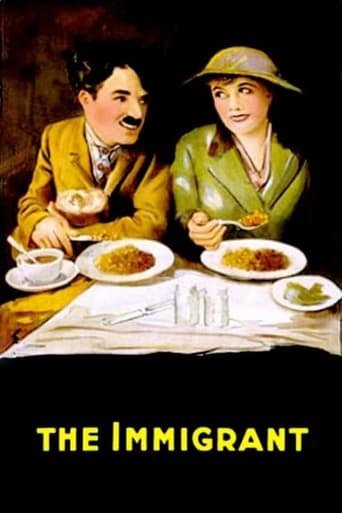
The best of Chaplin's twelve Mutual shorts, and the film where the Tramp stopped being a gag machine and became a character. The first half is a brilliant physical comedy set on a rolling ship; the second half, in a restaurant where the Tramp can't pay his bill, is equally funny. But what makes it special is the opening shot of immigrants crowded at the rail of the ship as the Statue of Liberty comes into view, followed immediately by a rope barrier herding them like cattle. In twelve minutes, Chaplin managed to be both hilarious and quietly devastating about poverty, displacement, and the promises America makes and breaks. The Mutual period is where Chaplin learned what the Tramp could do, and The Immigrant is the moment it all clicked.
The Rough House
1917 · Buster Keaton, Roscoe Arbuckle
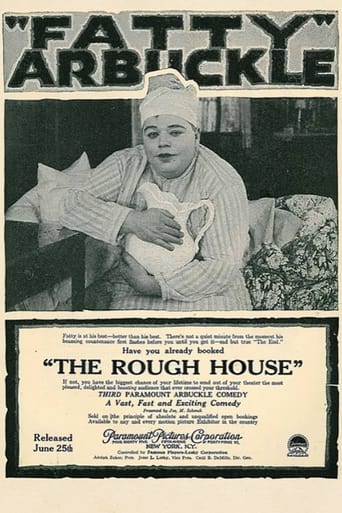
The historical significance alone would justify this film's inclusion: it contains the first screen appearance of Buster Keaton, who wandered onto Roscoe Arbuckle's set, was handed a broom, and immediately demonstrated the physical instincts that would make him the greatest screen comedian who ever lived. But The Rough House is also a showcase for Arbuckle himself, the first great physical comedian of the movies, whose agility was astonishing for a man of his size. The kitchen scene, in which Arbuckle juggles, flips, and acrobatically destroys an entire domestic space, is a masterclass in slapstick choreography. Arbuckle's career would be destroyed by scandal in 1921; his films are the reminder of how much was lost.
One Week
1920 · Buster Keaton, Edward F. Cline
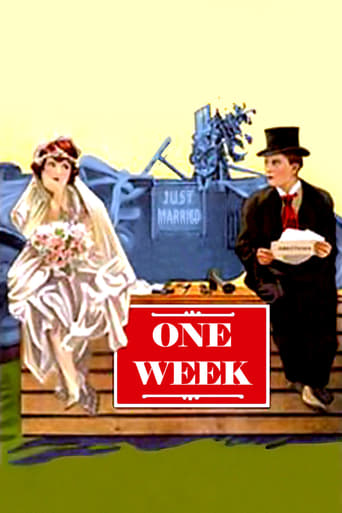
Keaton's first independent short, and a perfect film in nineteen minutes. A newlywed couple receives a build-it-yourself house kit, and a jealous rival switches the numbered boxes, so the house goes up wrong. Walls face the wrong direction. Doors open onto nothing. The whole structure spins in a storm. The escalation is mathematically precise, each disaster topping the last with a logic that feels both inevitable and completely surprising. The final gag, which I won't spoil, is one of the greatest payoffs in comedy history. One Week is the blueprint for everything Keaton would do: physical comedy as engineering, with the universe itself as the antagonist and a deadpan man at its center refusing to be impressed.
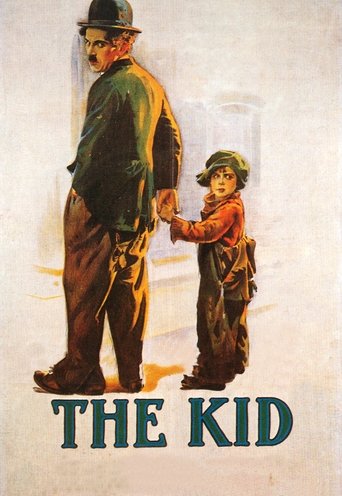
The Kid
1921 · Charlie Chaplin
Chaplin's first feature, and the film that proved screen comedy could sustain genuine emotion across a full-length narrative. The Tramp finds an abandoned baby, raises him in a slum, and the two develop a partnership (the kid breaks windows, the Tramp arrives to fix them) that's both a gag and a portrait of real tenderness. Jackie Coogan, five years old, is astonishing: a natural screen presence who matches Chaplin beat for beat. The dream sequence, in which the slum is transformed into heaven, is Chaplin at his most openly sentimental, and the scene where the authorities try to take the kid away is played with an emotional rawness that still lands. Chaplin drew directly on his own impoverished childhood in Lambeth, and you can feel it. The comedy and the autobiography are the same thing.
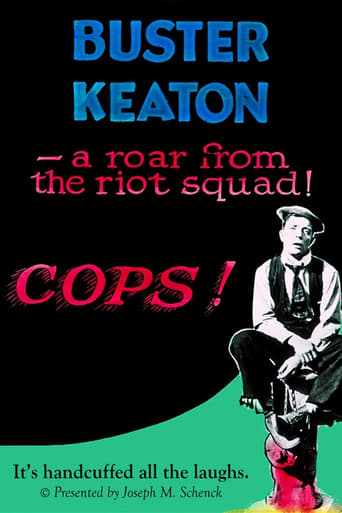
Cops
1922 · Buster Keaton, Edward F. Cline
The purest expression of Keaton's comic method, compressed into eighteen minutes. Through a chain of misunderstandings, Keaton ends up driving a horse-drawn cart through the middle of a police parade, accidentally launches a bomb into the procession, and spends the rest of the film being chased by what appears to be the entire New York City police force. The chase is choreographed with a spatial precision that makes it feel like a Rube Goldberg machine built from human bodies and urban architecture. Keaton moves through it all with absolute composure, scaling fences and threading through alleys as if the hundreds of cops behind him are a minor inconvenience. The final shot is legendarily dark for a comedy. It's the Keaton worldview in miniature: the universe is out to get you, and dignity consists of not flinching.
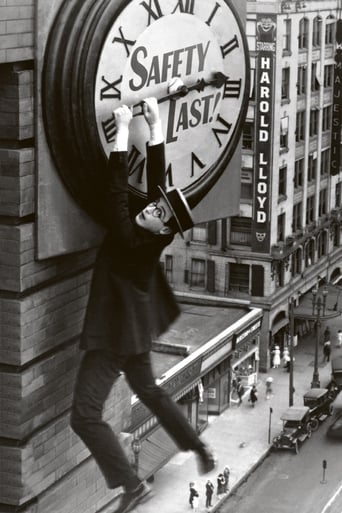
Safety Last!
1923 · Fred C. Newmeyer, Sam Taylor
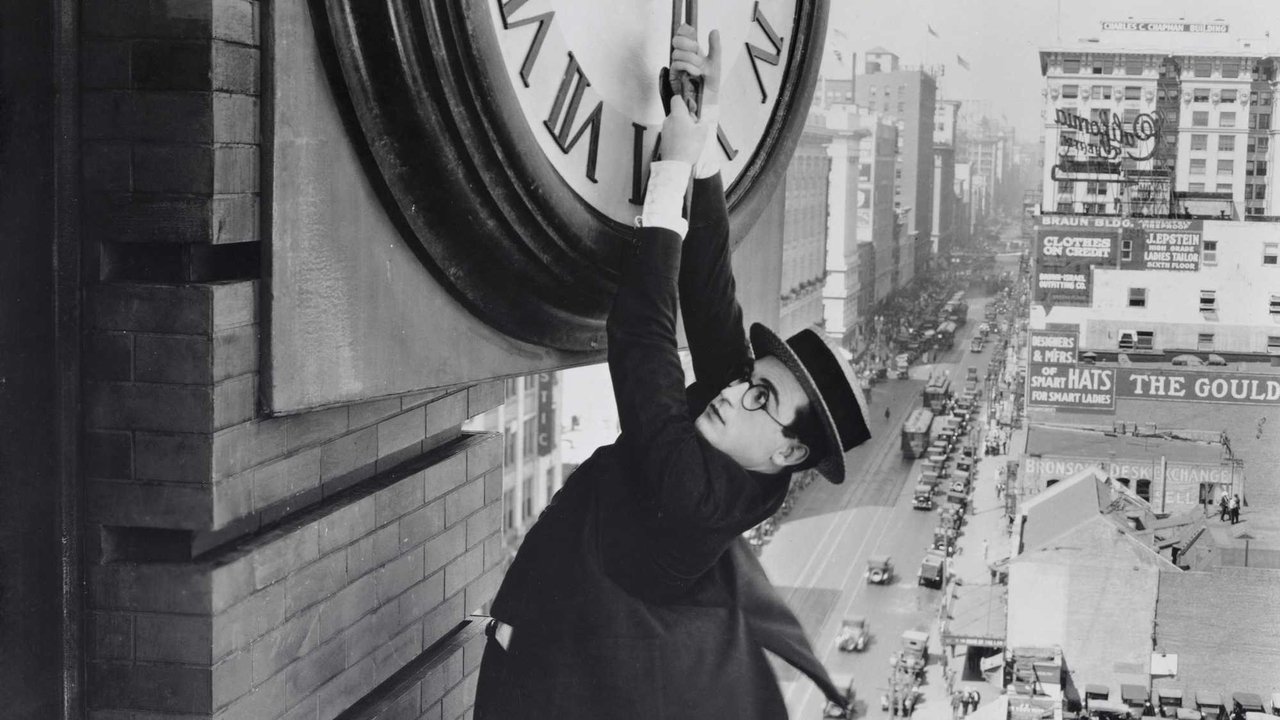
The image of Harold Lloyd dangling from a clock face high above the street is probably the single most iconic image of silent comedy, and the film that produced it is a masterclass in escalation. Lloyd plays a small-town boy trying to make it in the big city, and a publicity stunt requires him to climb the exterior of a twelve-story building. Each floor introduces a new hazard: pigeons, a painter's board, a tennis net, a mouse running up his trouser leg. Lloyd did his own climbing (with a mattress-covered platform just out of frame, about three stories below), and the vertigo is real. What makes it more than a stunt reel is Lloyd's persona: where Keaton is stoic and Chaplin is poetic, Lloyd is nervous, eager, completely relatable. He's the ordinary person who got in over his head, and the comedy comes from the fact that you'd panic just as badly.
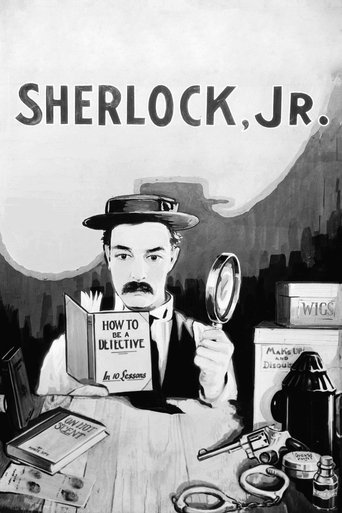
Sherlock Jr.
1924 · Buster Keaton
A movie theater projectionist falls asleep and dreams himself into the film he's projecting. From that premise, Keaton built the most conceptually ambitious comedy of the silent era, and one that wouldn't have a true successor until the postmodern experiments of the 1960s. The sequence where he steps into the movie screen and the backgrounds keep cutting around him while he remains in continuous motion is a staggering piece of filmmaking that required absolute precision in camera placement and body positioning. But Sherlock Jr. isn't just a technical exercise. It's a film about the relationship between movies and life, about a man who learns how to behave by watching the screen, and there's something both funny and melancholy about that. It's also only forty-five minutes long, which means there isn't a wasted frame in it.

The Gold Rush
1925 · Charlie Chaplin
Chaplin's masterpiece, and the film he said he most wanted to be remembered by. The Tramp in the Klondike, starving in a cabin, cooks and eats his boot with the delicacy of a gourmet meal: twirling the laces like spaghetti, sucking the nails like chicken bones. It's the most famous scene Chaplin ever filmed, and it captures his genius exactly: physical comedy so precise it becomes beautiful, played by a character so hungry it becomes tragic. The dinner roll dance, performed for a woman who isn't watching, might be the most perfect minute of screen comedy ever recorded. And the teetering cabin on the cliff edge is a set piece whose engineering rivals anything Keaton built. Chaplin was a perfectionist who shot hundreds of takes to get a single gag right. The Gold Rush is the film where that obsession paid off most completely.
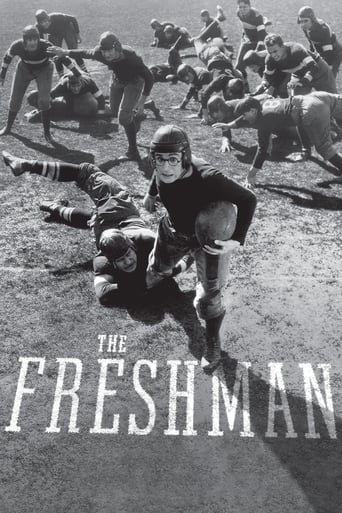
The Freshman
1925 · Fred C. Newmeyer, Sam Taylor
Lloyd's most personal film, and the one that reveals the anxiety underneath his go-getter persona. He plays a college student desperate to be popular, who doesn't realize that the entire campus is laughing at him rather than with him. The football game climax is brilliantly staged slapstick, but the party sequence that precedes it, in which his tuxedo slowly falls apart while he tries to maintain his dignity, is something more uncomfortable and more interesting. Lloyd understood something about American social aspiration that Chaplin and Keaton didn't need to: the terror of not fitting in, of being exposed as a fraud, of wanting approval so badly that you can't see you'll never get it. The Freshman was the highest-grossing comedy of the silent era because audiences recognized themselves in it.
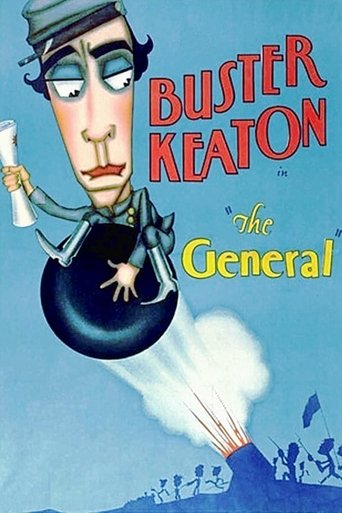
The General
1926 · Buster Keaton, Clyde Bruckman
Keaton bought real Civil War-era locomotives, laid miles of narrow-gauge track through the Oregon countryside, and staged a chase sequence of such logistical complexity that it nearly bankrupted the studio. The famous shot of a locomotive collapsing through a burning bridge was done in a single take with a real train because there was no second train. That commitment to physical reality is Keaton's defining quality: every stunt is real, every gag is engineered with structural precision, and the deadpan face at the center of the chaos never breaks. The General was a commercial failure on release because audiences expected a comedy and got something closer to an action epic. It is now regularly cited as the greatest comedy ever made. The gap between those two facts tells you everything about the difference between what audiences wanted from Keaton and what he actually was.
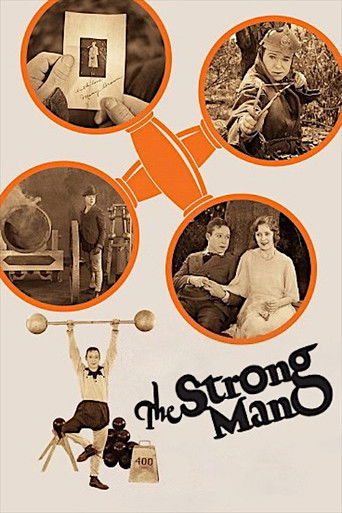
The Strong Man
1926 · Frank Capra
Harry Langdon is the "fourth genius" of silent comedy, and The Strong Man is the film that justifies the title. Directed by a young Frank Capra (in what was essentially his breakthrough), it follows a Belgian soldier's innocent assistant to a strongman who arrives in America searching for the girl who wrote him letters during the war. Langdon's comic persona is unlike anything else in the collection: slow, babylike, almost somnambulant, reacting to the world with a bewildered gentleness that makes Chaplin look cynical. The drunk scene, in which Langdon tries to fend off a woman's aggressive seduction while barely understanding what's happening, is a sustained comic performance of extraordinary delicacy. Langdon's career collapsed quickly after this peak (he fired Capra and tried to direct himself), but The Strong Man is the proof that his talent, at its best, was genuinely in the same league as the Big Three.
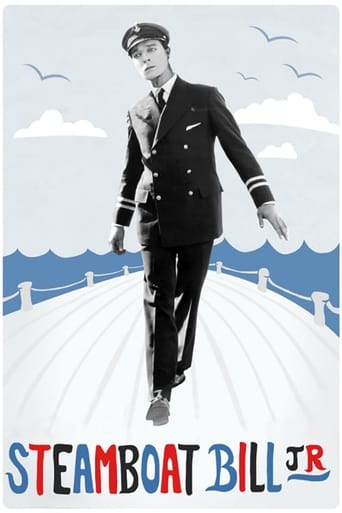
Steamboat Bill, Jr.
1928 · Charles Reisner, Buster Keaton
The falling house. That's what everyone remembers, and they should: the entire facade of a two-story building falls forward onto Keaton, who survives only because he's standing exactly where the open attic window passes over him. It was done in one take with a real building facade, and the margin for error was inches. Keaton refused a stunt double. But Steamboat Bill Jr. is more than its most famous gag. The cyclone sequence that contains it is the most sustained piece of physical comedy Keaton ever filmed, a ten-minute tour de force in which an entire town is destroyed around him while he maintains his perfect composure. It was also his last fully independent film. MGM absorbed his production company shortly after, and the greatest run in comedy history was over.

The Circus
1928 · Charlie Chaplin
The most underrated Chaplin feature, overshadowed by the films on either side of it (The Gold Rush before, City Lights after) and by the nightmarish production behind it (a divorce, an IRS investigation, a fire that destroyed the set). The Tramp accidentally becomes a circus star when audiences discover he's funnier in real life than the professional clowns. The tightrope scene with the monkeys is a piece of physical comedy as demanding as anything Keaton performed, and Chaplin did it himself, over and over, across hundreds of takes. Beneath the slapstick is a surprisingly honest film about performance: the Tramp is only funny when he doesn't know he's being watched, and the moment he tries to be intentionally amusing, he fails. Chaplin, the most controlling comedian who ever lived, made a film about the impossibility of controlling what makes people laugh.
Speedy
1928 · Ted Wilde
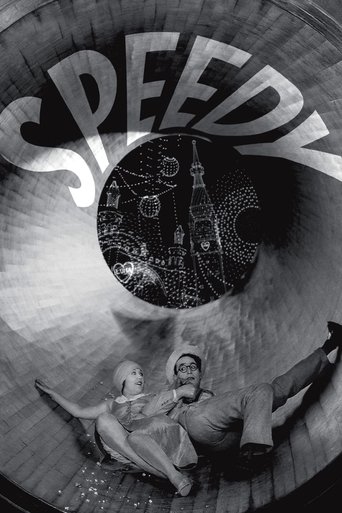
Lloyd's last silent film, and a love letter to New York City that doubles as an accidental documentary of a vanished world. He plays a baseball-obsessed young man trying to save his girlfriend's grandfather's horse-drawn streetcar from a predatory transit company. The location shooting is the real treasure: 1928 New York in all its chaotic, teeming energy, with Lloyd performing stunts through actual Manhattan traffic. The sequence where he drives Babe Ruth in a taxi through the streets is shot with real pedestrians who had no idea a movie was being made around them. Lloyd's great subject was always modernity itself, the speed and pressure of American urban life, and Speedy captures it with a documentary vividness that makes the comedy feel almost incidental to the portrait.
Show People
1928 · King Vidor
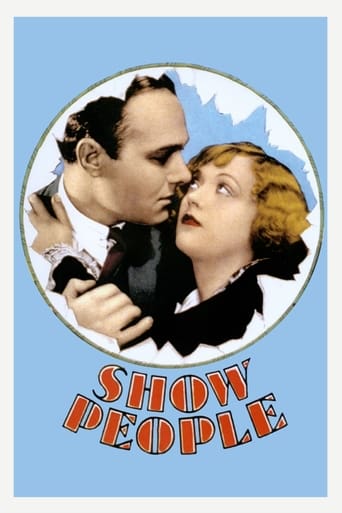
King Vidor's Hollywood satire stars Marion Davies in a performance that demolishes the persistent myth that she was a talentless protégée of William Randolph Hearst. She plays a Georgia girl who comes to Hollywood wanting to do serious drama, succeeds in slapstick instead, then loses herself when she tries to become a pretentious dramatic actress. Davies was a genuinely gifted comedienne with impeccable timing, and the scene where she tries to produce tears on command is one of the funniest things in all of silent cinema. The film is stuffed with cameos (Chaplin, Fairbanks, Vidor himself) and its portrait of the studio system's machinery has an insider's accuracy. It's the one film in this collection that's about comedy itself, about what it costs and what it means to be funny for a living.
Big Business
1929 · James W. Horne
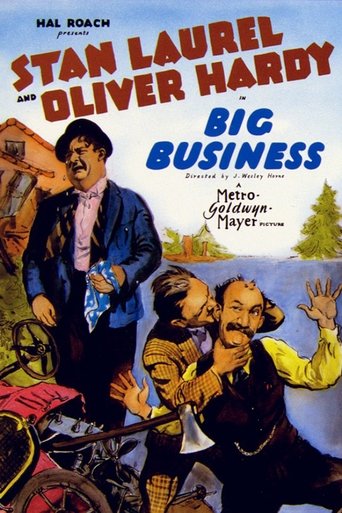
Laurel and Hardy try to sell a Christmas tree to James Finlayson, and a minor disagreement escalates into the total, methodical destruction of both Finlayson's house and their own car. That's the entire film. It takes twenty minutes. It's the purest distillation of the Laurel and Hardy method: tit-for-tat retaliation, each act of vandalism performed with a strange, almost ceremonial politeness, the damage accumulating with the inevitability of a Greek tragedy played for laughs. The genius is in the rhythm. Each escalation is preceded by a pause, a look, a moment of consideration before the next brick is pulled or the next fender is ripped off. Stan and Ollie didn't invent reciprocal destruction, but they perfected it, and Big Business is the textbook.
Liberty
1929 · Leo McCarey
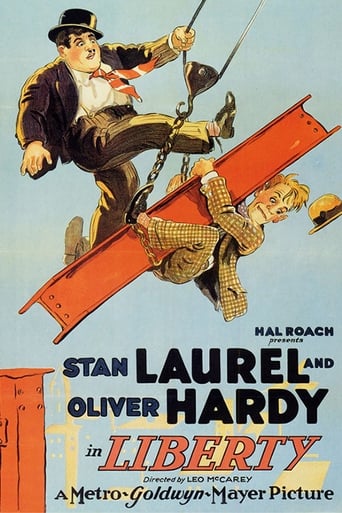
Stan and Ollie escape from prison and accidentally end up wearing each other's pants, then spend the rest of the film trying to switch them while the world conspires to make this simple task impossible. The first half is ground-level farce; the second half relocates to a construction site high above the city, and the vertigo comedy that follows is genuinely harrowing. Leo McCarey, who directed and whose gift for comic escalation was unmatched, builds the skyscraper sequence with a patience that makes each new height feel more precarious than the last. The pair's relationship (Ollie's exasperated dignity, Stan's baffled innocence) is already fully formed here, and the contrast between their domestic incompetence and the life-threatening situation they've stumbled into is the engine of every laugh. It's also the best proof that Laurel and Hardy, at their peak, could operate in Harold Lloyd territory and hold their own.
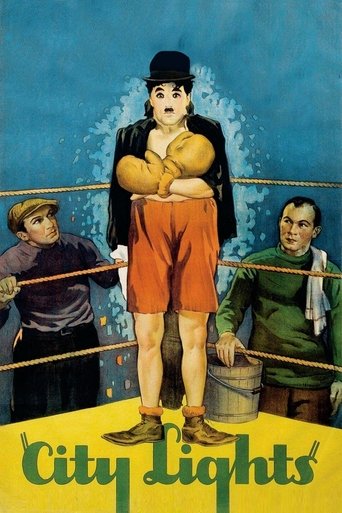
City Lights
1931 · Charlie Chaplin
By 1931, every studio in Hollywood had converted to sound. Chaplin, the most famous person in the world, refused. He released City Lights as a silent film with a synchronized score, and the gamble paid off so completely that it became his biggest commercial success. The Tramp falls in love with a blind flower seller who mistakes him for a wealthy man, and the comedy that follows (the boxing match, the party, the drunk millionaire who recognizes the Tramp only when intoxicated) is as precise and inventive as anything Chaplin ever produced. But the final scene is what makes it immortal: the flower seller, her sight restored, touches the Tramp's hand and realizes who he is. The close-up of Chaplin's face in that moment, simultaneously hopeful and terrified, is the most emotionally complex shot in the history of comedy. It is the last great silent film. It may be the greatest.