Lon Chaney: The Man of a Thousand Faces
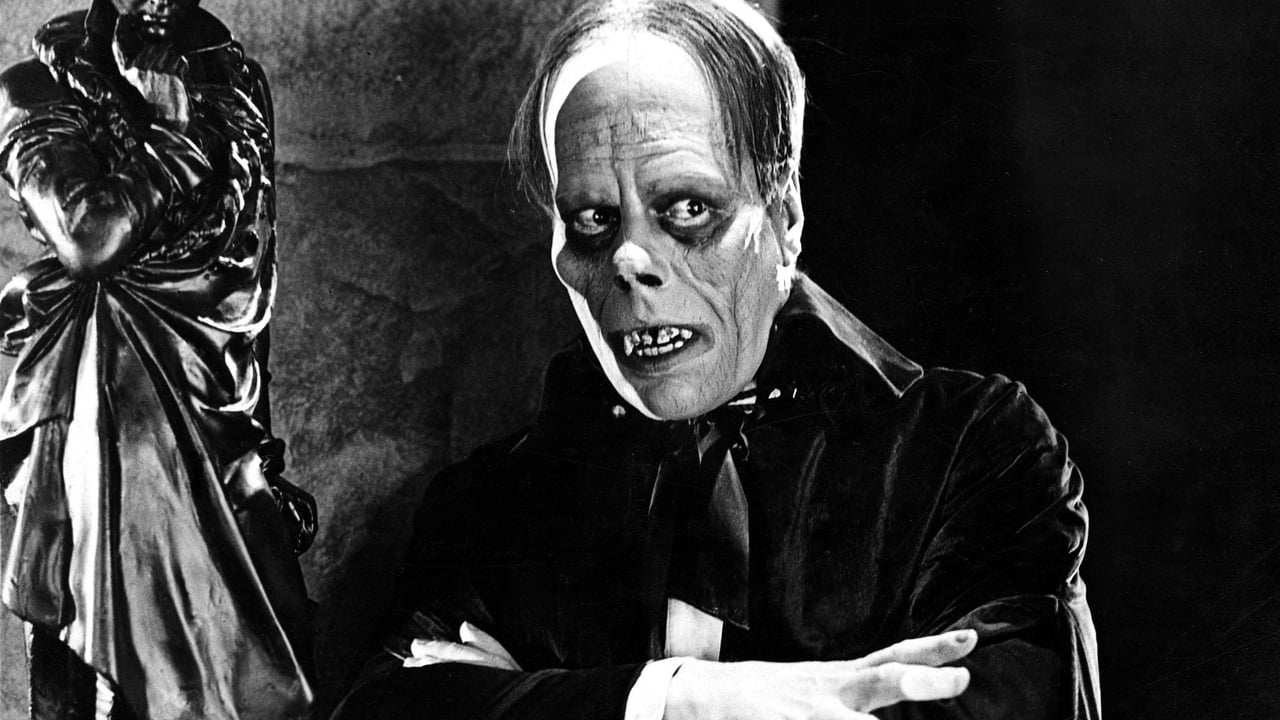
Lon Chaney could make you believe he was anyone. A legless crime lord. A vengeful paralytic. A tormented circus clown. A disfigured phantom haunting the Paris Opera. He designed his own makeup, often enduring considerable physical pain to achieve his transformations, and he brought to every role a depth of feeling that elevated genre material into something genuinely moving. Between 1919 and 1930, he was the biggest star in horror cinema and one of the biggest stars in Hollywood, period. He died of throat cancer at forty-seven, just as the sound era was beginning, and the loss is still felt. What made Chaney extraordinary was not the makeup alone but what he did underneath it. His characters are almost always outcasts: men deformed by accident or birth, criminals shaped by cruelty, performers hiding behind disguises. In lesser hands these roles would be freak-show spectacle. Chaney found the humanity in them. His Quasimodo is heartbreaking. His Phantom is tragic. Even his most monstrous creations carry a loneliness that makes the audience complicit in their suffering. He understood that the most effective horror comes not from revulsion but from recognition. This collection traces Chaney's career from his first collaboration with Tod Browning through the iconic roles that made him a legend. Five of the thirteen films were directed by Browning, whose fascination with the grotesque and the marginal made him Chaney's ideal creative partner. The others showcase the range of directors who recognized what Chaney could bring to their work, from Victor Sjöström's European gravity to the grand spectacle of Universal's horror productions. Together, they constitute the most remarkable body of screen performance in the silent era.
14 films

The Wicked Darling
1919 · Tod Browning
The first collaboration between Chaney and Tod Browning, and the beginning of one of cinema's most important creative partnerships. Chaney plays a supporting role as a Limehouse thief in this melodrama about a young woman caught between the criminal underworld and the possibility of a respectable life. The film is modest in ambition, but Chaney already demonstrates the quality that would define his career: the ability to make a villainous character feel lived-in rather than simply evil. Browning recognized immediately that Chaney could carry material that other actors would reduce to caricature. They would make ten films together over the next decade.
The Penalty
1920 · Wallace Worsley
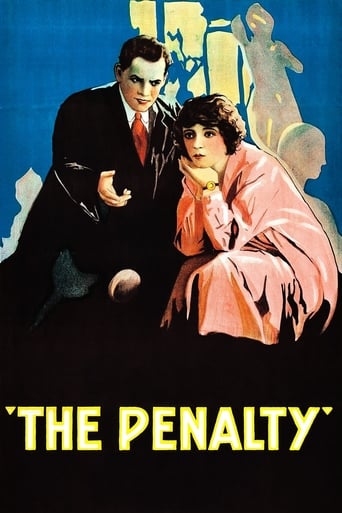
Chaney plays Blizzard, a legless crime lord who rules San Francisco's underworld and plots revenge against the doctor who needlessly amputated his legs as a child. To achieve the effect, Chaney strapped his lower legs behind him in a harness so painful that he could only wear it for short periods. The physical commitment is astonishing, but what makes the performance memorable is the intelligence and fury Chaney brings to the role. Blizzard is not a monster; he is a brilliant man whose rage at what was done to him has become the organizing principle of his life. The Penalty established Chaney as a star willing to suffer for his art in ways no other actor would consider.
Outside the Law
1921 · Tod Browning
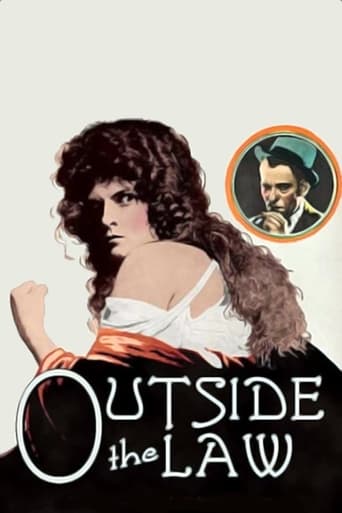
Chaney plays dual roles in this Browning-directed crime film set in San Francisco's Chinatown: a fearsome gang leader and a kindly old man who may or may not be the same person. The double performance gives Chaney room to demonstrate his range within a single film, moving between menace and tenderness with a control that borders on eerie. The plot is pulp melodrama, complete with hidden loot and last-minute redemptions, but Chaney and Browning invest it with a visual atmosphere that lifts it above its genre. Priscilla Dean matches Chaney's intensity as the female lead. It was a commercial hit and cemented the Chaney-Browning partnership.
The Ace of Hearts
1921 · Wallace Worsley
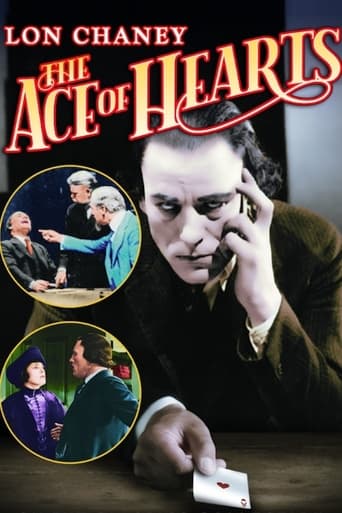
A secret society of anarchists draws lots to determine who will assassinate a man they have judged deserving of death. Chaney plays one of two members who are both in love with the same woman, and who both draw the ace of hearts. Wallace Worsley directs with a restraint unusual for the material, and Chaney delivers a performance built on stillness and interior conflict rather than physical transformation. There is no elaborate makeup here, no prosthetics. The film demonstrates that Chaney's gift was not dependent on disguise; he could hold an audience with nothing more than the way he held his body and the expression in his eyes.
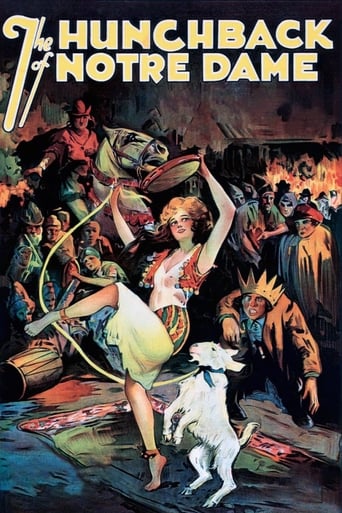
The Hunchback of Notre Dame
1923 · Wallace Worsley
The role that made Chaney a major star. His Quasimodo required a hump weighing over forty pounds, a harness that contorted his body, and facial prosthetics that took hours to apply. The physical ordeal was extreme even by Chaney's standards. But the performance is not about the makeup; it is about what happens in his eyes when Esmeralda shows the hunchback kindness for the first time in his life. That moment, in which Chaney's expression shifts from animal wariness to bewildered gratitude, is one of the great pieces of screen acting. The film around him is a lavish Universal production with enormous cathedral sets and hundreds of extras, but Chaney is the reason it endures.
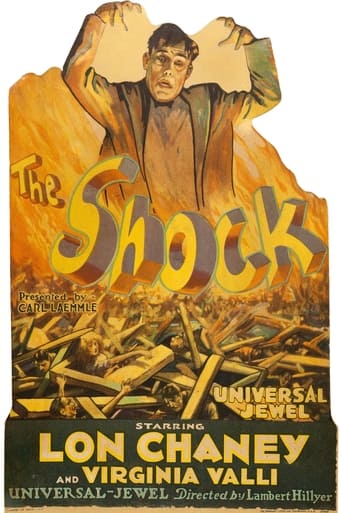
The Shock
1923 · Lambert Hillyer
Chaney plays a crippled enforcer sent by his criminal boss to a small town to set up a blackmail operation, only to find himself reformed by the love of a good woman. The premise is pure melodrama, and the film does not transcend it the way Chaney's best work does. But his physical performance as a man who moves through the world on crutches, the way he uses his upper body to compensate for his useless legs, is characteristically committed. The earthquake climax, destroying the town and the criminal plot simultaneously, is an early example of the disaster spectacle that would become a Hollywood staple. A minor Chaney film, but even minor Chaney repays attention.
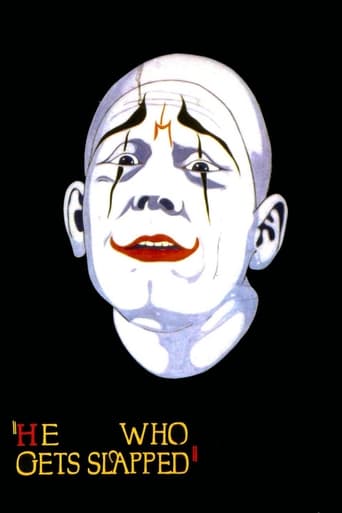
He Who Gets Slapped
1924 · Victor Sjöström
Victor Sjöström directed this adaptation of Leonid Andreyev's play, and the combination of Sjöström's psychological depth with Chaney's intensity produces one of the great performances of the silent era. A scientist, humiliated when a baron steals both his research and his wife, reinvents himself as a circus clown whose act consists entirely of being slapped. Chaney plays the role without elaborate makeup, relying instead on a physical language of suppressed pain and forced laughter that is almost unbearable to watch. The film was the first production from the newly formed MGM, and it announced that the studio intended to make films of serious artistic ambition.
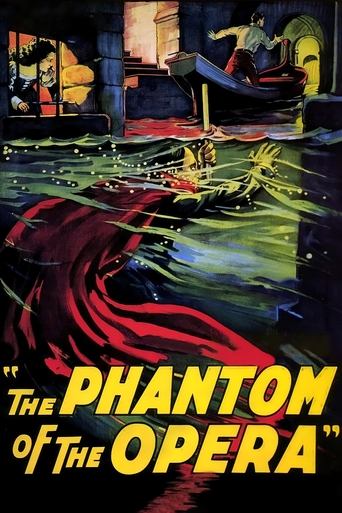
The Phantom of the Opera
1925 · Rupert Julian
Chaney's self-designed makeup for Erik, the Phantom, is one of the most famous images in the history of cinema. The skull-like face, the sunken nostrils, the exposed teeth: when Christine tears away the mask, audiences in 1925 reportedly screamed. But Chaney's Phantom is more than a shock effect. He plays Erik as a ruined genius, a man of extraordinary talent imprisoned in a body the world cannot bear to look at, and his rage is inseparable from his grief. The Technicolor masquerade ball, the underground lake, the chandelier crash: the film is grand spectacle, but Chaney's performance gives it a tragic center that spectacle alone could never provide.
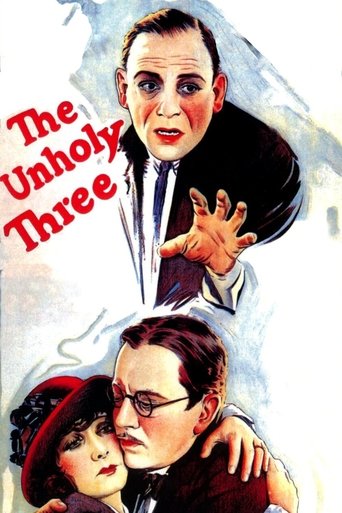
The Unholy Three
1925 · Tod Browning
Chaney plays Professor Echo, a ventriloquist who teams up with a strongman and a little person to form a criminal gang that operates out of a pet shop, using a parrot as a front for Echo's voice-throwing abilities. The premise sounds absurd, and Browning leans into the absurdity, but Chaney plays Echo with such conviction that the film achieves a strange plausibility. His performance requires him to throw his voice, impersonate an old woman, and command the screen against two scene-stealing co-stars. The Unholy Three was a major hit and spawned a sound remake in 1930 that became Chaney's only talking picture before his death.
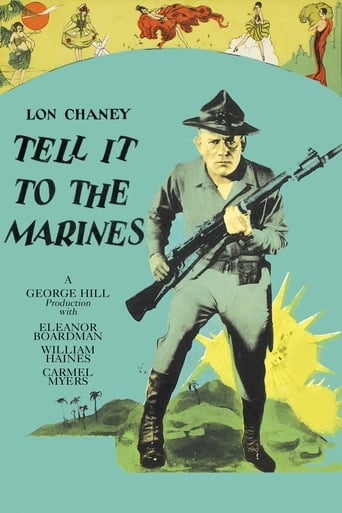
Tell It to the Marines
1926 · George W. Hill
The outlier in Chaney's filmography and the proof that he could do anything. There is no makeup, no prosthetics, no physical transformation. Chaney plays a tough Marine Corps sergeant training a cocky young recruit, and the film is a straightforward military comedy-drama with a love triangle. What makes it remarkable is the ease with which Chaney inhabits the role. He is funny, gruff, and unexpectedly tender, and his screen chemistry with William Haines is effortless. The film was one of the biggest box-office successes of 1926 and the U.S. Marine Corps' most effective recruiting tool of the decade. It proves that Chaney's stardom was built on acting ability, not gimmickry.
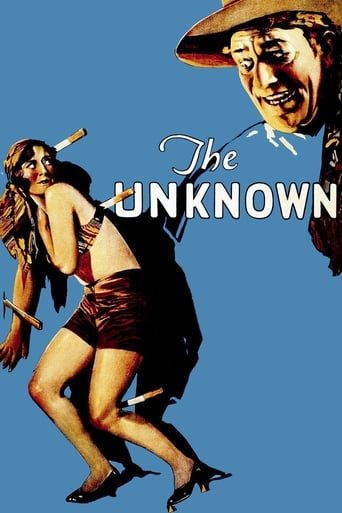
The Unknown
1927 · Tod Browning
The most disturbing film in the Chaney-Browning collaboration, and arguably the most disturbing film of the entire silent era. Chaney plays Alonzo, a circus knife-thrower who binds his arms to pass as armless because the woman he loves, played by a young Joan Crawford, has a pathological fear of being touched by men's hands. When Alonzo has his arms surgically removed to be worthy of her, she has already overcome her phobia and fallen for the strongman. The story is a nightmare of obsessive love taken to its logical extreme, and Chaney plays Alonzo's final realization with an anguish that is almost physically painful to witness. Nothing else in silent cinema goes this far.
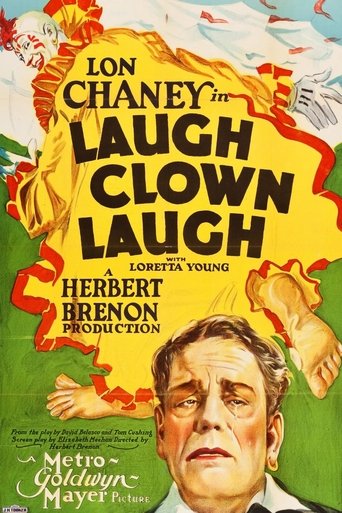
Laugh, Clown, Laugh
1928 · Herbert Brenon
Chaney plays Tito, a traveling clown who adopts an abandoned baby girl, raises her to adulthood, and then falls helplessly in love with her. The premise courts sentimentality at every turn, and Herbert Brenon's direction does not always resist. But Chaney's performance is devastating. He plays Tito's inner conflict, the impossibility of his love, the shame of it, the inability to stop feeling it, with a transparency that goes beyond acting into something closer to confession. The title is both the premise and the paradox: a man whose profession requires him to make people laugh while his private suffering threatens to destroy him. It is among Chaney's most emotionally exposed performances.
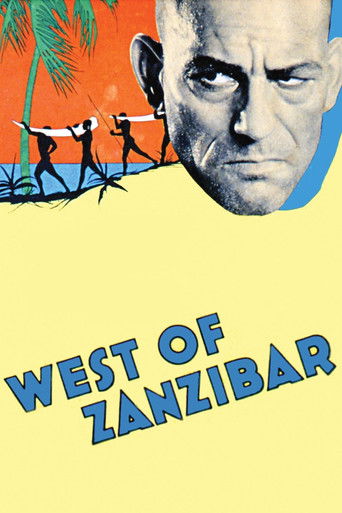
West of Zanzibar
1928 · Tod Browning
Chaney plays Phroso, a stage magician paralyzed from the waist down by a romantic rival, who spends eighteen years in the swamps of East Africa plotting an elaborate revenge that involves the rival's innocent daughter. The cruelty of the scheme is breathtaking, and Browning films the African sequences with a feverish intensity that matches Phroso's obsession. Chaney, confined to a wheelchair or dragging himself across the ground, makes paralysis itself a form of menace; he seems more dangerous immobile than most actors do in full motion. The final act, in which Phroso's plan comes undone, is Browning at his most operatically dark. It was their penultimate collaboration.
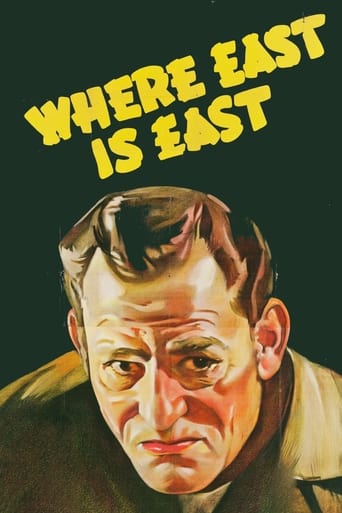
Where East Is East
1929 · Tod Browning
Chaney’s penultimate silent and the last of his ten films with Tod Browning, Where East Is East casts him as “Tiger” Haynes, a scarred animal trapper in French Indochina whose fierce devotion to his daughter Toyo (Lupe Vélez) is undone by the return of her estranged mother (Estelle Taylor), a predatory figure who sets out to seduce Toyo’s young fiancé. The role is atypical for the Chaney-Browning partnership: Tiger is fundamentally a decent man, and Chaney plays him with a banked, almost resigned restraint that cedes much of the film’s heat to Vélez and Taylor. The familiar Chaney apparatus is still in place — the elaborate facial scarring, the physical rapport with animals, the wounded patriarch nursing a private grief — but here it serves a quieter, more exhausted register. Within a year Chaney would be dead of throat cancer, having made only one talkie. Seen now, the film carries the weight of a closing chapter: the last collaboration of a partnership that, across a decade, had made the disfigured body the central vehicle of American silent melodrama.