Spotlight: Charlie Chaplin
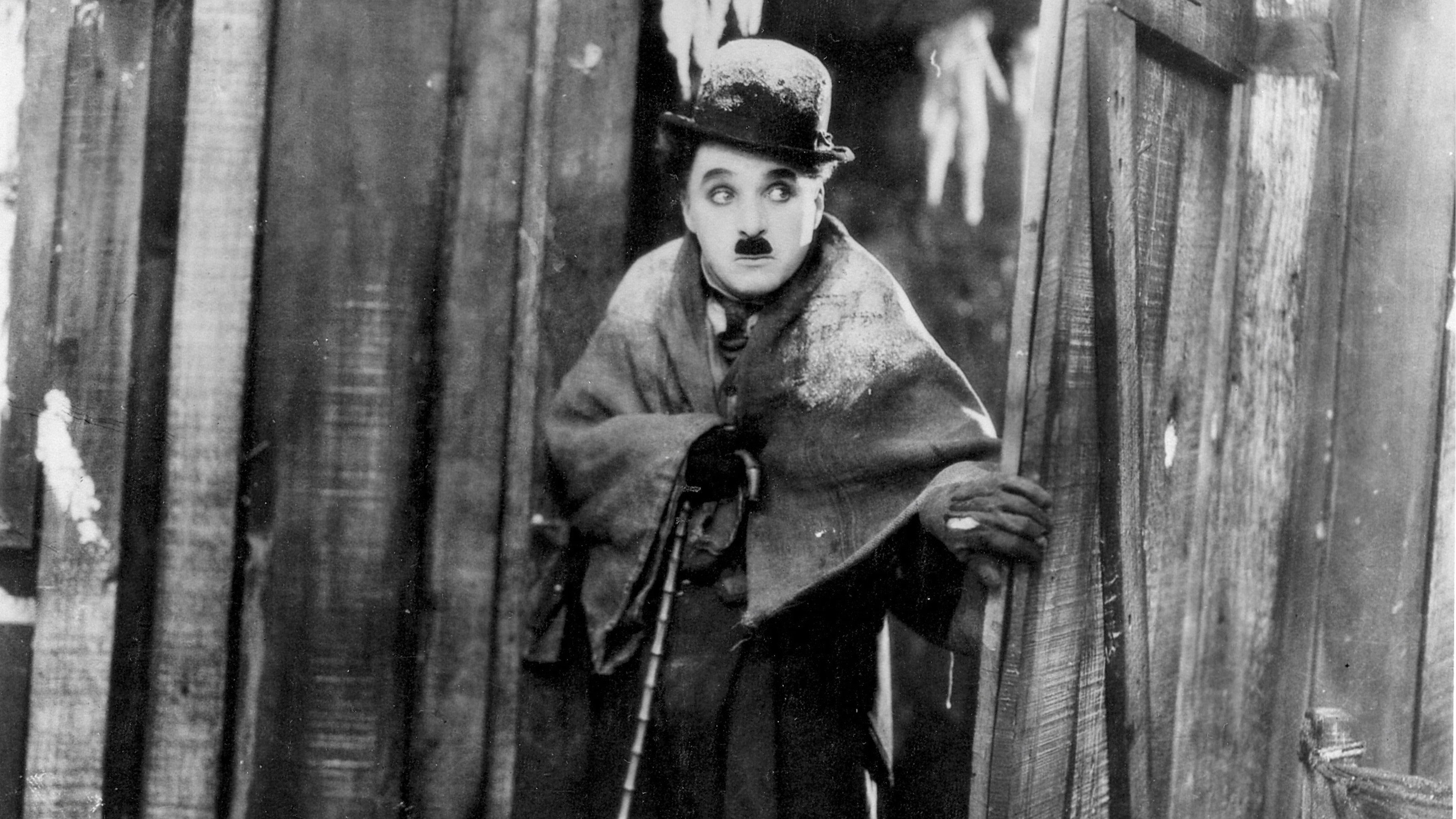
No figure in cinema's first half-century was as universally recognized, or as singularly burdened with the medium's ambitions, as the Tramp. Charlie Chaplin arrived at Keystone in 1914 a music-hall comedian and within four years was the most famous person on Earth. What he built across the silent era was something stranger than slapstick: a portable mythology in a bowler hat, a body that could shift from buffoonery to balletic grace inside a single frame, and a moral seriousness that crept into the comedy until the comedy could carry it. This collection traces the arc from the Keystone shorts that introduced the costume, through the Mutual and First National pictures where the Tramp acquired his soul, to the late masterpieces that staked everything on silence after the rest of cinema had moved on. By the time City Lights ended, Chaplin had spent seventeen years arguing for a kind of cinema the talkies were already burying. He won that argument in retrospect, the way he won most things: by outlasting them.
15 films
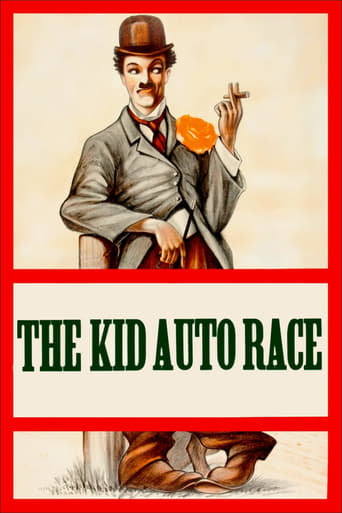
Kid Auto Races at Venice
1914 · Henry Lehrman
The bowler, the cane, the moustache, the trousers two sizes too big — all of it shows up here for the first time, in a six-minute Keystone improvisation shot at a real auto race in Venice, California. Chaplin is barely a character yet, just a nuisance who keeps wandering into the cameraman's shot and refusing to leave. But the costume is already complete, and the persona is half-formed: defiant, aggrieved, oblivious, charming despite himself. Within months he would be the company's biggest star.
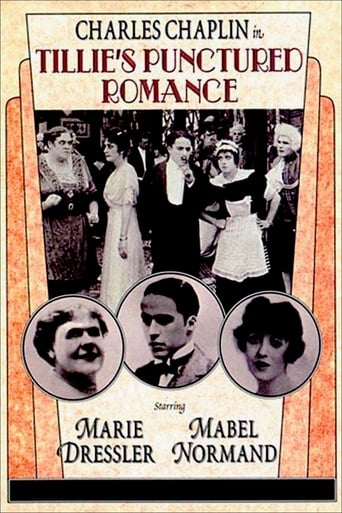
Tillie's Punctured Romance
1914 · Mack Sennett
The first feature-length comedy ever made, and one of the strangest things in Chaplin's filmography: he plays the villain. Mack Sennett directs a bewildering, breathless farce in which Chaplin is a city-slicker confidence man who seduces and abandons Marie Dressler's lumbering country girl. The film is rough, broad, and not always funny, but it's a useful artifact of the world the Tramp emerged from — Keystone slapstick at full volume — and a glimpse of what Chaplin might have become had he stayed inside someone else's system instead of building his own.
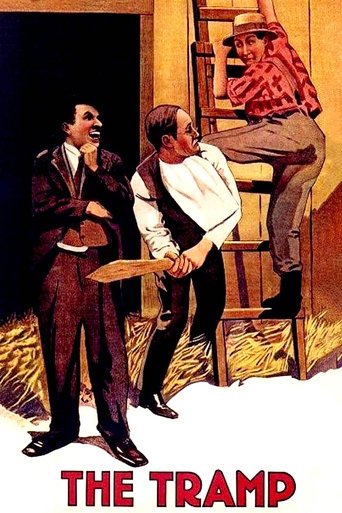
The Tramp
1915 · Charlie Chaplin
The film that named the character, and the first time Chaplin allowed his comedy to end in something like sadness. The Tramp wanders into a farm, falls in love with the farmer's daughter, foils some thieves, gets the girl — and then, in a final shot that would echo through the rest of his career, walks alone down a dirt road into an empty distance. Until this moment, Chaplin had been making comedy. With the closing image of The Tramp, he started making something else: a body of work about loneliness in a costume so perfect it could disappear into the road and the horizon and the spaces between them.

Easy Street
1917 · Charlie Chaplin
A two-reeler about a slum cop, a giant bully, and a city block where civilization has given up. Easy Street is the densest, most cleanly constructed of the Mutual shorts: every gag flows from the geography, and the geography (a single street set, built and shot with surprising care) becomes the third character. Chaplin had spent two years figuring out how to direct comedy without leaving the camera behind, and here he simply does it — the body in motion, the timing, the sense of an entire neighborhood compressed into one alley. The masterpiece of his short-film period.
The Adventurer
1917 · Charlie Chaplin
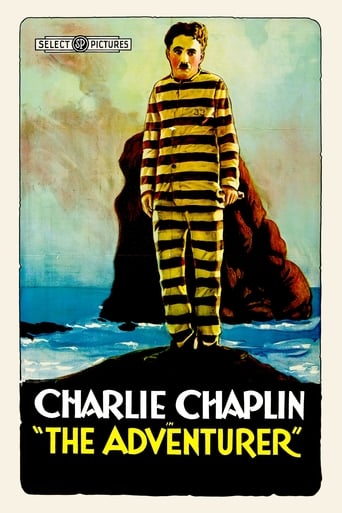
The last and tightest of Chaplin's twelve Mutual films, an escaped-convict farce stripped down to nothing but movement. There is no plot to speak of: a chase, a rescue, a society party, another chase. What Chaplin demonstrates instead is rhythm — the precise tempo at which a body in trouble can flip a gag inside out and turn it into ballet. By the time he closed his Mutual contract, he was the highest-paid performer in any medium on Earth. The next move was independence.
A Dog's Life
1918 · Charlie Chaplin
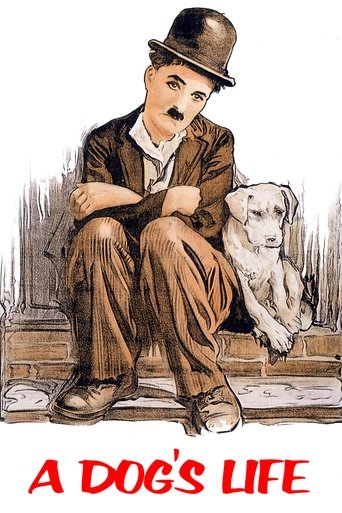
The first First National picture, and the moment Chaplin started taking longer to make films because he started taking them more seriously. The Tramp adopts a stray, wanders through a world that looks like it was lit with intention rather than convenience, and pulls off a lunch-counter robbery with a sleight-of-hand routine that's closer to magic than slapstick. Chaplin had begun composing his films like someone who knew they would outlive him.
Shoulder Arms
1918 · Charlie Chaplin
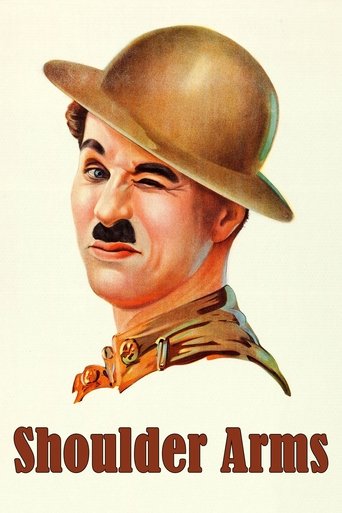
Released weeks before the Armistice, Shoulder Arms is a comedy set in the trenches — a premise that would have been unthinkable from anyone else and which Chaplin somehow made tender. The Tramp goes to the front, captures the Kaiser, falls for a French girl whose home is being shelled, and discovers that war, like everything else in his world, is mostly a problem of bad rooms and worse food. The film is half slapstick and half elegy, and the seam between them is hard to find. Audiences in 1918 understood it immediately.
Sunnyside
1919 · Charlie Chaplin
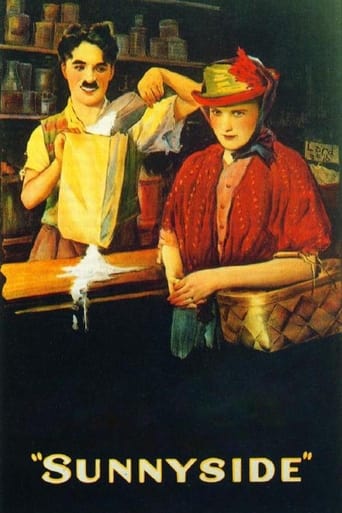
A pastoral comedy with a famous interlude — the Tramp dreams he is dancing with wood-nymphs in a meadow, a sequence so unlike everything around it that critics still aren't sure what to do with it. Sunnyside was made in the middle of one of Chaplin's recurring creative crises, and it shows: the film is restless, uneven, and reaching for something it can't quite name. But the dream-dance, modeled openly on Nijinsky's L'Après-midi d'un faune, is one of the strangest things in his work, and a glimpse of how seriously he wanted to be taken as an artist by 1919.
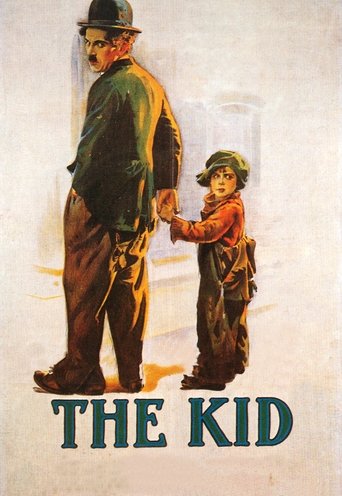
The Kid
1921 · Charlie Chaplin
Chaplin's first feature as a writer-director, and the film in which the comedy and the pathos finally fuse beyond separation. The Tramp finds an abandoned baby; the baby grows into Jackie Coogan; together they survive on cunning and theft and the kind of loyalty cinema rarely had room for. The scene in which welfare workers try to take the boy away, and the Tramp climbs across rooftops to get him back, is one of the great sustained passages of silent acting — pure feeling, no dialogue, no music in the original release that wasn't supplied by a live theater orchestra reading from Chaplin's own score. The film made Coogan, at six years old, the most famous child in the world.
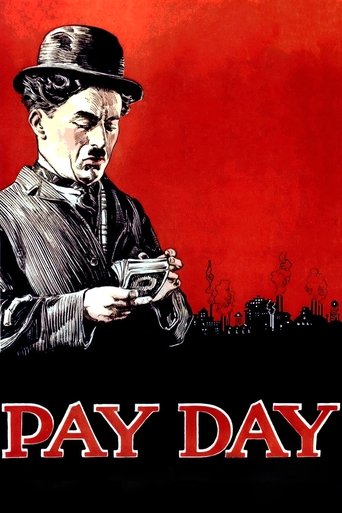
Pay Day
1922 · Charlie Chaplin
Chaplin's last short, a four-reeler about a construction worker on payday navigating an awful boss, an awful wife, and the impossibility of getting home from a tavern after midnight. The film is small, observant, and uncharacteristically domestic — Chaplin watching working life as it actually was, rather than the stylized poverty of the Tramp shorts. He never made another two-reeler. From here on, every film would be a feature, and every feature would be an event.

The Pilgrim
1923 · Charlie Chaplin
An escaped convict puts on a clergyman's clothes and accidentally takes over a small-town congregation. The Pilgrim is the funniest of Chaplin's religious satires (which he made more often than people remember), and the David and Goliath sermon — performed in pantomime to a mostly hostile flock — is one of the cleanest comic set-pieces in his work. The Hays Office and several state censor boards objected to it, which is one way of measuring how much of an actual sermon it was.

A Woman of Paris: A Drama of Fate
1923 · Charlie Chaplin
The Tramp does not appear. Chaplin is in this film for about thirty seconds, in heavy disguise, as a porter. A Woman of Paris was his attempt to prove he could direct serious drama without his costume, and audiences in 1923 were so disappointed by his absence that the film flopped commercially. They were wrong. It's one of the most influential dramatic films of the silent era — Lubitsch openly modeled the "Lubitsch touch" on its restraint, its visual economy, its refusal to spell anything out — and it remains the most undervalued thing Chaplin ever made.

The Gold Rush
1925 · Charlie Chaplin
The film Chaplin said he most wanted to be remembered for. The Tramp goes to the Klondike during the gold rush, nearly starves, eats his shoe, hallucinates that his cabin-mate has turned into a chicken, and falls in love with a dance-hall girl who barely notices him. Every famous Chaplin set-piece is here: the dance of the dinner rolls, the cabin teetering on a cliff, the Thanksgiving meal made of a boiled boot. But what holds it together is the steady, patient observation of cold and hunger and longing, treated with a tenderness that the gags wouldn't survive without.

The Circus
1928 · Charlie Chaplin
The most troubled production of Chaplin's silent career — a divorce, a tax investigation, a fire that destroyed weeks of footage, a leading lady he was secretly engaged to and then wasn't — somehow yielded one of his clearest, fastest-moving features. The Tramp accidentally becomes a circus star because he can't help being funny when he's scared, and is fired the moment he tries to do it on purpose. It's the most pointed thing Chaplin ever said about his own work: that the magic only happened when he wasn't reaching for it. He won an honorary Academy Award for the film at the first Oscars ceremony, then never spoke about The Circus publicly again until 1969.
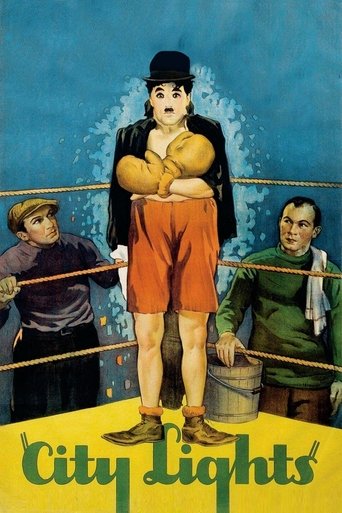
City Lights
1931 · Charlie Chaplin
Four years after The Jazz Singer, the most famous filmmaker on Earth released a silent film with a synchronized orchestral score and no spoken dialogue. The opening sequence parodies the talkies directly: a politician gives a speech in squeaks and squawks, the human voice rendered literally meaningless. From there, City Lights proceeds to demonstrate that everything sound was supposed to bring to cinema, Chaplin could already do without it. The Tramp's romance with a blind flower girl and his uneasy friendship with a suicidal millionaire build to a final shot — her face, recognizing him for the first time — that remains the single most famous closeup in silent cinema, and the medium's last great argument for itself.