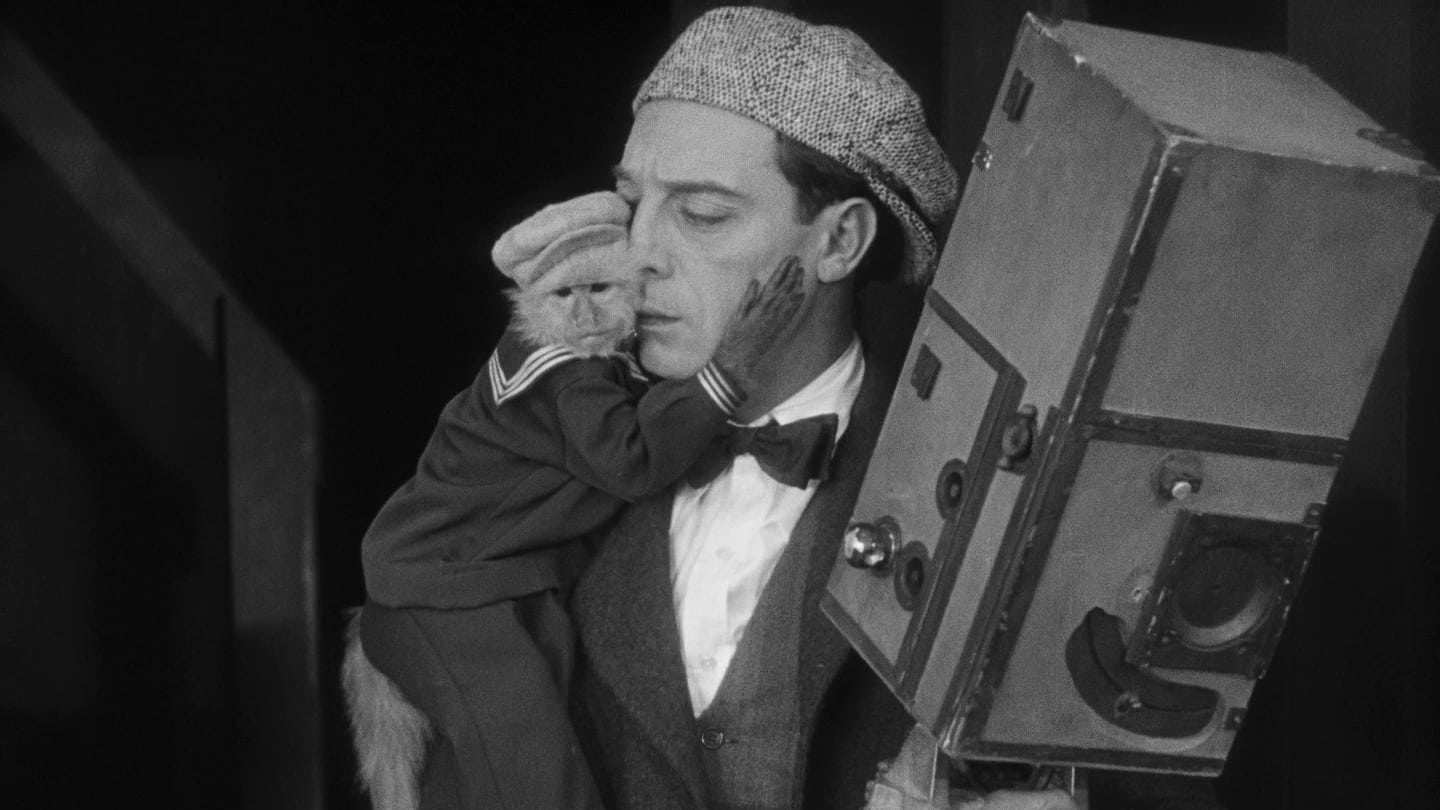
Pioneers: Buster Keaton
Buster Keaton never smiled on screen, and he made it mean more than anyone else's laughter. Born into a vaudeville family in 1895, he was literally thrown around the stage as a toddler — his father used him as a human prop — and he learned before he could read that the key to physical comedy was absolute commitment delivered with absolute calm. He brought that principle to cinema and became the most inventive filmmaker of the silent era, a director-star who thought in purely visual terms and built gags of such architectural complexity that they still provoke disbelief. His features from 1923 to 1928 represent the highest sustained achievement in screen comedy. Our Hospitality is a perfectly constructed chase film. Sherlock Jr. is a meditation on cinema itself, decades ahead of its time. The General is widely regarded as the greatest comedy ever made, a Civil War epic built around a single locomotive pursuit that manages to be simultaneously hilarious, thrilling, and genuinely beautiful. He did all his own stunts, including the famous falling house front in Steamboat Bill, Jr. — a two-ton wall dropping around him with inches of clearance — and he approached each one with the precision of an engineer and the fatalism of a philosopher. Keaton lost creative control when he signed with MGM in 1928, and his subsequent career is one of Hollywood's great tragedies. But the body of work he produced in less than a decade of independence is without peer. The ten films collected here trace his evolution from the anarchic brilliance of his early shorts to the feature-length masterpieces that define what cinema comedy can be.
10 films
From the Reading Room
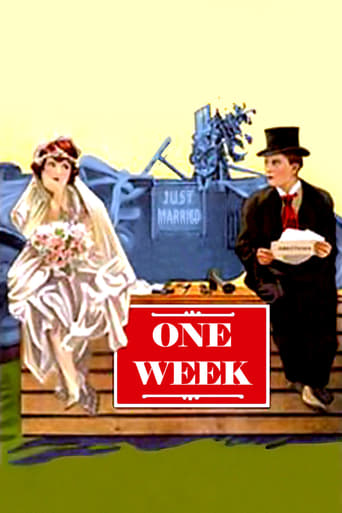
One Week
1920 · Buster Keaton, Edward F. Cline
Keaton's first independent short as a star — made after his apprenticeship with Roscoe Arbuckle — is a masterpiece of escalating catastrophe. A newlywed couple receives a build-it-yourself house kit, and everything that can go wrong does, culminating in the entire structure spinning on its foundation in a windstorm. The film establishes the Keaton method in miniature: take a simple premise, pursue its logic to absurd extremes, and execute every gag with engineering precision. One Week also introduces the Keaton screen persona — the resourceful, unflappable man who meets disaster with stoic determination — fully formed from the very first frame.

The Goat
1921 · Malcolm St. Clair, Buster Keaton
Keaton plays a man mistaken for a wanted criminal and pursued by the entire police force, and the resulting chase is one of the great sustained comic sequences of the silent era. The Goat is Keaton at his most inventive in short form: the gags come in rapid succession, each one building on the last, and the physical comedy is executed with a reckless precision that makes the impossible look effortless. The film's centerpiece — Keaton standing motionless on the back of a moving vehicle, appearing to walk through traffic — is a perfect distillation of his genius: an illusion that works because his deadpan face sells the absurdity as reality.
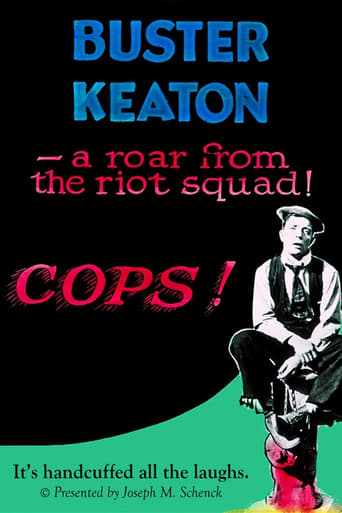
Cops
1922 · Buster Keaton, Edward F. Cline
The most famous of Keaton's shorts, and the one that best demonstrates his ability to build a gag sequence of breathtaking scale. The setup is simple: Keaton accidentally disrupts a police parade and is chased through the streets by what appears to be the entire force. The pursuit grows more elaborate and more dangerous as it goes, with Keaton leaping between buildings, swinging on construction equipment, and navigating increasingly impossible obstacles, all while maintaining the stone-faced composure that was his trademark. Cops is a perfect short film — not a wasted frame, not a false beat — and it announced that Keaton was ready for features.
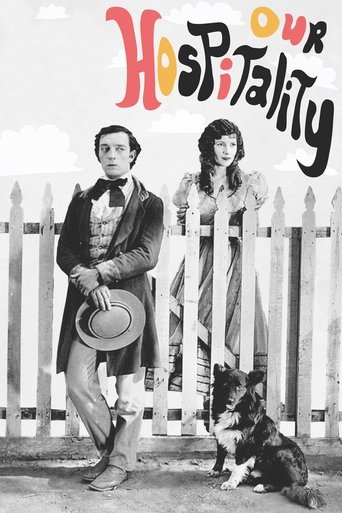
Our Hospitality
1923 · Buster Keaton, John G. Blystone
Keaton's first great feature is a Southern comedy of manners that builds to one of the most spectacular chase sequences in silent cinema. He plays a Northerner visiting his girlfriend's family in the South, navigating the treacherous hospitality of a clan that harbors a generations-old grudge. The film's pacing is impeccable — it takes its time establishing character and situation before unleashing an extended river chase that combines genuine danger with meticulous comic timing. Keaton performed the climactic waterfall rescue himself, and the sequence demonstrates his unique fusion of physical daring and structural intelligence. Our Hospitality proved that Keaton could sustain his comic vision across feature length without losing momentum or precision.
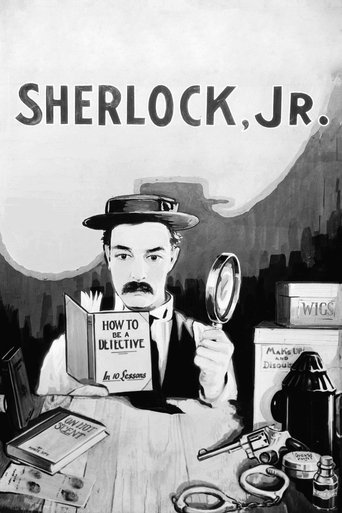
Sherlock Jr.
1924 · Buster Keaton
Keaton's most formally audacious film, and one of the most inventive ever made. He plays a movie projectionist who falls asleep and dreams himself into the film on screen, where the cuts between shots throw him from one dangerous situation to another. The sequence in which Keaton enters the movie — stepping from the auditorium into the projected image, only to be battered by the film's editing — is a meditation on the nature of cinema itself, executed with a technical brilliance that filmmakers are still trying to match. The film is only forty-five minutes long, but it contains more ideas about the relationship between reality and illusion than most directors manage in a career.
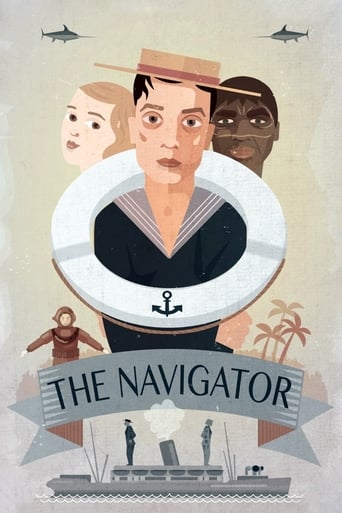
The Navigator
1924 · Donald Crisp, Buster Keaton
Keaton and his co-star Kathryn McGuire are stranded on an ocean liner, and the comedy comes from their increasingly desperate attempts to operate a ship designed for a crew of hundreds. The Navigator was Keaton's biggest commercial hit, and it shows him at his most audience-friendly: the gags are broad, the situations are immediately legible, and the underwater sequence — in which Keaton fights a swordfish while wearing a deep-sea diving suit — is one of the most inventive set pieces in his filmography. The film demonstrates Keaton's ability to transform any environment into a comedy machine. Give him a prop, a space, and a problem, and he will find every possible gag hidden in the geometry.
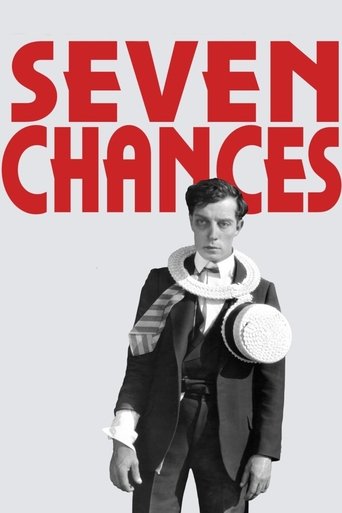
Seven Chances
1925 · Buster Keaton
Keaton plays a man who inherits a fortune on the condition that he marry by seven o'clock that evening, and the film's final act — in which he is pursued across a mountainous landscape by an avalanche of boulders — is one of the most exhilarating sequences in all of cinema. The rocks were real, and Keaton choreographed the entire chase himself, timing his movements to miss each one by inches. Seven Chances begins as a fairly conventional romantic comedy, but the boulder sequence transforms it into something transcendent: pure cinema, pure physical comedy, executed at a level of danger and precision that no one else would have attempted.
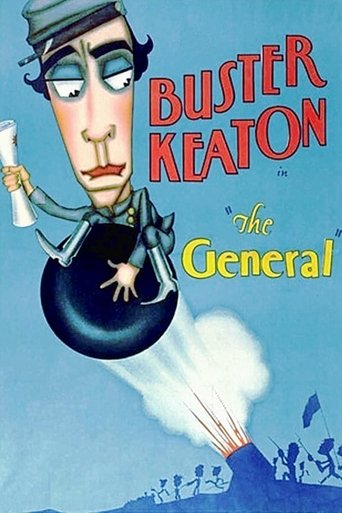
The General
1926 · Buster Keaton, Clyde Bruckman
The masterpiece. Keaton plays Johnnie Gray, a Confederate train engineer whose locomotive — and whose girl — are stolen by Union spies, and who pursues them across Georgia in a single-minded quest to get both back. The General is simultaneously a great comedy, a great action film, and a great war film, and it achieves all three without ever seeming to try. Keaton's direction is flawless: every shot is composed with a painter's eye, every gag is integrated into the narrative, and the action sequences — filmed with real trains, real bridges, and real explosions — have a scale and physical authenticity that no amount of special effects could replicate. The film was a commercial disappointment on release but is now universally recognized as one of the greatest films ever made.
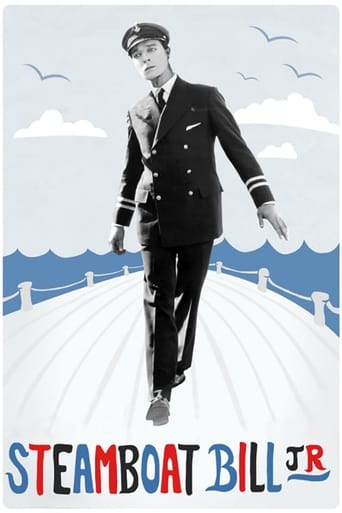
Steamboat Bill, Jr.
1928 · Charles Reisner, Buster Keaton
The falling house front. A two-ton building facade collapses around Keaton, and he survives because he is standing exactly where the open attic window passes over him. The margin of error was inches. He did it in one take. The stunt has become the defining image of Keaton's career — a visual metaphor for his artistic philosophy of absolute commitment executed with absolute precision. The rest of the film is excellent too: a river comedy about a young man trying to impress his girlfriend's father during a catastrophic storm, directed by Keaton with his usual structural intelligence. But the house front is what people remember, and rightly so. It is the single most astonishing moment in the history of physical comedy.
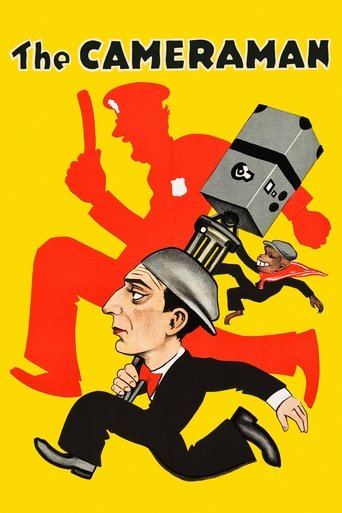
The Cameraman
1928 · Edward Sedgwick, Buster Keaton
Keaton's last great film, and the last he made with full creative control before MGM absorbed him into the studio system. He plays a tintype photographer who wants to become a newsreel cameraman and follows a woman he loves to the MGM lot, where his attempts to capture footage generate a series of brilliant comic situations. The film is both a love letter to filmmaking and a portrait of an outsider trying to break into a world that doesn't want him — a premise that carried personal resonance for Keaton, who was about to lose his independence to the studio whose gates his character is trying to enter. The Cameraman is a bittersweet masterpiece, and its final sequence, in which Keaton accidentally captures a tong war on film, is among the best work he ever did.