
Spotlight: Anna May Wong
Anna May Wong was Hollywood's first Chinese American film star and one of the most consequential, and most wronged, figures in the history of cinema. Born Wong Liu Tsong in Los Angeles in 1905, she broke into films as a teenager and quickly demonstrated a screen presence that critics consistently singled out even when the films around her were mediocre. Her career is a study in paradox: she was internationally celebrated as a fashion icon and a major star in Europe, while American studios kept her trapped in stereotypical Dragon Lady and exotic villain roles, systematically denied her the leading parts she deserved. Anti-miscegenation laws literally prevented her from kissing a white co-star on screen, which effectively barred her from most romantic leads. She responded with remarkable resourcefulness, founding her own production company, traveling to Europe where she was treated as the star she was, mastering French and German to act in multiple language versions of films, and performing Shakespeare on stage opposite Laurence Olivier. She died in 1961 at fifty-six, just before the tide of history might finally have turned in her favor, but her legacy as a pathbreaker for Asian American representation in Hollywood is now rightly celebrated. The films collected here trace her career from a teenage extra to an international star, and they document both the brilliance of her talent and the constraints that prevented it from being fully realized.
13 films
From the Reading Room
- ↗READSan Francisco Silent Film Festival11 DEC 2023
Pavement Butterfly— Yunte Huang
The Red Lantern
1919 · Albert Capellani
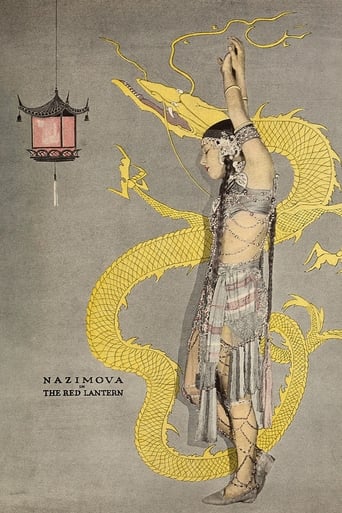
Wong was fourteen years old and had no professional acting experience when she appeared as an uncredited extra carrying a lantern in this melodrama starring Alla Nazimova. The film itself is a dated curiosity about half-sisters in the Boxer Rebellion, but Wong's presence in it marks the beginning of one of the most important careers in American cinema. She had been haunting the film sets near her father's laundry in Los Angeles for years, and when the casting call went out for Chinese extras, she seized the opportunity. Within four years she would have her first leading role. The speed of her ascent, in an industry that had almost no place for her, speaks to the force of her talent.
Outside the Law
1921 · Tod Browning
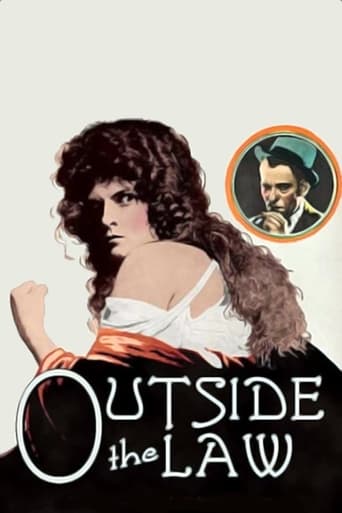
Wong's role in this Tod Browning crime film is small, but it places her, at age sixteen, alongside Lon Chaney in a major studio production. Browning's San Francisco Chinatown setting is built from the usual stereotypes of the period, and Wong's appearance is brief. But the film matters in the trajectory of her career because it shows how quickly she moved from uncredited extra work to credited roles in films with recognizable stars. She was learning the craft of screen acting in real time, studying the techniques of performers like Chaney and Priscilla Dean while navigating an industry that saw her primarily as an exotic background presence.
The Toll of the Sea
1923 · Chester M. Franklin
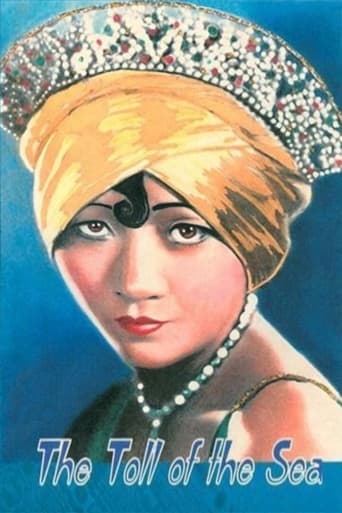
Wong's first leading role, and a film of genuine historical significance: it was the first feature shot entirely in two-strip Technicolor, and the early color process gives the film a painterly quality that enhances its emotional effect. Wong plays Lotus Flower, a Chinese woman who rescues and falls in love with an American sailor, only to be abandoned when he returns home with a white wife. The story is a transposed Madame Butterfly, and its racial politics are exactly what you would expect from 1923. But Wong's performance transcends the material. She was seventeen years old, and she commands the screen with a subtlety and emotional depth that established her as a serious actress.
Drifting
1923 · Tod Browning
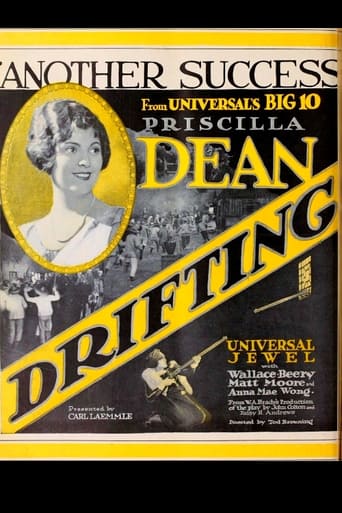
Wong's second film with Tod Browning is set in a Hollywood version of Shanghai, complete with opium dens and underworld intrigue. Her role is supporting, but she makes the most of her screen time. The film is notable less for its quality than for what it reveals about the roles available to Wong at this stage of her career: she is already being cast as an exotic figure in melodramas that treat Asian settings as backdrops for white protagonists' stories. It was a pattern that would define and constrain her Hollywood career for the next decade, and one she would eventually leave the country to escape.
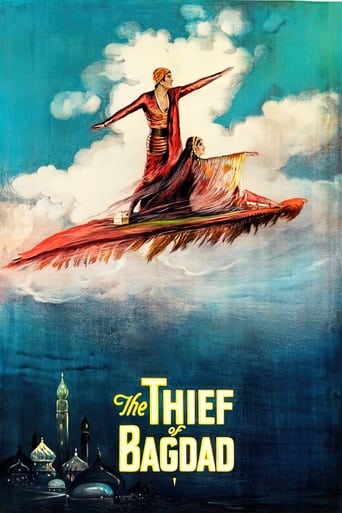
The Thief of Bagdad
1924 · Raoul Walsh
Douglas Fairbanks' lavish fantasy adventure gave Wong one of her most memorable early roles as the treacherous Mongol slave who aids the villain's plot against the Caliph of Bagdad. The production was one of the most expensive of the silent era, with enormous sets designed by William Cameron Menzies, and Wong holds her own in the spectacle. She is magnetic in every frame she occupies, even though her role requires her to be duplicitous and ultimately punished. The film was a worldwide hit, and Wong's performance brought her international attention. It also established a frustrating template: she was too talented to ignore, so Hollywood cast her as the beautiful villain instead.
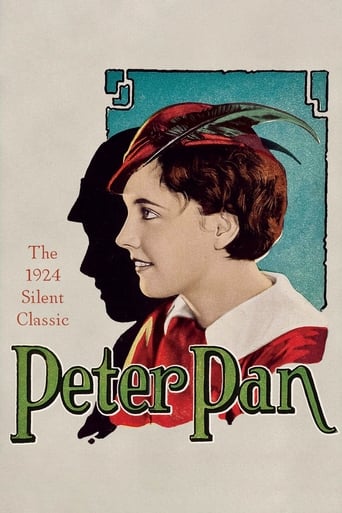
Peter Pan
1924 · Herbert Brenon
Herbert Brenon's adaptation of J.M. Barrie's play cast Wong as Tiger Lily, the Native American princess in Neverland. The racial dynamics are uncomfortable by any modern standard, but Wong brings a physical grace and a watchful intelligence to the role that distinguishes her from the pantomime surrounding her. She was nineteen, already a recognizable name, and the casting reflects her peculiar position in Hollywood: famous enough to be given named roles in major productions, but only in parts defined by her ethnicity. Peter Pan was a commercial success and kept Wong visible, even as the industry continued to limit what that visibility could mean.

Old San Francisco
1927 · Alan Crosland
Alan Crosland's pre-earthquake San Francisco melodrama is remembered primarily as a technical milestone: it was one of the first films to use the Vitaphone sound system for its score and effects. Wong's role is a supporting part that leans on the usual stereotypes. But her screen time, however limited, demonstrates why she kept getting cast: her face, her timing, and her physical presence consistently draw the eye away from whatever else is happening in the frame. By 1927, Wong was growing increasingly frustrated with the roles Hollywood offered her. Within a year, she would leave for Europe.
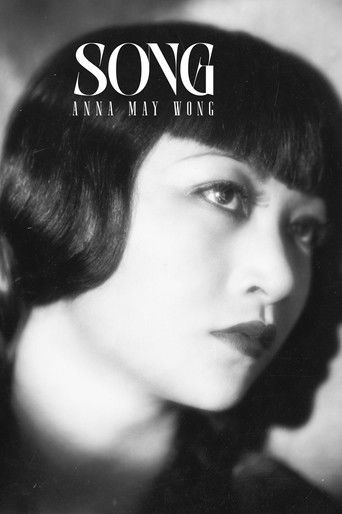
Song
1928 · Richard Eichberg
Wong's first European film, made in Germany with director Richard Eichberg, represents a turning point in her career. For the first time, she was treated as a genuine star rather than an exotic supporting player. Eichberg built the film around her, giving her a complex leading role as a dancer caught in a web of jealousy and murder. The European film industry, while hardly free of racial prejudice, did not operate under the same anti-miscegenation codes that governed Hollywood, and Wong was finally able to play romantic leads. The difference in her performance is visible: freed from the constraints of American casting, she relaxes into a confidence and sensuality that her Hollywood roles had never permitted.
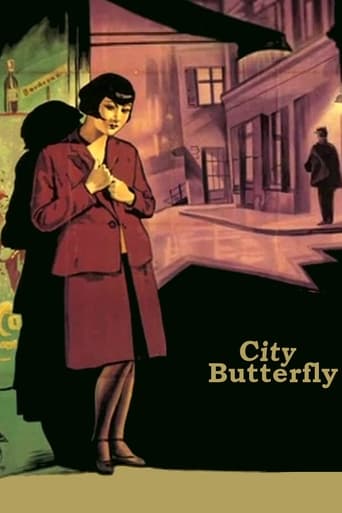
Pavement Butterfly
1929 · Richard Eichberg
Wong's second collaboration with Eichberg finds her playing a Parisian fan dancer whose staged "death act" blurs the line between performance and reality. The film is a melodrama, but it gives Wong the kind of role she rarely received in America: a woman whose desires and choices drive the plot, rather than a decorative figure defined entirely by her ethnicity. Her dance sequences are remarkable, combining athleticism with a theatricality that reveals how much Wong understood about the relationship between her body and the camera. The European period, spanning 1928 to 1930, was the happiest and most artistically fulfilling stretch of her career.
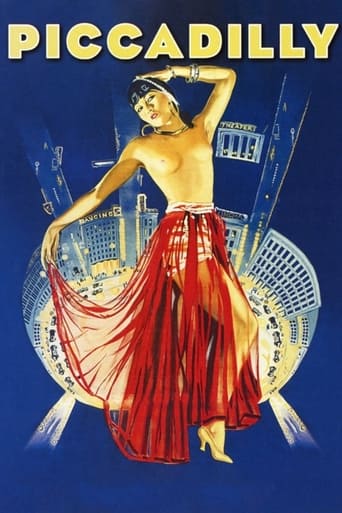
Piccadilly
1929 · E.A. Dupont
The finest film of Wong's career, and one of the great performances of the late silent era. She plays Shosho, a scullery maid at a London nightclub who is promoted to headlining dancer and becomes the object of the owner's obsessive desire. E.A. Dupont gives Wong the screen time and dramatic weight she deserves, and she repays him with a performance of extraordinary precision: watchful, self-possessed, and charged with a quiet authority that makes the white characters around her seem clumsy by comparison. The film engages directly with the racial dynamics of desire, showing how Shosho's ethnicity makes her simultaneously irresistible and disposable. It is the closest thing to a definitive Wong performance that exists.
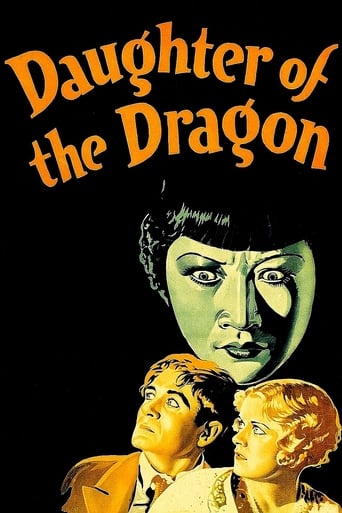
Daughter of the Dragon
1931 · Lloyd Corrigan
Wong returned to Hollywood in 1930, hoping that her European success would translate into better American roles. It did not. Daughter of the Dragon cast her as the daughter of Fu Manchu, the embodiment of every Yellow Peril stereotype that Hollywood had spent decades refining. Wong reportedly hated the role, and her frustration is almost visible on screen: she delivers her lines with a precision that borders on contempt for the material. The film is worth watching not for its plot, which is lurid nonsense, but as a document of what Hollywood was willing to do with one of the most talented actresses of her generation. It is a depressing film, and it was meant to be entertainment.
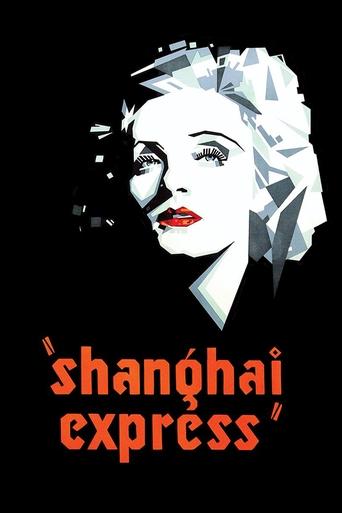
Shanghai Express
1932 · Josef von Sternberg
Josef von Sternberg's visually ravishing thriller aboard a train in civil-war-era China gave Wong her best Hollywood role: Hui Fei, a courtesan of fierce dignity who ultimately saves the other passengers through an act of self-sacrifice. Marlene Dietrich receives top billing as Shanghai Lily, but Wong matches her scene for scene. The two women share a mutual respect on screen that is rare in films of this period, and Sternberg photographs Wong with the same care and glamour he lavishes on Dietrich. The film was a massive hit. It also represented the ceiling of what Hollywood would allow Wong to do: even in her finest American role, she is supporting, sacrificial, and denied a romantic future.
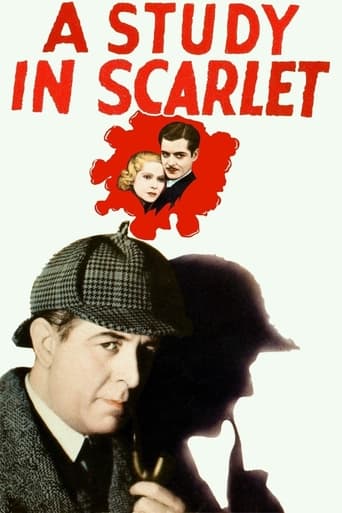
A Study in Scarlet
1933 · Edwin L. Marin
Wong appears in a supporting role in this low-budget Sherlock Holmes adaptation that bears little resemblance to Arthur Conan Doyle's original story. The film is a curiosity, notable primarily for Wong's presence in a cast that includes Reginald Owen as Holmes. By 1933, Wong's Hollywood career had settled into a dispiriting pattern of small roles in minor films, a waste of talent that she recognized and resented. She would continue working in film and television for the rest of her life, but the promise of her European stardom and her extraordinary work in Piccadilly would never be matched by the roles America offered her. The gap between what she could do and what she was allowed to do remains one of cinema's great injustices.