Passion and Desire
Silent cinema understood desire better than most of what came after it. Without dialogue to explain away emotion, filmmakers had to find visual equivalents for longing, obsession, jealousy, and the reckless surrender of falling in love. The results were often more honest than words could have been. A lingering close-up of Greta Garbo's face in Flesh and the Devil communicates more about erotic power than any line of dialogue. The way Murnau's camera follows a couple through a crowded city in Sunrise captures the feeling of being so absorbed in another person that the rest of the world literally dissolves. The films in this collection explore the full range of what desire does to people. Some of these stories are tender, even hopeful: two lonely strangers meeting at Coney Island, a waterfront drifter rescuing a woman from the harbor. Others are brutal: a husband's greed consuming a marriage from the inside, a young woman ground down by the institutions that claim to protect her. What connects them is a refusal to simplify. These filmmakers understood that passion is rarely pure, that love and destruction often share a border, and that the most interesting stories live in that uncertain territory. Taken together, these twenty films also represent a remarkable diversity of national perspectives on desire. Swedish restraint, German obsession, Soviet pragmatism, Hollywood glamour, and Weimar-era frankness about sexuality all appear here, each bringing a distinct sensibility to the universal subject of what happens when people want what they cannot easily have.
20 films
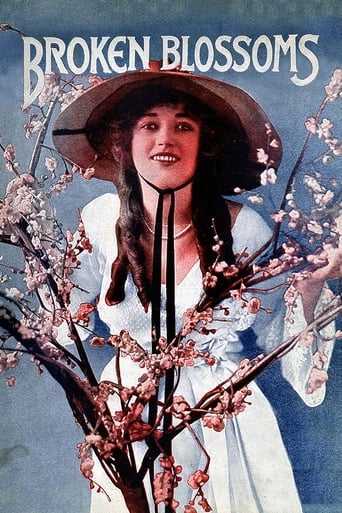
Broken Blossoms
1919 · D.W. Griffith
D.W. Griffith's film about a gentle Chinese immigrant and an abused English girl in London's Limehouse district is one of the most emotionally devastating works of the silent era. Richard Barthelmess plays the Cheng Huan with a tenderness that transcends the yellowface casting, and Lillian Gish's performance as the brutalized Lucy is almost unbearable to watch. The love between them is never consummated, barely even spoken; it exists in gestures, glances, and the fragile safety of a small decorated room. Griffith films their scenes together with a softness he rarely showed elsewhere. The ending is shattering precisely because the film has made you believe so completely in the possibility of this connection.
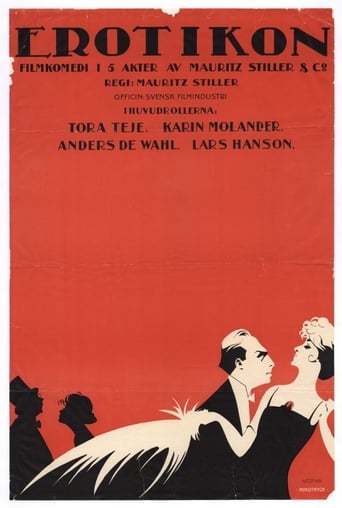
Erotikon
1920 · Mauritz Stiller
Mauritz Stiller essentially invented the sophisticated sex comedy with this film about a married entomologist whose wife is having an affair with a sculptor, while the entomologist himself is infatuated with his niece. The plot sounds like a bedroom farce, and it is, but Stiller treats the material with a lightness and psychological intelligence that was revolutionary. The film's attitude toward adultery is neither moralizing nor cynical; it simply observes how educated people negotiate desire when the rules prove inadequate. Ernst Lubitsch saw Erotikon and openly acknowledged that it changed his approach to comedy. The entire tradition of romantic sophistication in cinema flows from here.
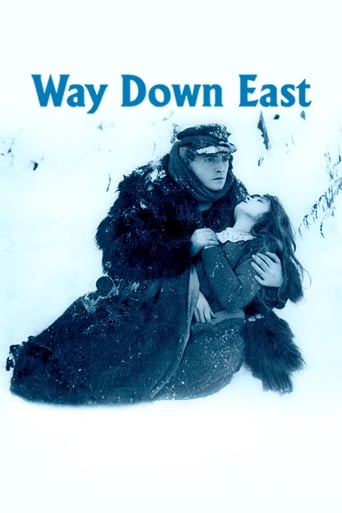
Way Down East
1920 · D.W. Griffith
A young woman is tricked into a false marriage, abandoned when she becomes pregnant, and then cast out by the respectable community that discovers her past. Griffith's melodrama of seduction and punishment is powered by one of Lillian Gish's greatest performances and by the famous ice-floe climax, which remains one of the most physically daring sequences in silent cinema. But the film's real force comes from its sustained fury at the hypocrisy of a society that punishes the deceived woman while the deceiver walks free. The moral framework is Victorian, but the anger is timeless.
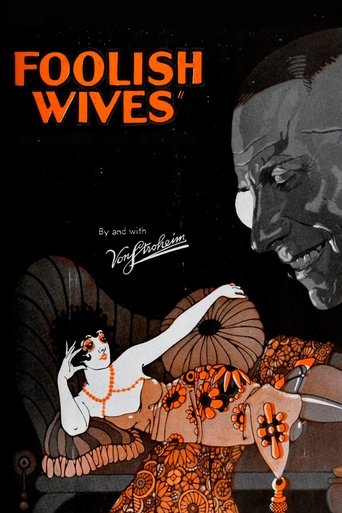
Foolish Wives
1922 · Erich von Stroheim
Erich von Stroheim cast himself as a fraudulent Russian count prowling the Riviera for wealthy women to seduce and swindle. The film is a study in the mechanics of desire as manipulation: how charm operates, how vanity creates vulnerability, how the performance of sophistication becomes indistinguishable from the real thing. Von Stroheim spent lavishly on sets and costumes, building a Monte Carlo of extraordinary detail, because he understood that the con artist's world must look convincing in order for the con to work. Universal executives were horrified by the budget and the sexual content. The film was a scandal and a sensation.

A Woman of Paris: A Drama of Fate
1923 · Charlie Chaplin
Chaplin made no comedies for this film. A Woman of Paris is a straight drama about a kept woman in Paris who must choose between her wealthy protector and the struggling artist she once loved. The tone is cool, observant, and remarkably modern in its refusal to judge anyone. Adolphe Menjou's performance as the charming, casually cruel benefactor is a masterclass in understatement. Chaplin directed with a sophistication that surprised audiences expecting the Tramp, using small details and implied emotions rather than broad gestures. The film was not a commercial success, but it influenced nearly every filmmaker who saw it, Lubitsch and Pabst among them.
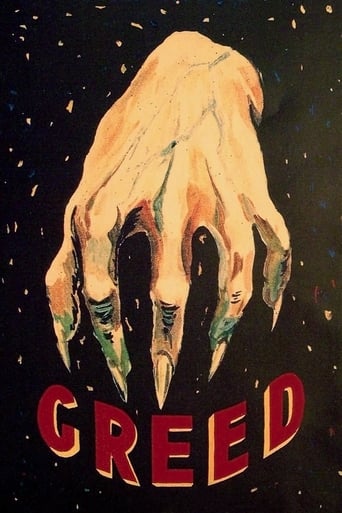
Greed
1924 · Erich von Stroheim
Von Stroheim's masterpiece, butchered from nine hours to two by the studio, survives as a magnificent ruin. The story follows a San Francisco dentist, his wife, and the lottery winnings that poison their marriage. Desire in Greed is not romantic; it is the desire for gold, for security, for possession, and it consumes everything it touches. The final sequence in Death Valley, two men handcuffed together under a merciless sun, is one of cinema's most powerful images of what happens when wanting becomes a sickness. Even in its truncated form, the film's ambition and ferocity are overwhelming.
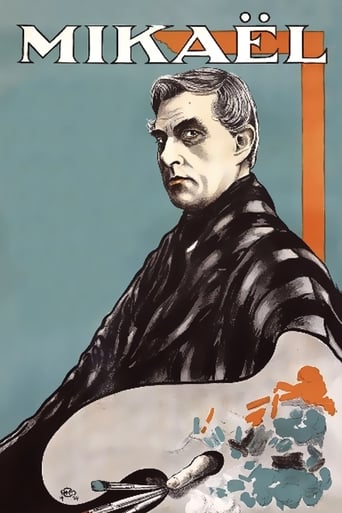
Michael
1924 · Carl Theodor Dreyer
Carl Theodor Dreyer's adaptation of Herman Bang's novel is one of the earliest sympathetic depictions of same-sex desire in cinema. An aging painter falls in love with his young male model, and the film treats this love not as pathology but as genuine devotion, rendered tragic by the model's indifference and eventual betrayal. Dreyer's approach is characteristically restrained; the emotion is communicated through composition, through the way the camera observes the painter watching the young man, rather than through any explicit declaration. The film's quiet dignity makes its heartbreak all the more affecting.
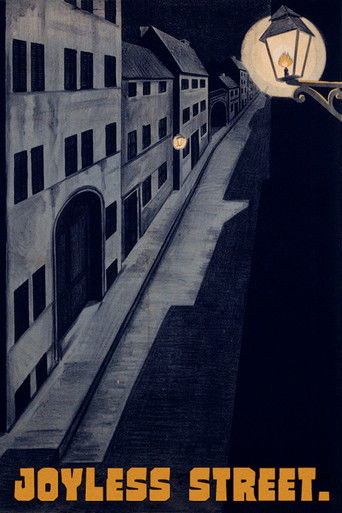
Joyless Street
1925 · G.W. Pabst
G.W. Pabst's portrait of post-war Vienna follows two women, one from the middle class and one from the working class, as economic desperation pushes them toward prostitution and exploitation. The film is unflinching about the connection between poverty and sexual vulnerability, showing how desire operates differently depending on which side of the economic divide you stand on. Greta Garbo and Asta Nielsen both appear, and their contrasting performances embody the film's argument: that beauty can be either a lifeline or a trap, depending on circumstances no individual can control.
Variety
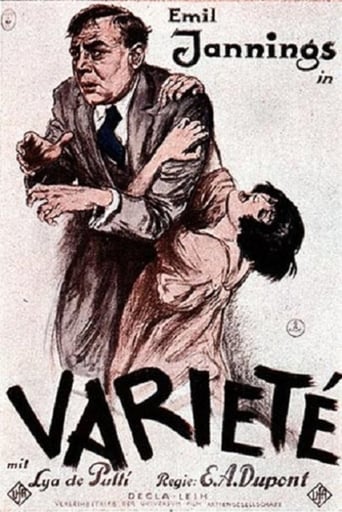
1925 · E.A. Dupont
E.A. Dupont's film about a trapeze artist, his wife, and the younger acrobat who comes between them is one of the most viscerally intense films of the Weimar era. Emil Jannings plays the older performer with a jealousy so physical it seems to radiate from his body. The circus setting allows Dupont to literalize the stakes of desire: every performance is a potential fall, every act of trust a risk of death. Karl Freund's camera, famously strapped to a trapeze for the aerial sequences, makes the audience feel the vertigo. The film was an international sensation and one of the key influences on Hollywood's visual style.

Flesh and the Devil
1926 · Clarence Brown
The film that made Greta Garbo an American star, and the one that established her screen persona as an object of irresistible, almost dangerous desire. Garbo plays a woman who comes between two lifelong friends, and Clarence Brown films her love scenes with John Gilbert using a frankness that pushed the boundaries of what 1926 audiences expected. The famous communion scene, in which Garbo turns the shared chalice to drink from the same spot Gilbert's lips touched, is one of the most erotically charged moments in silent cinema. MGM had found its most valuable property.
The Scarlet Letter
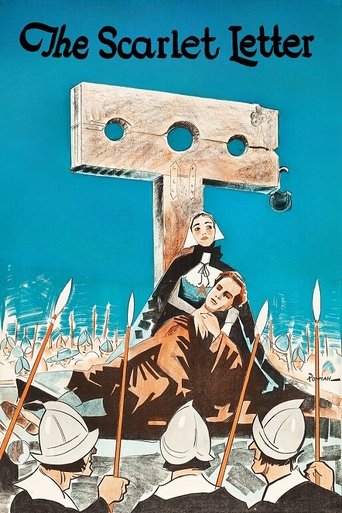
1927 · Victor Sjöström
Victor Sjöström's adaptation of Hawthorne's novel casts Lillian Gish as Hester Prynne, forced to wear the scarlet letter A for her adulterous affair with the town minister. The film is a study in the social punishment of female desire: Hester is shamed, isolated, and surveilled by a community that treats her sexuality as a civic threat. Sjöström, working far from his native Sweden, brings a Scandinavian gravity to the material that deepens it beyond melodrama. Gish's performance refuses to make Hester either a martyr or a penitent; she is simply a woman who loved and will not pretend otherwise.
Sunrise: A Song of Two Humans
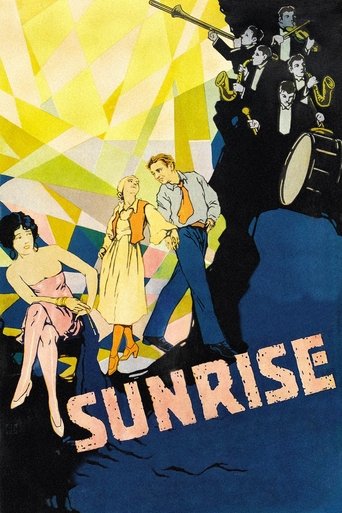
1927 · F. W. Murnau
Murnau's first American film is, by near-universal consensus, one of the greatest films ever made, and it is fundamentally a love story. A farmer, tempted by a woman from the city, nearly drowns his wife; the rest of the film follows the couple as they rediscover each other in a single day. The sequence in which they walk through traffic, oblivious to the cars swerving around them, is cinema's purest expression of what it feels like to be so consumed by another person that the world ceases to matter. Murnau's moving camera, Karl Struss's luminous photography, and the performances of George O'Brien and Janet Gaynor create something that transcends its era entirely.
Bed and Sofa
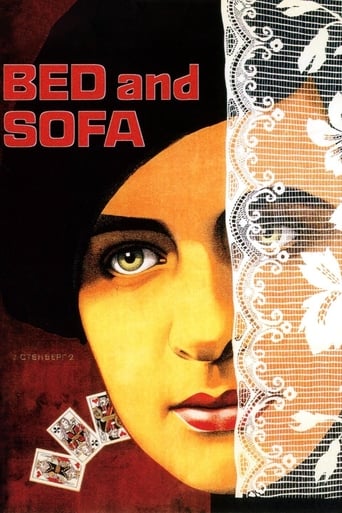
1927 · Abram Room
Abram Room's Soviet drama follows a husband, a wife, and the lodger who moves into their cramped Moscow apartment, and the ménage à trois that develops with startling matter-of-factness. The film treats its love triangle not as scandal but as a natural consequence of inadequate housing and evolving social mores. What makes it remarkable is its honesty about female desire: Ludmila, the wife, is not a victim or a vamp but a woman making rational choices about her own satisfaction. Soviet censors eventually suppressed the film, uncomfortable with its implications. Nearly a century later, its candor about the relationship between intimacy and living conditions remains striking.
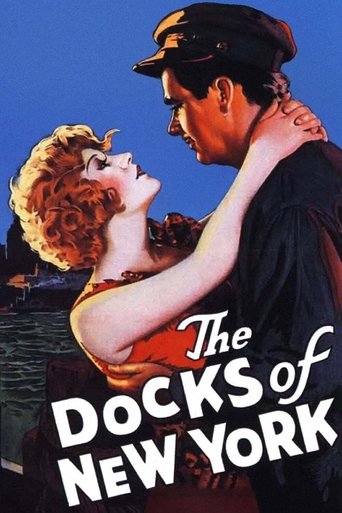
The Docks of New York
1928 · Josef von Sternberg
Josef von Sternberg's waterfront romance follows a stoker who fishes a suicidal woman out of New York harbor and marries her on impulse. The entire film takes place over a single night, and Sternberg fills that night with fog, lamplight, and a tenderness that cuts against the roughness of the setting. George Bancroft and Betty Compson play people who have been damaged by life and are not particularly articulate about their feelings, which makes the moments of genuine connection between them all the more moving. The final act, in which the stoker must decide whether his impulsive act of kindness was real, is quietly devastating.
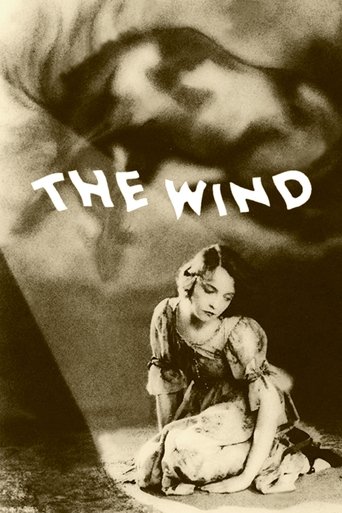
The Wind
1928 · Victor Sjöström
Victor Sjöström directed Lillian Gish in this adaptation of Dorothy Scarborough's novel about a Virginia woman who marries a man she does not love and moves to the desolate Texas plains. The wind never stops blowing. It fills the house with sand, drives the cattle mad, and slowly strips away Letitia's composure until the film's climax, one of the most harrowing in silent cinema. The wind functions as an externalization of desire itself: relentless, indifferent to human comfort, impossible to shut out. MGM forced a happy ending; even with it, the film is one of the most psychologically intense works of the late silent era.

Lonesome
1928 · Pál Fejős
Pál Fejős's film follows two lonely people in New York City who meet at Coney Island, spend a magical afternoon together, and lose each other in the crowd. The premise is simple, but Fejős executes it with extraordinary visual imagination, using split screens, superimpositions, and location shooting to capture the overwhelming scale of the city and the smallness of two people trying to find each other within it. Lonesome is the gentlest film in this collection. Where the other entries explore desire's capacity to destroy, Fejős is interested in something more fragile: the courage it takes to reach toward another person when you have no guarantee they will reach back.
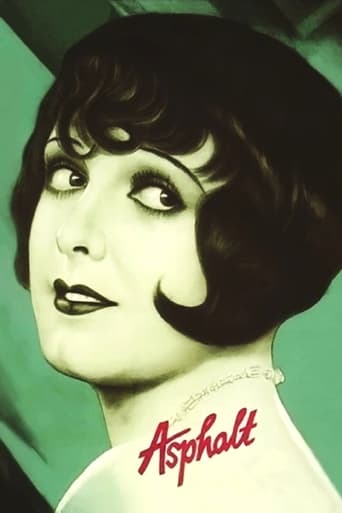
Asphalt
1929 · Joe May
Joe May's late Weimar film follows a young policeman who falls for a jewel thief and finds his moral certainty dissolving in the face of desire. The Berlin streets, shot with gleaming wet surfaces and pools of electric light, become a landscape of temptation. The film is less well known than the other entries here, but its visual sophistication is exceptional, and its central question is timeless: what happens when the person you want stands on the other side of every boundary you have been taught to respect? The ending is conventional, but the journey to it is not.
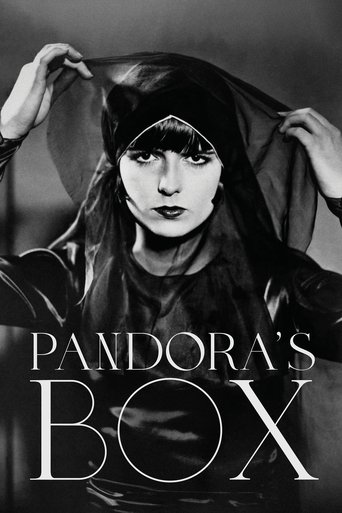
Pandora's Box
1929 · G.W. Pabst
Louise Brooks as Lulu is the most magnetic screen presence in all of silent cinema. Pabst's adaptation of Wedekind's plays follows a woman whose sexual vitality attracts and destroys every man who comes near her, and Brooks plays the role without a trace of calculation or malice. Lulu does not seduce; she simply exists, and the world around her cannot handle it. The film's trajectory, from the glamour of a Berlin revue to a squalid garret in London, is pitiless. Pabst refuses to moralize, and Brooks refuses to apologize. The result is a portrait of desire as an elemental force that neither the desirer nor the desired can control.
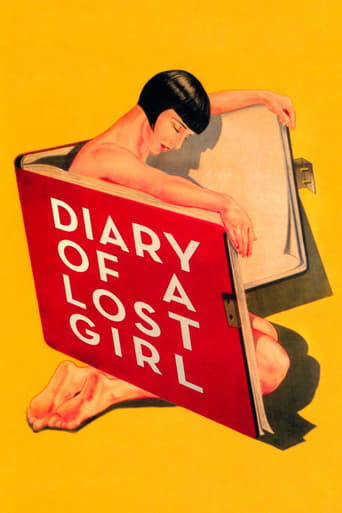
Diary of a Lost Girl
1929 · G.W. Pabst
Pabst's second collaboration with Louise Brooks is, in some ways, even more devastating than Pandora's Box. A young woman from a respectable family is seduced, abandoned, sent to a brutally repressive reformatory, and eventually driven to prostitution. The institutions that claim to protect her, the family, the school, the church, are revealed as mechanisms of control designed to punish female desire rather than address its causes. Brooks brings the same luminous presence she had in Pandora's Box, but Thymian is a different character: not a force of nature but a person systematically ground down. The film's anger at institutional hypocrisy is controlled and devastating.
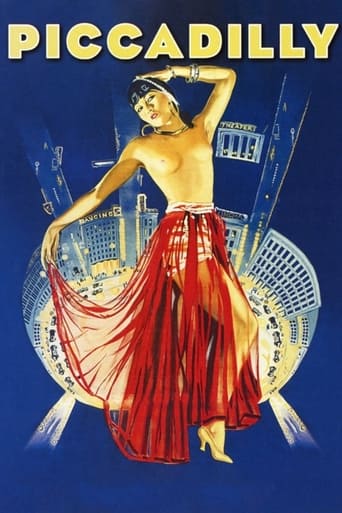
Piccadilly
1929 · E.A. Dupont
E.A. Dupont's London-set thriller follows the rise of Shosho, a Chinese scullery maid who becomes a nightclub sensation and the object of two men's desire. Anna May Wong's performance is extraordinary: watchful, precise, and charged with a self-possession that the other characters find both irresistible and threatening. The film is unusually frank about the racial dynamics of desire, showing how Shosho's ethnicity makes her simultaneously exotic and disposable in the eyes of the white men who pursue her. The nightclub sequences are visually stunning. Piccadilly is both a compelling thriller and one of the sharpest interrogations of who is permitted to desire whom.