
Scandinavian Realism
Before Hollywood consolidated its dominance, before German Expressionism made its mark, the most artistically advanced cinema in the world was coming out of Sweden and Denmark. Between roughly 1913 and 1924, Scandinavian filmmakers developed something no other national cinema had attempted: a form of screen storytelling rooted in landscape, natural light, and a moral seriousness inherited from Ibsen and Strindberg. Where other cinemas built sets, the Scandinavians went outside. Mountains, frozen lakes, coastal storms, and endless northern light became not just settings but active participants in the drama, externalizing the psychological states of characters who were themselves drawn with a novelistic complexity that was years ahead of the rest of the world. The three towering figures are Victor Sjöström, Mauritz Stiller, and Carl Theodor Dreyer. Sjöström was the movement's conscience, a director-actor whose films about guilt, redemption, and the crushing weight of nature remain overwhelming a century later. Stiller was its sophisticate, equally capable of sweeping literary adaptation and razor-sharp social comedy. Dreyer, the Dane, was its radical, stripping cinema down to essentials with an austerity that only grew more uncompromising as the decades passed. Around them worked a constellation of less famous but equally interesting filmmakers: Benjamin Christensen, whose Häxan remains unlike anything else ever made; Karin Swanström, one of the era's rare female directors; and Per Lindberg, who brought a sharp urban sensibility to a tradition dominated by rural landscapes. The golden age ended when Hollywood came calling. Sjöström and Stiller both left for America in the mid-1920s, taking Greta Garbo with them. Dreyer continued working in Europe on his own uncompromising terms. But the sensibility they forged never disappeared. It resurfaces in Bergman, in Tarkovsky, in every film that trusts landscape and silence to carry the emotional weight that dialogue cannot.
17 films
From the Reading Room
- ↗READ12 NOV 2025
Song of the Scarlet Flower— Imogen Sara Smith
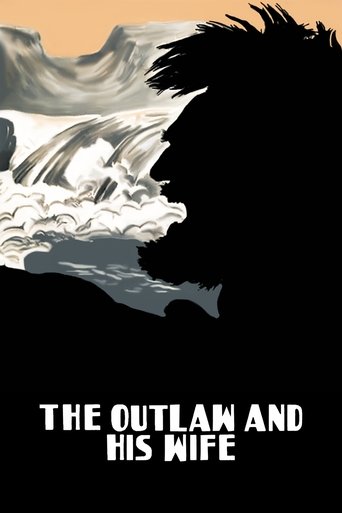
The Outlaw and His Wife
1918 · Victor Sjöström
The film that announced Scandinavian cinema to the world. Sjöström plays a fugitive who flees into the Icelandic highlands with the woman who loves him, and the two build a life together in a landscape so vast and indifferent that it reduces human drama to its bare essentials. What sets it apart from everything else being made in 1918 is the location shooting: real mountains, real snow, real weather, all photographed with a patience that makes the landscape feel like a character with its own intentions. The final sequence, in which the couple faces death in a blizzard, is devastating precisely because the film has spent so long establishing the beauty and cruelty of the world that will kill them. This is the template for everything that follows in this collection.
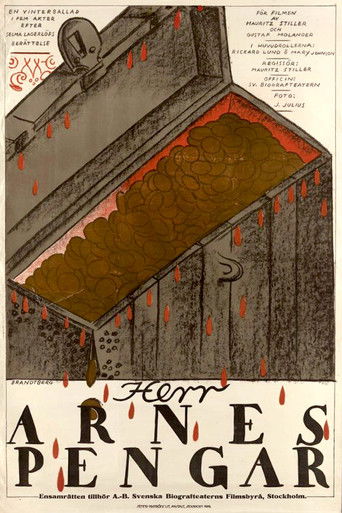
Sir Arne's Treasure
1919 · Mauritz Stiller
Stiller's adaptation of Selma Lagerlöf's novella is set in sixteenth-century Sweden, and it moves with the gravity and visual splendor of a saga. Three Scottish mercenaries murder a priest and his household for their treasure, then become trapped by the frozen sea as guilt closes in. The ice sequences are extraordinary: Stiller filmed on real frozen harbors, and the images of the funeral procession moving across the ice have a stark, monumental beauty that anticipates Bergman by decades. Where Sjöström's landscapes are wild and psychological, Stiller's are composed and painterly, and Sir Arne's Treasure is the purest expression of his gift for turning historical material into something that feels timeless.
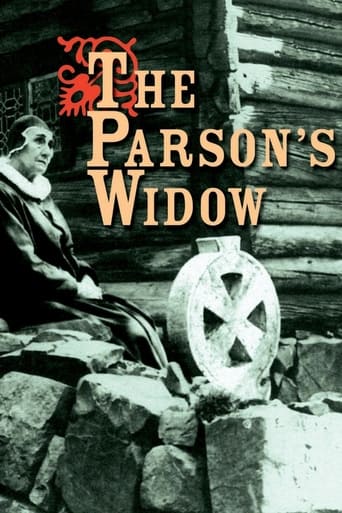
The Parson's Widow
1920 · Carl Theodor Dreyer
A revelation for anyone who thinks of Dreyer only as the austere master of suffering. His third film is a broad, earthy comedy set in rural Norway: a young theology student wins a parish but must marry the ancient widow of the previous parson as a condition of the appointment. It's genuinely funny, filmed entirely on location in a seventeenth-century Norwegian farmstead, and animated by an affection for its characters that Dreyer's later reputation for severity tends to obscure. The naturalistic detail is remarkable. You can practically smell the hay and the woodsmoke. It's the most likeable film Dreyer ever made, and it demonstrates that his famous austerity was a choice, not a limitation.
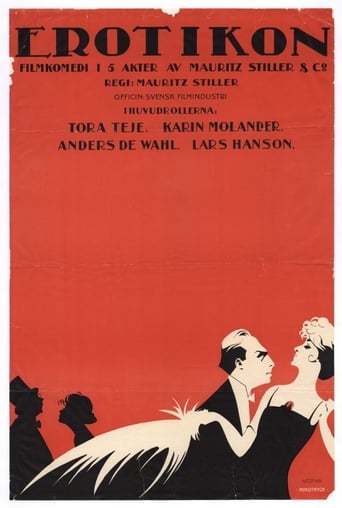
Erotikon
1920 · Mauritz Stiller
Stiller essentially invented the sophisticated screen comedy with this film, and Lubitsch, who saw it in Berlin, freely admitted the debt. A professor is obliviously devoted to his entomological research while his wife conducts two simultaneous affairs under his nose, and the whole thing is played with a lightness and ironic detachment that was completely new in cinema. No moralizing, no melodrama, no punishment for the adulterous wife. Just adults behaving as adults do, observed with amusement rather than judgment. The influence was enormous: Erotikon gave Hollywood the template for the comedy of manners, and the "Lubitsch touch" is, in significant part, a Stiller inheritance.

Leaves from Satan's Book
1920 · Carl Theodor Dreyer
Dreyer's second feature borrows its structure from Griffith's Intolerance, telling four stories of temptation across different historical periods: the betrayal of Christ, the Spanish Inquisition, the French Revolution, and the Finnish Civil War. The Griffith influence is unmistakable, but Dreyer's sensibility is already distinct. Where Griffith is grandiose and emotional, Dreyer is precise and psychological, more interested in the mechanism of moral failure than in its spectacle. The film is uneven (the contemporary Finnish episode is the strongest), but it's essential viewing as a map of Dreyer's developing concerns: the collision between institutional authority and individual conscience that would reach its supreme expression in Joan of Arc.
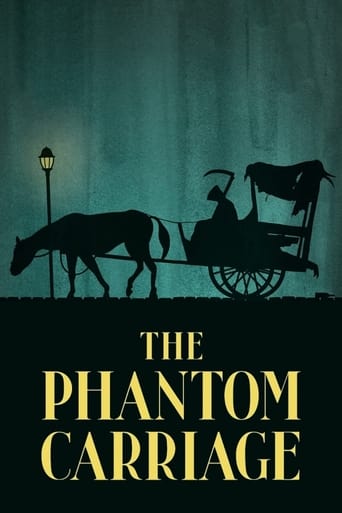
The Phantom Carriage
1921 · Victor Sjöström
The masterpiece of Scandinavian silent cinema, and one of the greatest films ever made in any tradition. The premise is folkloric: the last person to die on New Year's Eve must drive Death's carriage for the following year. But Sjöström uses this supernatural framework to tell a brutally honest story about alcoholism, domestic destruction, and the possibility (or impossibility) of redemption. The double-exposure photography, which places transparent ghosts in the real world, was the most sophisticated visual effect anyone had achieved, and Sjöström uses it not for spectacle but for emotional devastation. The film's nonlinear structure, moving fluidly between past and present, influenced Bergman profoundly (he called it the film that shaped his life). Sjöström himself plays the protagonist, and his performance is as physically committed and morally unsparing as anything in the history of cinema.
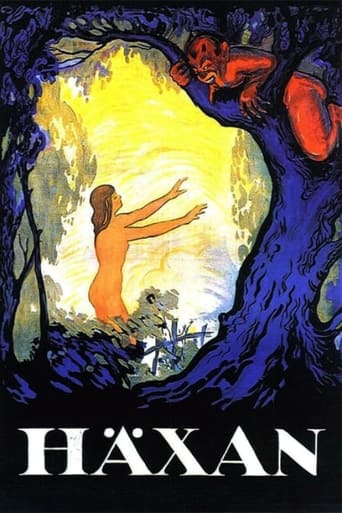
Häxan
1922 · Benjamin Christensen
There is nothing else like this in all of cinema. Christensen spent years researching the history of witchcraft and produced something that defies every category: part illustrated lecture with scholarly intertitles, part dramatic recreation of medieval witch trials, part surrealist horror film with demons, sabbaths, and torture rendered in gruesome detail. Christensen himself plays the Devil, with evident relish. The film's thesis, that medieval witchcraft accusations were the persecution of mental illness and female sexuality, was radical for 1922, and the images Christensen created to argue it are indelible. It was banned in several countries, embraced by the Surrealists, and remains completely sui generis. No one has ever attempted anything like it again, which is probably wise.
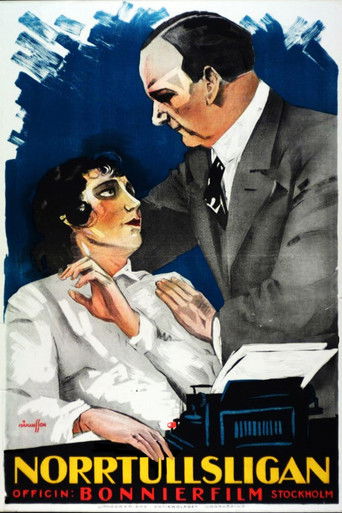
The Norrtull Gang
1923 · Per Lindberg
Lindberg's comedy offers a valuable counterpoint to the collection's prevailing tone of moral gravity. Four young working women in Stockholm navigate jobs, romance, and limited prospects with a cheerful pragmatism that gives the film an almost documentary texture of urban Swedish life in the 1920s. It's lighter fare than Sjöström or Dreyer, but that lightness is the point: Scandinavian cinema was not exclusively a cinema of brooding landscapes and existential weight. It also produced sharp, affectionate portraits of ordinary people getting by. The film captures a social world (young women with economic independence but constrained choices) that the more celebrated filmmakers tended to overlook.
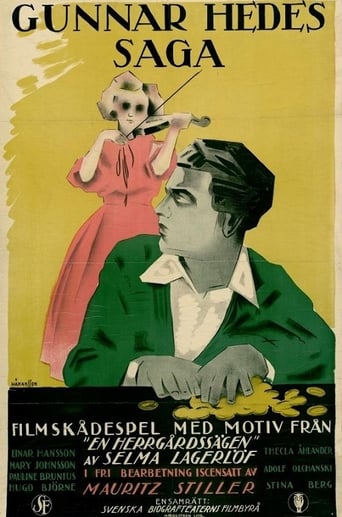
Gunnar Hede's Saga
1923 · Mauritz Stiller
Another Selma Lagerlöf adaptation from Stiller, and one of his most visually striking films. A young man inherits a Lapland estate, suffers a trauma that shatters his sanity, and wanders the countryside as a fiddler while the woman who loves him searches for a way to restore his mind. The reindeer stampede that triggers his breakdown is a remarkable piece of location filmmaking, and the scenes of his madness have a poetic intensity that anticipates the psychological landscapes of Bergman. Stiller's gift for integrating real Nordic environments with internal emotional states is on full display. It's also, beneath the surface drama, a film about the collision between modernity and the mythic rural world that Scandinavian cinema kept returning to.
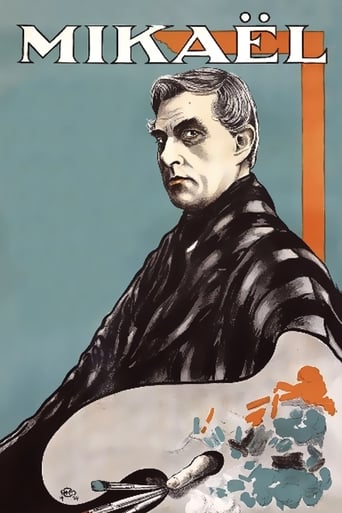
Michael
1924 · Carl Theodor Dreyer
Dreyer's first film made outside Scandinavia (it was produced in Germany with a German cast), and one of the earliest serious depictions of homosexual love in cinema. An aging painter is consumed by his devotion to his young male model, who gradually drifts away toward a woman and a more conventional life. Dreyer films this triangle with his characteristic refusal to moralize or sentimentalize: the painter's love is presented as genuine and dignified, his suffering as real, and the film's emotional sympathies are entirely with him. The art direction (by Hugo Häring) is sumptuous, the performances are nuanced, and the final scene, in which the painter dies with the words "Now I can die content, for I have known a great love," is handled with a restraint that makes it unbearably moving.

The Saga of Gösta Berling
1924 · Mauritz Stiller
Stiller's last great Swedish film before his departure for Hollywood, and the film that introduced Greta Garbo to the world. Adapted from Selma Lagerlöf's epic novel about a defrocked priest who falls in with a band of dissolute cavaliers on a country estate, it's Stiller's most ambitious production: sprawling, visually magnificent, and populated with characters whose appetites and failures feel genuinely novelistic. Garbo, in her first major role, already has the quality that would make her the biggest star in the world: a face that the camera seems to understand better than any human observer could. Stiller saw it before anyone else. MGM's Louis B. Mayer came to Sweden for Stiller and got Garbo as part of the deal. It was the most consequential casting accident of the twentieth century.
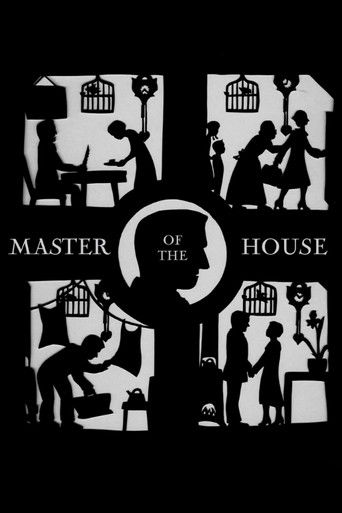
Master of the House
1925 · Carl Theodor Dreyer
A petty domestic tyrant bullies his wife into a breakdown, and his elderly former nanny moves in to teach him a lesson. That's the entire plot, and Dreyer turns it into one of the most technically accomplished films of the 1920s. The apartment set was built with removable walls so the camera could move through it with unprecedented fluidity, and Dreyer's attention to domestic detail (dishes, laundry, the small humiliations of household labor) gives the film an almost ethnographic precision. It's his most accessible work, warm where Joan of Arc is austere, funny where Vampyr is terrifying. It also happens to be a devastating feminist argument, made with such apparent simplicity that it's easy to miss how radical it is.
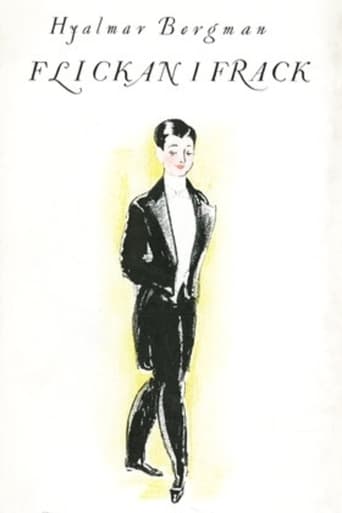
The Girl in Tails
1926 · Karin Swanström
Swanström was one of the very few women directing feature films anywhere in the 1920s, and this gender-bending comedy is her most interesting work. A young woman disguises herself as a man to navigate Stockholm's social scene, and the film plays the resulting confusions with a deftness that suggests genuine interest in the fluidity of gender performance rather than mere comic convenience. It's a slight film compared to the heavyweights in this collection, but its perspective is irreplaceable: a woman behind the camera in an era when that was extraordinarily rare, making a film about what happens when the rules governing how men and women are supposed to behave turn out to be costumes that anyone can put on.
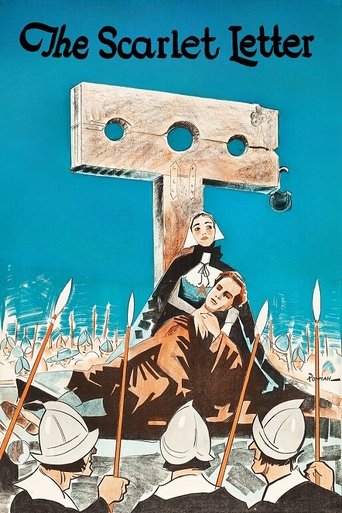
The Scarlet Letter
1927 · Victor Sjöström
Sjöström's Hollywood adaptation of Hawthorne's novel is the clearest proof that the Scandinavian sensibility survived the transatlantic crossing. Lillian Gish's Hester Prynne is a performance of extraordinary interior complexity, and Sjöström frames her against the Puritan community with the same attention to the relationship between individual and environment that characterized his Swedish films. The difference is that the oppressive force is no longer the natural landscape but the social landscape: the rigid moral architecture of the colony, which functions as a kind of man-made weather. Sjöström understood Hawthorne instinctively, because the Puritan dilemma (the individual conscience trapped inside an unyielding community) was already the central subject of Scandinavian cinema.
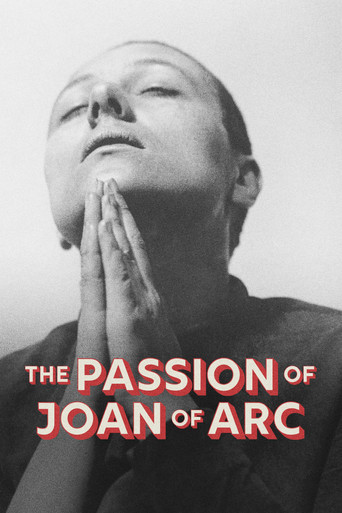
The Passion of Joan of Arc
1928 · Carl Theodor Dreyer
Dreyer stripped away everything cinema usually relies on and left only the human face. Maria Falconetti, a stage comedienne who had never made a major film and never would again, delivers what is routinely called the greatest performance in cinema history, and the superlative is earned. Shot almost entirely in close-up, without makeup, against white backgrounds, her Joan registers every moment of the trial with an emotional transparency that feels almost like an invasion of privacy. The sets were built by Hermann Warm (who designed The Cabinet of Dr. Caligari), but Dreyer shoots them so tightly that architecture becomes claustrophobia. The film was thought lost for decades until a complete print was discovered in a Norwegian mental institution in 1981. Its survival is one of cinema's great miracles.
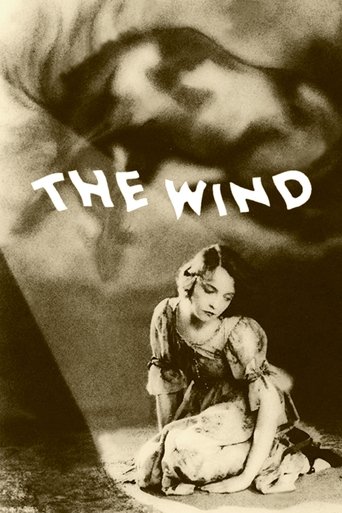
The Wind
1928 · Victor Sjöström
Sjöström's greatest Hollywood film, and the final, overwhelming statement of the Scandinavian conviction that landscape is destiny. Lillian Gish plays a Virginia woman transplanted to the Texas frontier, where an unrelenting wind slowly dismantles her sanity. Sjöström had airplane propellers rigged to blast sand at Gish for the storm sequences, and the resulting images of her small figure against the howling, dust-choked emptiness are as powerful as anything in his Swedish films. The studio imposed a happy ending that Sjöström despised (the original ended with Gish walking into the sandstorm to die), but even the compromised version cannot diminish the film's force. It is the last great silent film of the Scandinavian tradition, and it proves that the tradition was never really about Sweden. It was about the relationship between human beings and the indifferent world they inhabit.
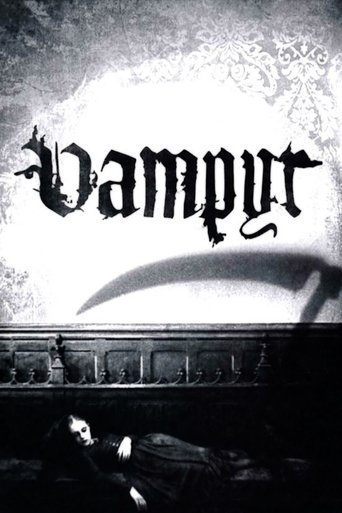
Vampyr
1932 · Carl Theodor Dreyer
Dreyer's first film after Joan of Arc is technically a sound film, but it barely uses sound, operating almost entirely through images of such uncanny strangeness that they feel closer to a waking dream than to anything conventionally narrative. A young traveler arrives at a rural inn and gradually realizes he has stumbled into a vampire's domain. The atmosphere is created through in-camera effects (gauze over the lens, reflections, shadows that move independently of their sources) rather than sets or makeup, and the result is the most genuinely unsettling horror film of its era. The coffin sequence, shot from the perspective of the corpse looking up through a glass window as it is carried to burial, is one of cinema's most nightmarish images. Vampyr was a commercial disaster that essentially ended Dreyer's ability to find funding for over a decade. It is also a masterpiece, and the perfect endpoint for this collection: Scandinavian cinema's final, haunted gift to the world before the era closed.