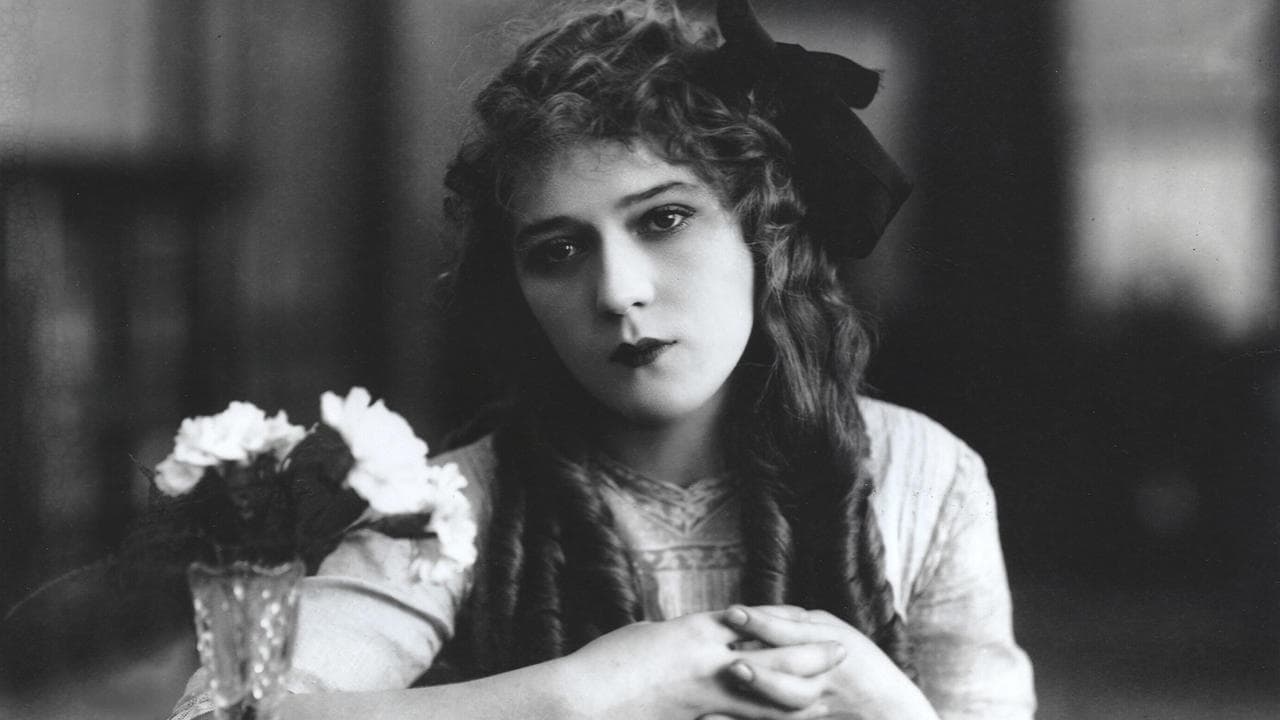
Spotlight: Mary Pickford
Mary Pickford was the most powerful woman in the history of early Hollywood, and for a time she was the most famous woman in the world. Born Gladys Louise Smith in Toronto in 1892, she was a stage veteran by the age of eight and a film star by sixteen, and she leveraged her enormous popularity into a degree of creative and financial control that no actor — male or female — had previously achieved. She co-founded United Artists in 1919 with Chaplin, Fairbanks, and Griffith, becoming the first major star to own her own distribution company. She produced her own films, chose her own directors, and negotiated contracts that made her the highest-paid performer in the industry. Her screen persona — plucky, resourceful, emotionally transparent — was often dismissed as sentimental, but the performances themselves are far more sophisticated than their reputation suggests. In Stella Maris she played two roles, one a privileged beauty and the other a disfigured orphan, and the contrast revealed a dramatic range that critics consistently underestimated. In Sparrows she combined fairy-tale innocence with genuine physical danger, leading a group of kidnapped children through a swamp full of alligators in sequences she performed without doubles. She was not merely “America's Sweetheart.” She was a complete filmmaker who happened to perform in front of the camera. Pickford retired from acting in 1933, frustrated by the limited roles available to her in the sound era, and spent the rest of her long life as a producer and businesswoman. The nine films collected here span the full arc of her career, from the early features that made her a star through the late silents that showcased the full range of her talent and ambition.
9 films
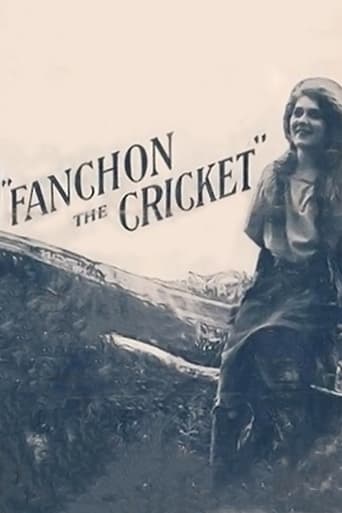
Fanchon, the Cricket
1915 · James Kirkwood
Pickford was twenty-two when she starred in this adaptation of a George Sand novel, playing a free-spirited country girl raised by her grandmother who enchants a local landowner. The role suited her perfectly: Fanchon is resourceful, emotionally transparent, and tougher than she appears, qualities that would define Pickford's screen persona for the next decade. The film was directed by James Kirkwood Sr. and is one of the earliest features to showcase Pickford's full range — she handles both the comedy and the pathos with an ease that belied her relative youth. It was a modest production, but Pickford's performance elevates it, as she would elevate nearly everything she appeared in.
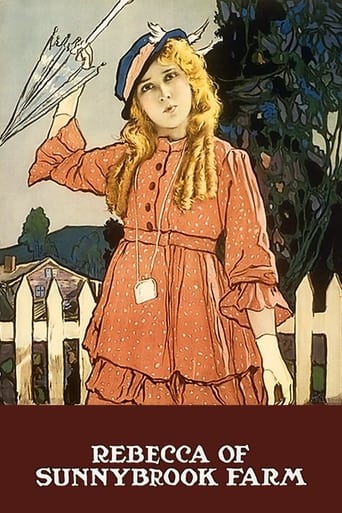
Rebecca of Sunnybrook Farm
1917 · Marshall Neilan
Pickford plays the irrepressibly optimistic orphan from Kate Douglas Wiggin's beloved novel, and the performance is a master class in screen charm without sentimentality. The role required Pickford to play a child — she was twenty-four — and she does it not through simpering but through sheer kinetic energy and emotional openness. Her Rebecca is a force of nature: stubborn, generous, impossible to resist. The film was a major hit, and it cemented the screen persona that made Pickford the most popular actress in the world. She would spend years trying to escape the little-girl roles that audiences demanded, but her work in them was never less than extraordinary.
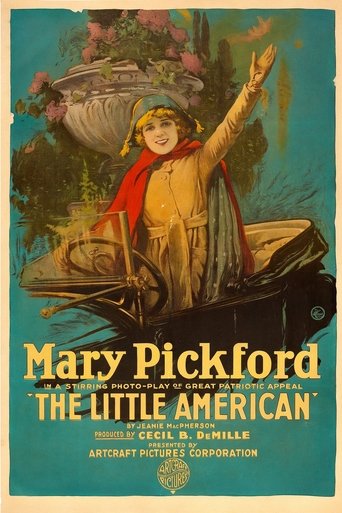
The Little American
1917 · Joseph Levering, Cecil B. DeMille
Cecil B. DeMille directed this wartime propaganda drama in which Pickford plays an American woman caught up in the German invasion of France. The film gave Pickford one of her most dramatic roles, requiring her to navigate violence, betrayal, and moral compromise, and she rises to every challenge. She is particularly effective in the scenes depicting the German occupation, bringing a fierce, unglamorous determination to a character who must survive by any means necessary. The Little American was a significant departure from the sunlit comedies that had made Pickford famous, and it demonstrated that her range extended far beyond what audiences expected or the industry typically allowed.
The Poor Little Rich Girl
1917 · Maurice Tourneur
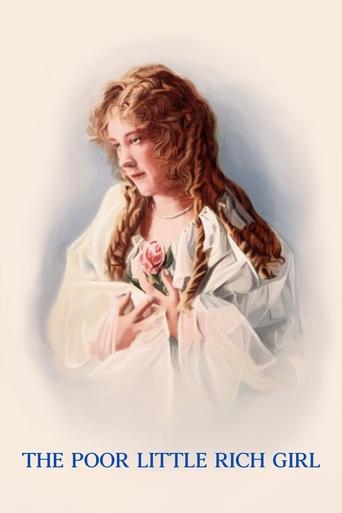
Maurice Tourneur directed this dual-world fantasy about a sheltered rich girl who has never been outside her mansion and the vivid imaginary world she constructs from the stories her servants tell her. Pickford is superb in both registers — wistful and isolated in the real-world scenes, wildly inventive in the fantasy sequences — and the film's visual imagination is remarkable for its period. The Poor Little Rich Girl was one of the films that established Pickford's ability to combine comedy, drama, and spectacle within a single vehicle, and her physical performance in the fantasy sequences demonstrates an athleticism and comic timing that rivaled any of her male contemporaries.

Stella Maris
1918 · Marshall Neilan
This is the film that should have permanently retired any notion of Pickford as merely a sentimental performer. She plays two roles: Unity Blake, a disfigured, abused orphan servant, and Stella Maris, a beautiful, sheltered invalid who knows nothing of the world's cruelty. The two characters eventually collide, and the film's resolution is genuinely shocking. Pickford's transformation into Unity — hunched, scarred, desperate — required hours of makeup and a complete physical and emotional reinvention, and she disappears into the role so completely that audiences reportedly did not recognize her. Stella Maris demonstrated that Pickford was a serious dramatic actress willing to sacrifice her vanity for a performance, and it remains one of the most impressive dual-role achievements in silent cinema.

The Love Light
1921 · Frances Marion
Pickford produced and starred in this drama about an Italian woman whose lover is lost at sea during World War I and who maintains a lighthouse beacon in the hope of guiding him home. The film is more somber than most Pickford vehicles, and her performance is correspondingly restrained — she plays grief and endurance without the sunny resilience that characterized her comedy roles. The Love Light was directed by Frances Marion, one of the most important screenwriters in Hollywood history, and the collaboration between the two women resulted in a film that takes its heroine's inner life seriously. It was not a commercial success, but it represents Pickford's ongoing effort to expand beyond the roles that audiences expected of her.
Little Annie Rooney
1925 · William Beaudine
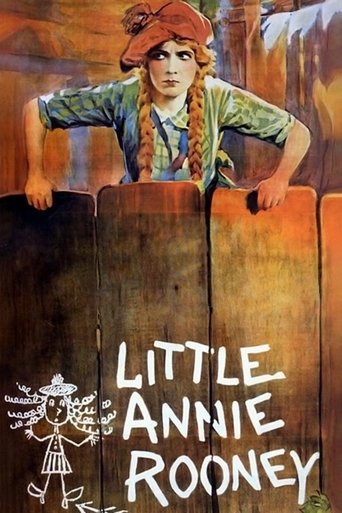
Pickford returned to the child-woman roles that audiences loved in this story of a scrappy twelve-year-old who leads a gang of street kids in a New York tenement neighborhood. She was thirty-two years old, and she is completely convincing. The film combines comedy, melodrama, and action — including a rooftop fight sequence that Pickford performed largely without doubles — and it was one of her biggest hits of the decade. Little Annie Rooney demonstrates both the strengths and the limitations of Pickford's position in Hollywood: she was brilliant at these roles, audiences would accept nothing else from her, and the gap between her actual maturity and her screen persona was becoming increasingly difficult to bridge.
Sparrows
1926 · William Beaudine
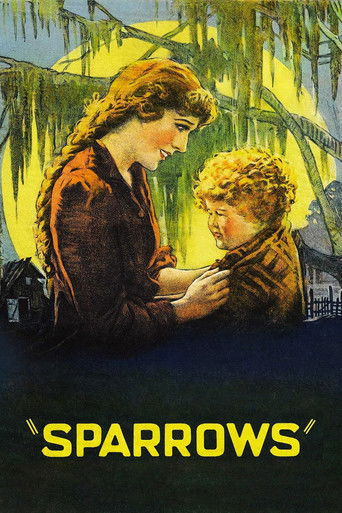
Pickford plays Mama Mollie, a teenage girl who protects a group of kidnapped children from their captors on a swamp farm in the Deep South. The film's centerpiece is an escape sequence through an alligator-infested swamp that Pickford performed herself, carrying a baby while wading through water with live alligators restrained just out of frame. Sparrows is Pickford at her most physically daring and dramatically intense, combining the maternal protectiveness that defined her screen persona with a genuine sense of danger that few of her other films achieved. It is one of her best performances, and the swamp sequence ranks among the most harrowing action set pieces of the silent era.
My Best Girl
1927 · Sam Taylor
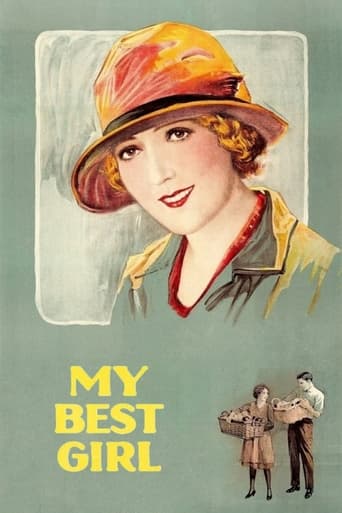
Pickford's final great silent film is a romantic comedy in which she plays a shopgirl who falls in love with the heir to a department store fortune, played by Buddy Rogers, whom Pickford would later marry in real life. The chemistry between them is palpable and unforced, and Pickford's performance is her most relaxed and naturalistic — she plays a woman her own age for once, and the freedom it gives her is visible in every scene. My Best Girl was a commercial hit and a critical success, and it stands as a fitting capstone to Pickford's silent career: a film that finally allowed her to be an adult on screen, and proved that the talent was always there, waiting for the material to catch up.