The Smiling Madame Beudet
La Souriante Madame Beudet
1923·FR
Director: Germaine Dulac
Drama
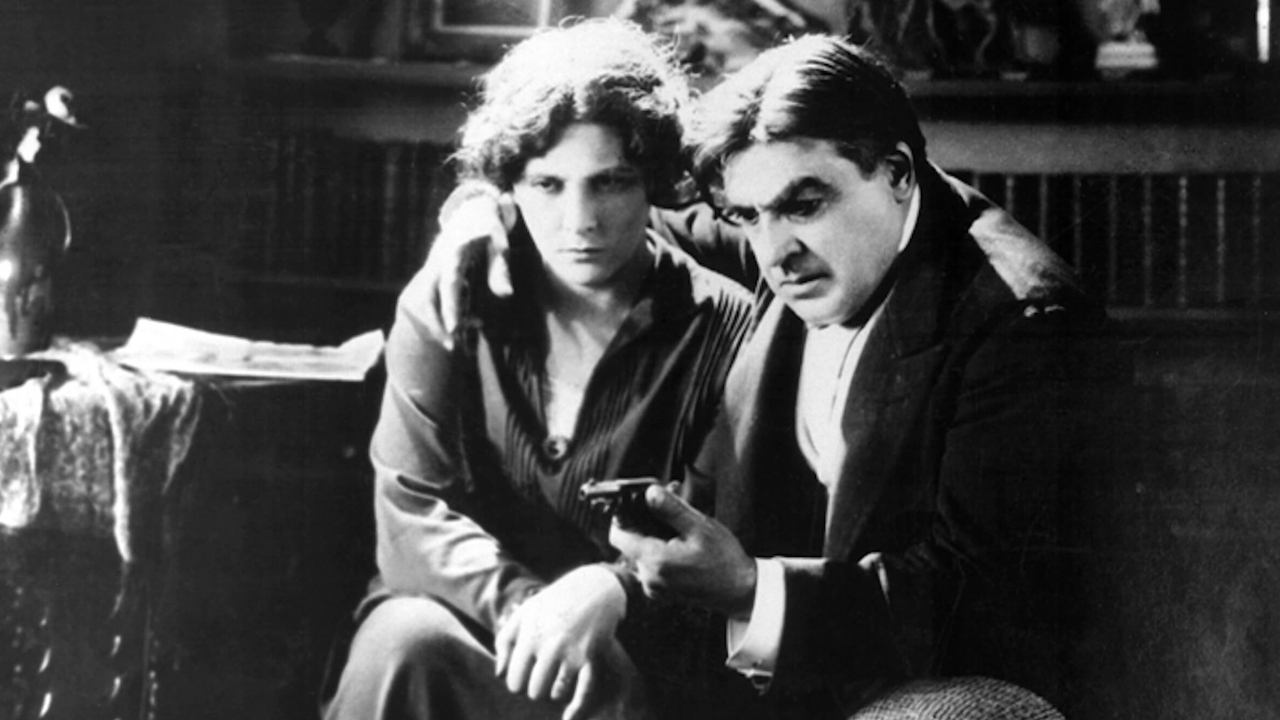
Germaine Dulac's quietly devastating portrait of a bourgeois marriage suffocating under its own propriety — and one of the earliest films directed by a woman that survives in good condition. Madame Beudet is intelligent, sensitive, and desperately unhappy, trapped with a boorish, insensitive husband whose one theatrical gesture — pretending to shoot himself with an unloaded revolver — she decides to turn real by loading the gun. Dulac uses Impressionist techniques — slow motion, superimposition, distorted lenses — to externalize Beudet's inner life, her fantasies of escape and her simmering rage, creating a visual language for female subjectivity that was decades ahead of its time. At just forty minutes, it's a concentrated, brilliant study of the quiet violence of domestic confinement. A landmark of feminist cinema.
Germaine Dulac's quietly devastating portrait of a bourgeois marriage suffocating under its own propriety — and one of the earliest films directed by a woman that survives in good condition. Madame Beudet is intelligent, sensitive, and desperately unhappy, trapped with a boorish, insensitive husband whose one theatrical gesture — pretending to shoot himself with an unloaded revolver — she decides to turn real by loading the gun. Dulac uses Impressionist techniques — slow motion, superimposition, distorted lenses — to externalize Beudet's inner life, her fantasies of escape and her simmering rage, creating a visual language for female subjectivity that was decades ahead of its time. At just forty minutes, it's a concentrated, brilliant study of the quiet violence of domestic confinement. A landmark of feminist cinema.
Watch
Explore Further
Where to Watch
Streaming data by JustWatch
Cast


Crew
Germaine Dulac
writer
A. Morrin
cinematographer
Maurice Forster
cinematographer
André Obey
writer
Paul Parguel
cinematographer