Between the world wars, France became the laboratory where cinema discovered it could be an art form on par with painting, poetry, and music. The filmmakers in this collection rejected the conventions of commercial storytelling in favor of something more ambitious: a cinema of rhythm, light, and subjective experience. They called themselves Impressionists, Dadaists, Surrealists, and sometimes refused labels altogether, but they shared a conviction that the camera could reveal truths invisible to the naked eye. The movement drew from an extraordinary range of sources. Georges Méliès had already demonstrated cinema's capacity for fantasy and illusion at the turn of the century. Louis Feuillade's hallucinatory crime serials inspired the Surrealists decades before Surrealism had a name. Abel Gance pushed montage toward a kind of visual symphony. The Impressionists, led by Germaine Dulac, Jean Epstein, and Marcel L'Herbier, pursued what they called "photogénie," the idea that cinema could capture an inner essence of objects and faces that ordinary perception missed. And when the Dadaists and Surrealists arrived, they turned the screen into a space for automatic writing, dream logic, and provocations designed to short-circuit rational thought. What makes these films so exhilarating today is their sheer inventiveness. Every formal device we associate with cinematic experimentation, from superimposition and rhythmic editing to distorted lenses and the abolition of narrative, was pioneered in this period. These filmmakers were not just ahead of their time. In many ways, the rest of cinema is still catching up.
18 films

1902 · Georges Méliès
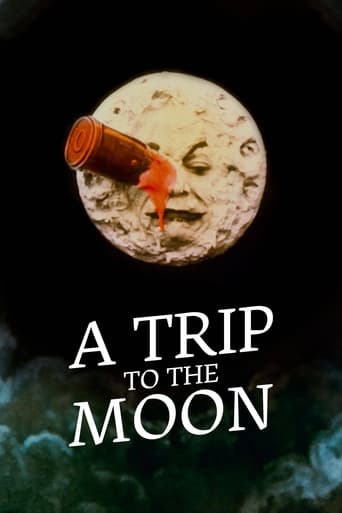
Méliès was a stage magician before he became a filmmaker, and that background explains everything about his work. A Trip to the Moon is the most famous of his hundreds of "trick films," a fourteen-minute fantasy that sent a bullet-shaped capsule into the eye of the Man in the Moon and introduced audiences to the idea that cinema could show them things that had never existed. The hand-painted color, the theatrical sets, the joyful absurdity of moon-dwelling Selenites exploding into puffs of smoke: all of it established a tradition of cinematic fantasy that the French avant-garde would inherit and transform.

1915 · Louis Feuillade
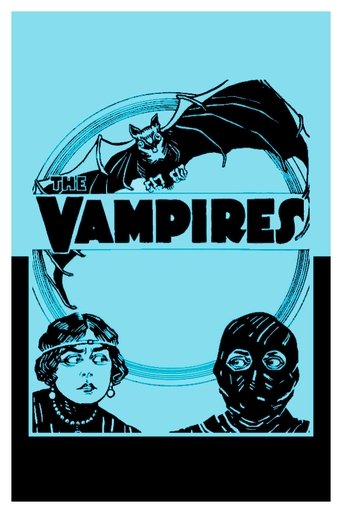
Louis Feuillade's ten-episode serial follows a criminal gang through the streets and rooftops of Paris, and the Surrealists were obsessed with it. André Breton and Louis Aragon watched it repeatedly, captivated by its dreamlike atmosphere and its refusal to make rational sense of its own plot. Feuillade shot on real Parisian locations with a documentary eye, then filled those locations with impossible events: bodies in trunks, secret passages behind fireplaces, the unforgettable image of Irma Vep in her black catsuit scaling the side of a building. The Vampires is not "avant-garde" in any programmatic sense, which is precisely why the avant-garde loved it.

1919 · Abel Gance
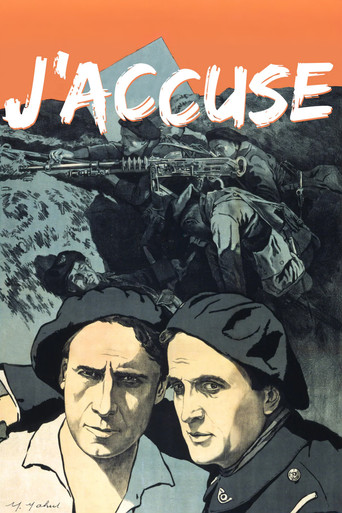
Abel Gance made this anti-war epic while World War I was still being fought, and the rage is palpable in every frame. The story follows a poet who survives the trenches and returns to accuse the living of betraying the dead, culminating in a sequence where the war dead literally rise from their graves. Gance's innovations here, particularly his rapid montage and use of superimposition, anticipate the techniques he would push even further in La Roue and Napoléon. The film was a sensation; it also established Gance as the most technically ambitious filmmaker in France.

1923 · Germaine Dulac
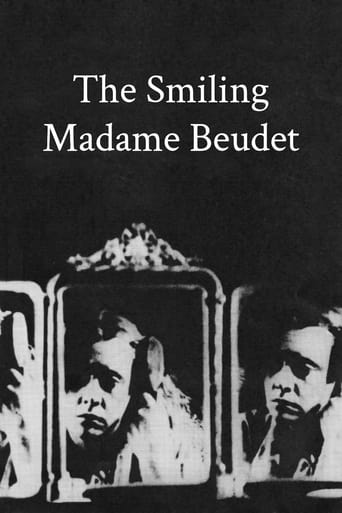
In just thirty-eight minutes, Germaine Dulac created one of the foundational works of feminist cinema and a landmark of the Impressionist movement. A bourgeois wife, trapped in a suffocating marriage to a boorish husband, retreats into fantasies of escape. Dulac uses slow motion, soft focus, and distorted imagery to render these inner states visible, building a subjective cinema that privileges feeling over plot. It is a quiet film, but a radical one; Dulac was arguing, through form rather than manifesto, that cinema's highest purpose was the expression of interior life.

1923 · Jean Epstein
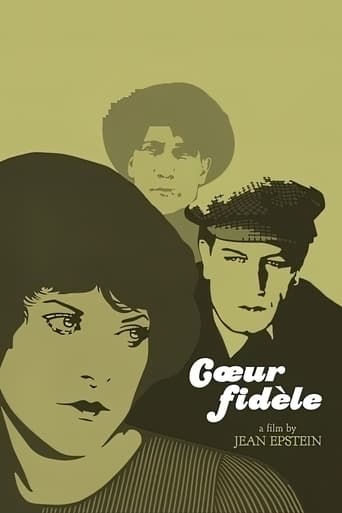
Jean Epstein set his melodrama in the working-class bars and fairgrounds of Marseille, and then filmed it with a sensory intensity that made the genre feel entirely new. The camera sways with a carousel ride, blurs with a character's drunkenness, fragments faces in close-up until they become almost abstract. Epstein was putting his theory of photogénie into practice: the belief that cinema could reveal the hidden life of things through rhythm, angle, and movement. The plot is simple, a love triangle in a port town, but the filmmaking is anything but.

1924 · René Clair
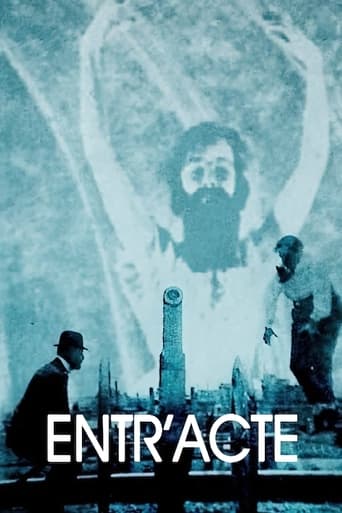
Commissioned as an intermission film for a Dadaist ballet, Entr'acte is twenty-two minutes of pure anarchic delight. René Clair assembled a cast that included Marcel Duchamp, Man Ray, Francis Picabia, and Erik Satie, then set them loose in a series of escalating absurdities: a rooftop chess game, a cannon fired at the audience, a funeral procession chasing a camel-drawn hearse through the streets of Paris at increasing speed. Satie's score (one of the first composed specifically for a film) drives the whole thing forward. It remains the purest distillation of Dada aesthetics on screen.

1924 · Fernand Léger, Dudley Murphy
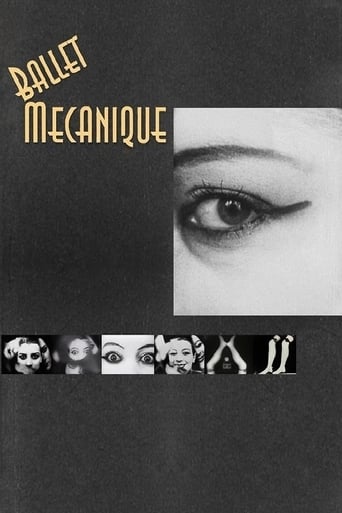
Painter Fernand Léger and cinematographer Dudley Murphy stripped cinema down to its most elemental components: shape, rhythm, and motion. For nineteen minutes, mechanical objects, kaleidoscopic patterns, a woman on a swing, and a washerwoman climbing stairs are edited to a precise visual beat. There is no story, no characters, no intertitles. Ballet Mécanique is pure abstraction, closer to visual music than to anything resembling a conventional film. It marks one of the earliest and most successful attempts to free cinema entirely from narrative.

1924 · Marcel L'Herbier
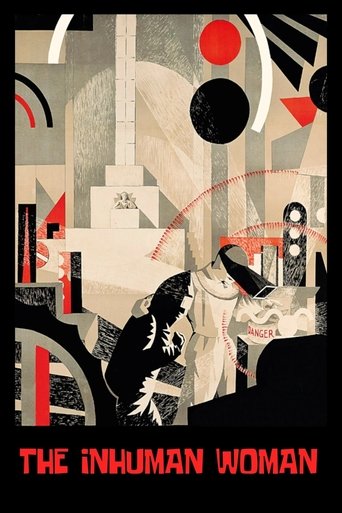
Marcel L'Herbier recruited the finest artists in Paris to build this film. The sets were designed by Fernand Léger and Robert Mallet-Stevens, the costumes by Paul Poiret. The result is a science fiction fable about a scientist's daughter whose voice can shatter glass, wrapped in the most extravagant Art Deco production design of the silent era. The plot is secondary to the visual spectacle, and that was exactly L'Herbier's point. He wanted to prove that cinema could be a total art form, a Gesamtkunstwerk that synthesized architecture, fashion, music, and light.

1925 · René Clair
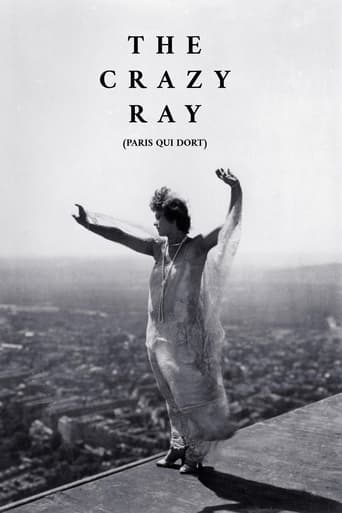
A mad scientist's ray freezes all of Paris in place, leaving only a handful of people on the Eiffel Tower to wander through a silent, motionless city. René Clair's first film (originally titled Paris qui dort) is a playful science fiction premise executed with genuine visual wit. The frozen Parisians, caught mid-stride or mid-embrace, become accidental sculptures, and the free survivors quickly discover that a world without consequences is both exhilarating and terrifying. It is a slight film compared to what followed, but its lightness of touch is part of its charm.

1926 · Jean Renoir
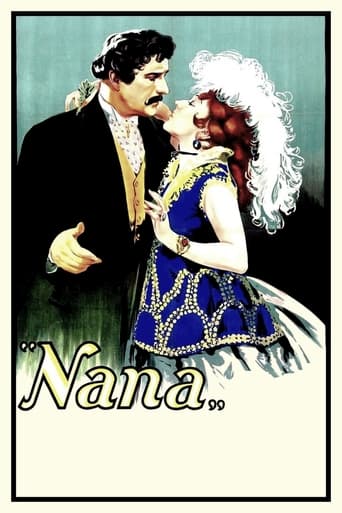
Renoir's adaptation of Zola's novel about a Parisian courtesan was his most ambitious early production, and it nearly bankrupted him. He insisted on building elaborate sets, shooting on location, and using natural light wherever possible. The result is uneven but fascinating: you can see Renoir developing the deep-focus compositions and the sensitivity to human behavior that would define his mature work. Catherine Hessling's performance as Nana is deliberately stylized, closer to the Impressionist aesthetic of gesture and pose than to the naturalism Renoir would later champion.

1926 · Dimitri Kirsanoff
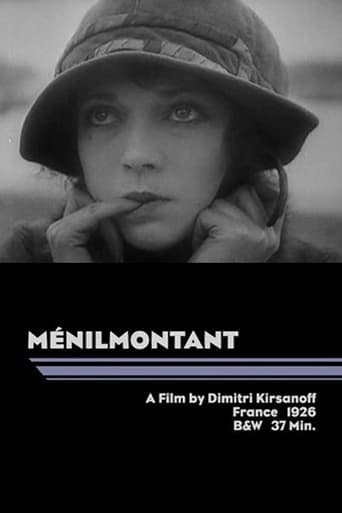
Dimitri Kirsanoff, a Lithuanian émigré working in Paris, made this forty-minute film with almost no money and no intertitles whatsoever. Two sisters, separated by a traumatic event, navigate life in the Ménilmontant neighborhood of Paris. The storytelling is entirely visual: fragmented editing, superimpositions, close-ups of faces and hands that communicate states of grief, longing, and tenderness without a single word. It is one of the most emotionally powerful films of the decade, proof that the avant-garde's formal experiments could serve human feeling rather than abstract theory.

1926 · Alberto Cavalcanti
Alberto Cavalcanti's city symphony follows twenty-four hours in the life of Paris, from dawn to midnight. It predates Walter Ruttmann's Berlin: Symphony of a Metropolis by a year and shares its fascination with urban rhythm, but Cavalcanti's film is warmer and more socially aware. Alongside the bustling markets and café terraces, he lingers on the poor, the elderly, and the forgotten. The editing creates connections between images based on visual rhyme rather than narrative logic, making the city itself the protagonist.

1926 · Man Ray
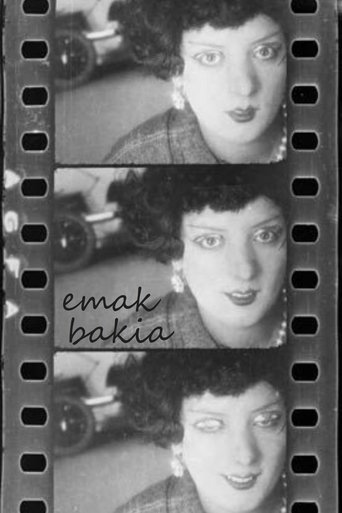
Man Ray subtitled this film "a collection of fragments, a cinepoem," and that is an honest description. Over sixteen minutes, distorted images of a woman's eyes, spinning objects, herds of sheep, and Ray's signature rayographs (created by placing objects directly on film stock) follow one another according to a logic that is associative rather than narrative. The title, a Basque phrase meaning roughly "leave me alone," signals Ray's attitude toward anyone expecting coherence. Emak-Bakia is a photographer's film, interested in what light and celluloid can do when freed from the obligation to tell a story.

1928 · Germaine Dulac
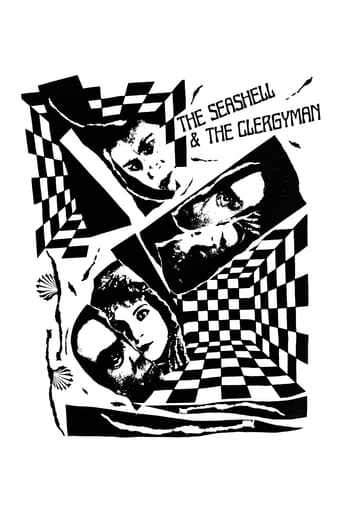
Germaine Dulac's adaptation of an Antonin Artaud screenplay is often cited as the first Surrealist film, predating Un Chien Andalou by a year. A clergyman pursues a beautiful woman through a series of dreamlike transformations: heads split open, liquids pour from shells, spaces defy physical law. Artaud himself disowned the film, claiming Dulac had softened his vision, and Surrealists disrupted its premiere. The controversy obscures the film's real achievement, which is its sustained commitment to a visual language governed by desire and hallucination rather than cause and effect.

1928 · Jean Epstein
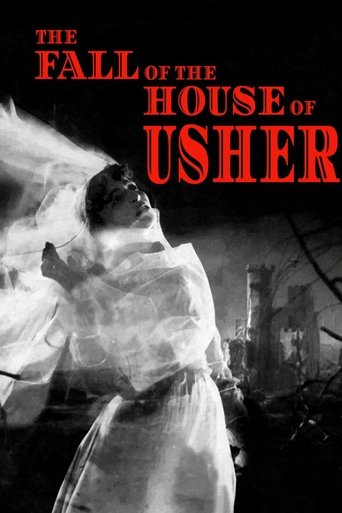
Jean Epstein took Edgar Allan Poe's story and dissolved it into pure atmosphere. Plot barely matters; what matters is the crumbling house, the slow drip of candlewax, the curtains billowing in an unfelt wind, the guitar strings that vibrate on their own. Epstein used slow motion more expressively here than perhaps anyone had before, stretching time until the images take on a hallucinatory weight. The film is only sixty-five minutes long, but it feels like a sustained trance. This is photogénie at its most fully realized.

1928 · Marcel L'Herbier
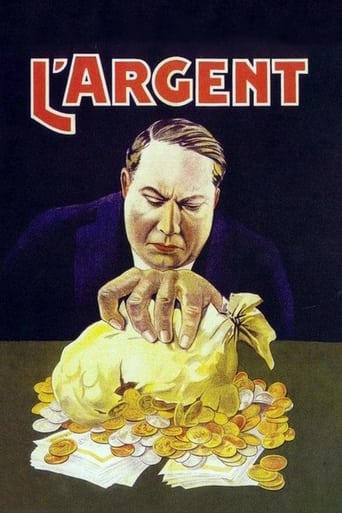
Marcel L'Herbier's final silent film is an adaptation of Zola's novel about financial speculation, transformed into a furious indictment of capitalism with some of the most virtuosic camera work of the entire silent era. The camera flies, swoops, and plunges through the Paris stock exchange, turning traders into a swarming mass of bodies and greed. L'Herbier mortgaged his own house to finance the production. The result is both a summation of everything the French Impressionists had learned about mobile camerawork and a bitter commentary on the economic forces that were about to reshape Europe.

1928 · René Clair
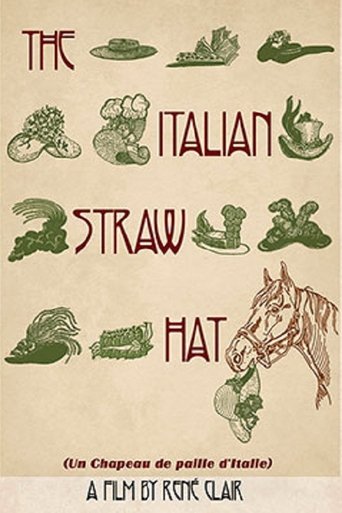
René Clair's comic masterpiece adapts a Labiche farce about a bridegroom whose wedding day collapses into chaos when his horse eats someone's straw hat. The premise is simple, but Clair's execution turns it into a study in escalating absurdity, with the entire wedding party stampeding through Parisian streets in pursuit of a replacement hat. The film demonstrates that the avant-garde's formal playfulness could serve popular entertainment, not just gallery audiences. It was one of the biggest commercial successes in French silent cinema.

1929 · Luis Buñuel
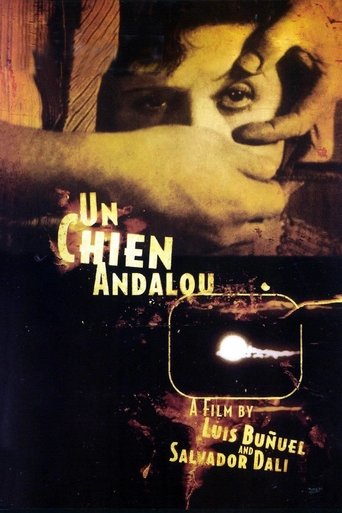
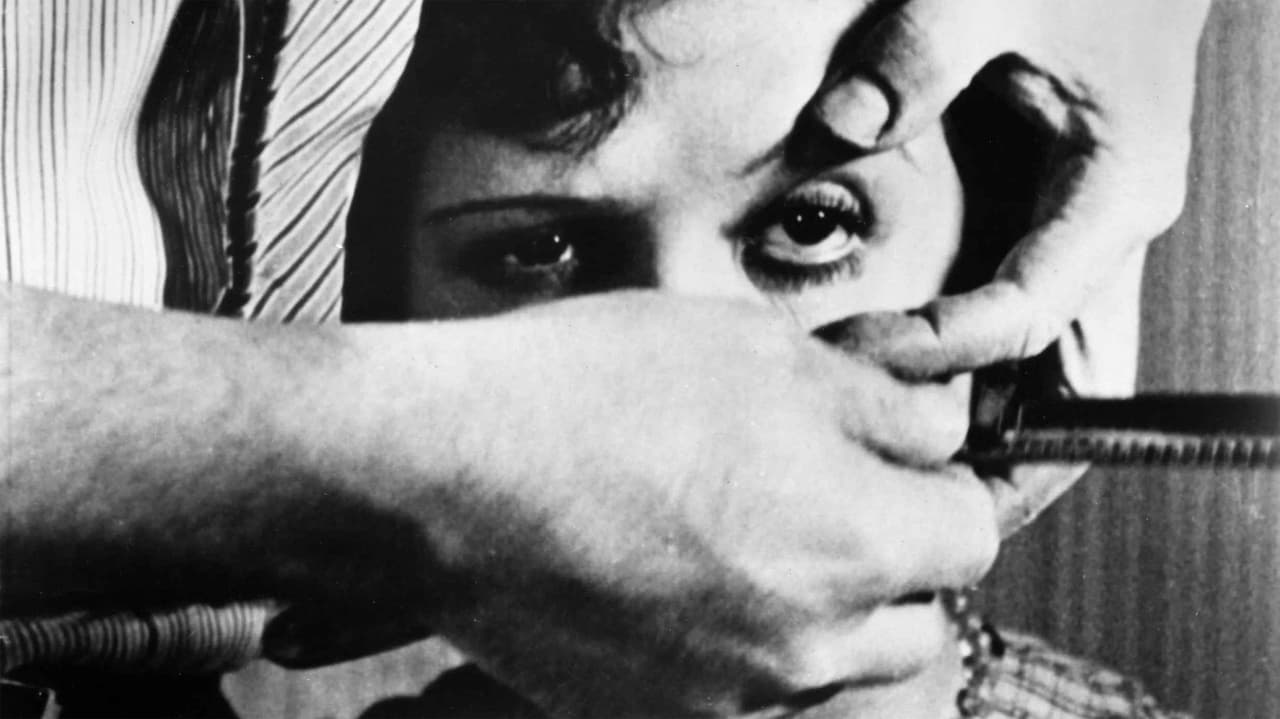
Seventeen minutes long, made for almost nothing, and probably the most famous avant-garde film ever produced. Luis Buñuel and Salvador Dalí assembled the screenplay by telling each other their dreams and rejecting anything that could be explained rationally. The result is a sequence of images that have burned themselves into the collective memory of cinema: an eyeball sliced by a razor, ants crawling from a hole in a palm, dead donkeys draped across pianos. Un Chien Andalou is designed to provoke, and nearly a century later, it still does. It brought the Surrealist movement's assault on bourgeois rationality to its most concentrated and enduring expression.