A Page of Madness
狂った一頁
1926·71 min·JP
Director: Teinosuke Kinugasa
HorrorDrama
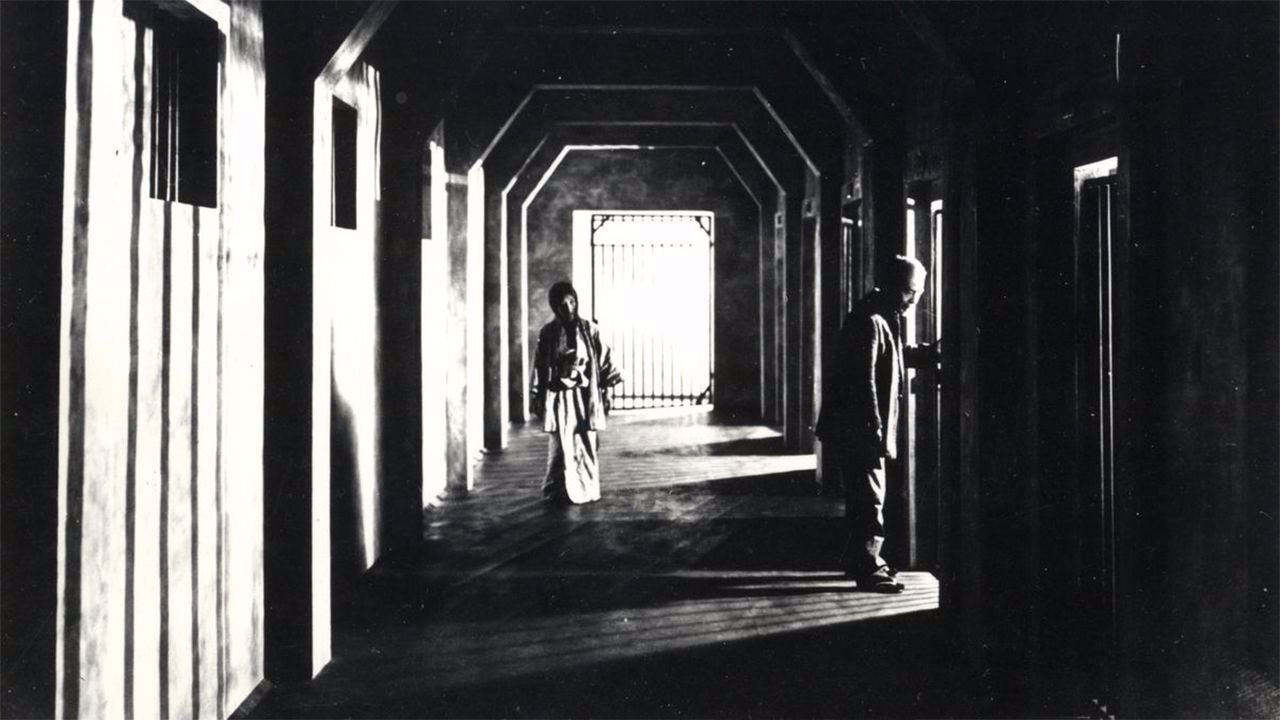
Teinosuke Kinugasa's staggering avant-garde masterpiece — the most radical Japanese film of the silent era and one of the most visually extraordinary films made anywhere in the 1920s. A former sailor takes a menial job at an asylum, hoping to free his wife, who was committed after drowning their baby. Kinugasa plunges us into the subjective experience of madness itself: the camera tilts, blurs, and fractures; superimpositions layer reality and hallucination; identities dissolve and reform. Made independently and influenced by both German Expressionism and the French avant-garde, the film was lost for decades until Kinugasa himself discovered a print in his storehouse in 1971. No intertitles, no conventional narrative — just an overwhelming, immersive descent into a mind coming apart. A masterpiece that demands to be experienced rather than merely watched.
Teinosuke Kinugasa's staggering avant-garde masterpiece — the most radical Japanese film of the silent era and one of the most visually extraordinary films made anywhere in the 1920s. A former sailor takes a menial job at an asylum, hoping to free his wife, who was committed after drowning their baby. Kinugasa plunges us into the subjective experience of madness itself: the camera tilts, blurs, and fractures; superimpositions layer reality and hallucination; identities dissolve and reform. Made independently and influenced by both German Expressionism and the French avant-garde, the film was lost for decades until Kinugasa himself discovered a print in his storehouse in 1971. No intertitles, no conventional narrative — just an overwhelming, immersive descent into a mind coming apart. A masterpiece that demands to be experienced rather than merely watched.
Watch
Explore Further
Where to Watch
Streaming data by JustWatch
Cast



Crew
Yasunari Kawabata
writer
Kōhei Sugiyama
cinematographer
Teinosuke Kinugasa
writer
Minoru Inuzuka
writer
Bankô Sawada
writer