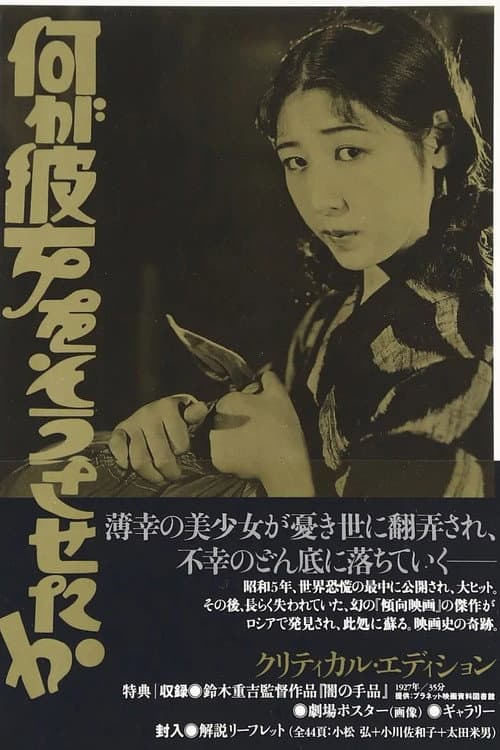
What Made Her Do It?
何が彼女をそうさせたか
1930 · 85 min · JP
Directed by Shigeyoshi Suzuki
Shigeyoshi Suzuki, Teikoku Kinema, 1930, from Seikichi Fujimori. Sumiko (Keiko Takatsu) is passed from poorhouse to factory to kitchen to the street; the last act is a fire. A tendency film with the vulgar bits Teikine wanted, and the top-grossing Japanese silent; papers reported a crush in Asakusa. Thought lost after the war, an incomplete print turned up at Gosfilmofond in 1994, and Yoneo Ōta's 1997 restoration fills the missing head and tail with titles. Poverty answers the question on the poster.
Watch What Made Her Do It?
Public domain presentation
Public Domain Source
modernrocksong
Cast & Crew
Available Subtitles
No subtitle tracks are currently listed.
Cast
Principal playersCrew
Shigeyoshi Suzuki
writer
Seiji Tsukakoshi
cinematographer