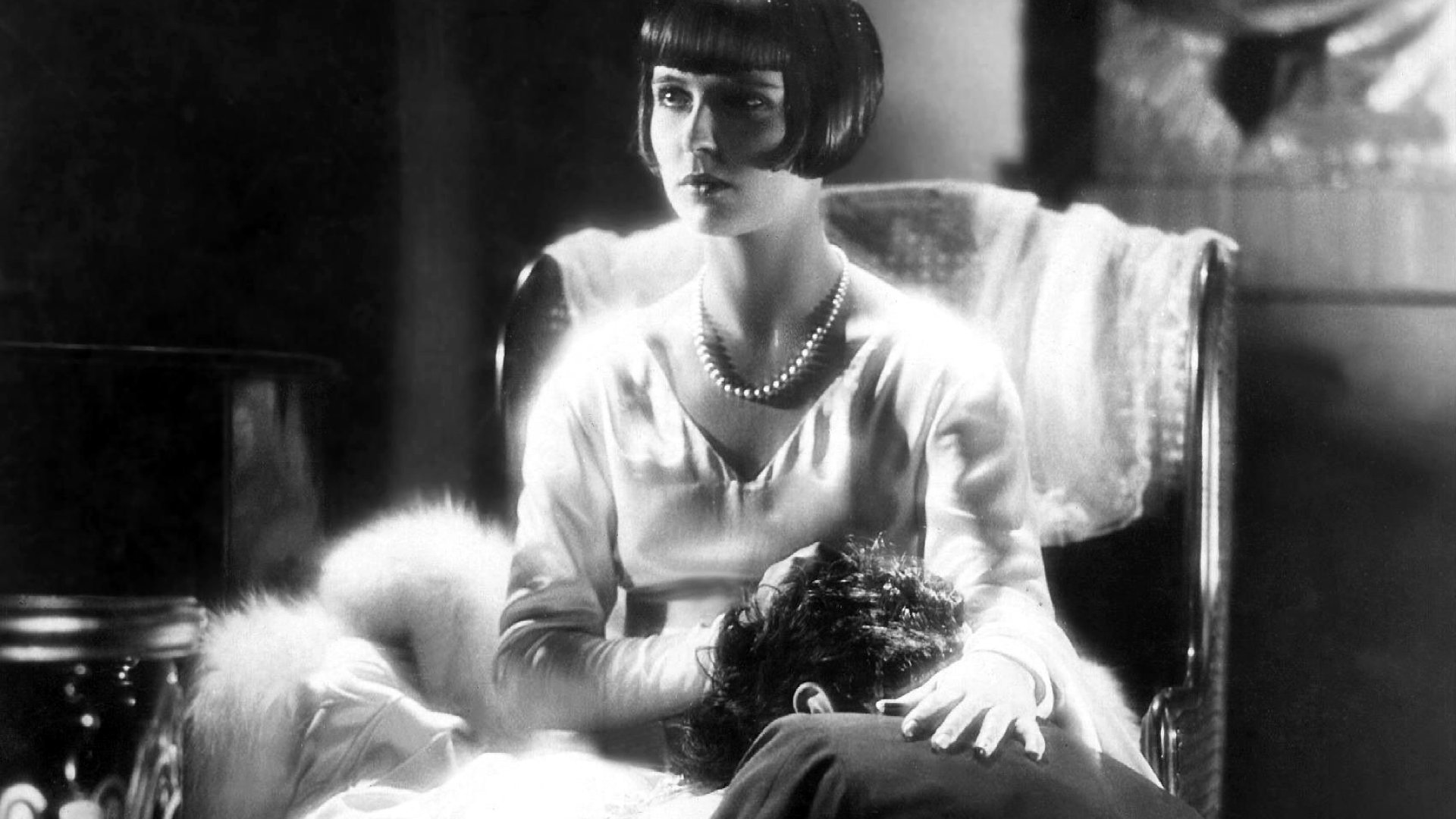
Spotlight: Louise Brooks
Louise Brooks made fewer than two dozen films and retired from Hollywood before she turned thirty, yet she remains one of the most magnetic screen presences in the history of cinema. Born in Cherryvale, Kansas in 1906, she was a Denishawn dancer turned Ziegfeld girl turned movie star, and she brought to her performances an intelligence and erotic candor that the American studio system had no idea what to do with. She was too modern for 1920s Hollywood, which preferred its ingenues pliant and unthreatening, and she knew it. Her two masterpieces were made not in Hollywood but in Berlin, for the Austrian-American director G.W. Pabst, who recognized what American producers could not: that Brooks was not merely beautiful but genuinely dangerous on screen. As Lulu in Pandora's Box and Thymian in Diary of a Lost Girl, she created characters of such unguarded sensuality and emotional directness that the films still feel radical nearly a century later. She did not act in the conventional sense. She simply existed on screen with a transparency that made everything around her look artificial. Brooks walked away from Hollywood on her own terms, refused to play the comeback game, and spent decades in obscurity before being rediscovered by film historians in the 1950s. Her memoir, Lulu in Hollywood, revealed a writer of startling precision and wit. The films collected here trace her trajectory from studio comedies to the Pabst collaborations that sealed her legend, and they document a talent that burned too brightly for the industry that produced it.
8 films
From the Reading Room
- ↗VID
Looking For Lulu - Documentary on Louise Brooks— Hugh Munro Neely
1998 documentary about the life of Louise Brooks, created by Hugh Munro Neely. Narrated by Shirley MacLaine and featuring numerous interviews with friends and relatives of the legendary star, it also contains excerpts from many of her films including her first on-screen appearance.
The Show Off
1926 · Malcolm St. Clair
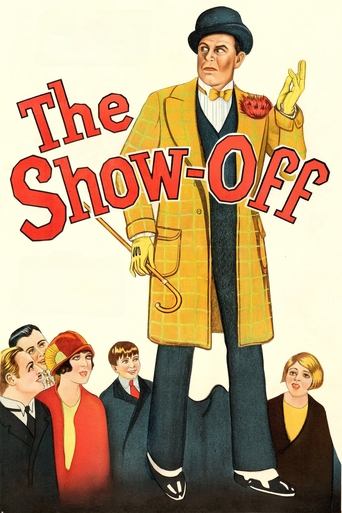
Brooks had been in Hollywood for less than a year when she appeared in this adaptation of George Kelly's Pulitzer Prize–winning play about a braggart whose delusions of grandeur torment his long-suffering family. Her role is small — she plays a supporting part alongside Ford Sterling and Lois Wilson — but she is already unmistakable on screen. There is a directness to her presence, an unforced modernity in the way she inhabits a frame, that sets her apart from the more mannered performers around her. Paramount saw enough to keep casting her, though they had no idea yet what they had.
It's the Old Army Game
1926 · A. Edward Sutherland
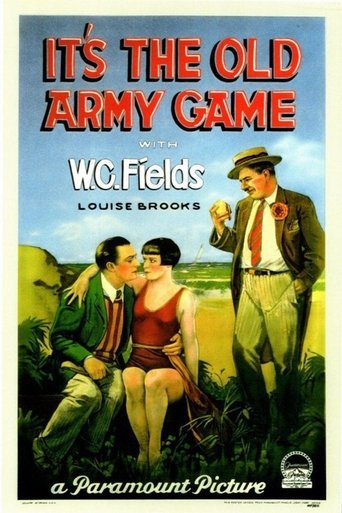
W.C. Fields was the star of this comedy, and Brooks was the decorative love interest — a role that gave her little to do but look appealing. She does it effortlessly, but the film is more interesting as evidence of how Paramount used her in this early period: as a beautiful accessory in other people's vehicles. Brooks was a Ziegfeld girl before she was a film actress, and the studio treated her accordingly. She was learning, though, and her natural screen magnetism is evident even in underwritten parts. Fields, characteristically, dominates every scene he's in, but Brooks holds the eye whenever the camera finds her.
A Girl in Every Port
1928 · Howard Hawks
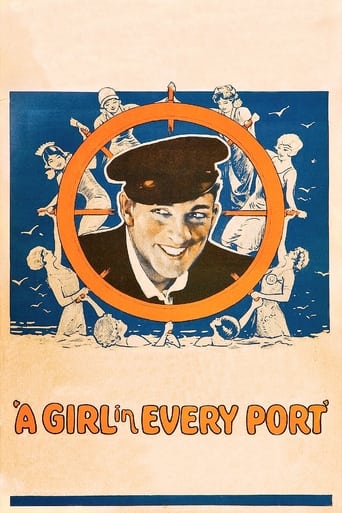
Howard Hawks directed this story of two brawling sailors, played by Victor McLaglen and Robert Armstrong, whose friendship is tested when they both fall for the same woman. Brooks is that woman, and she is electric. The role gave her more to work with than anything Paramount had offered before, and she responded with a performance of cool, self-possessed sensuality that announced her as something more than a pretty face in supporting parts. Hawks understood her appeal — he saw the intelligence behind the beauty — and the film marks the moment when Brooks began to emerge as a genuinely distinctive screen presence.
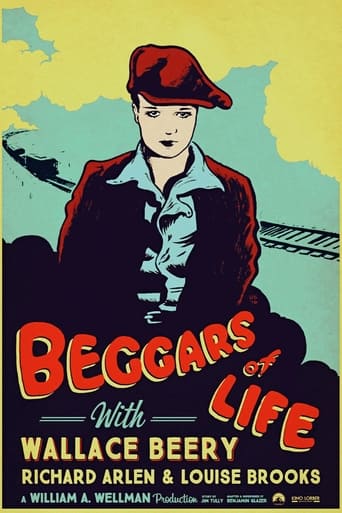
Beggars of Life
1928 · William A. Wellman
William Wellman's drama about hobos riding the rails gave Brooks her first major American role, and she delivers one of the best performances of her Hollywood career. She plays a young woman fleeing an abusive stepfather who disguises herself as a boy and takes to the road with Richard Arlen. The film required physical toughness and emotional range, and Brooks provides both. She is completely believable as someone desperate enough to live rough, and she brings a rawness to the part that anticipates the Pabst films. Wellman shot much of it on location, and the realism of the setting draws out a side of Brooks that studio-bound comedies never could.
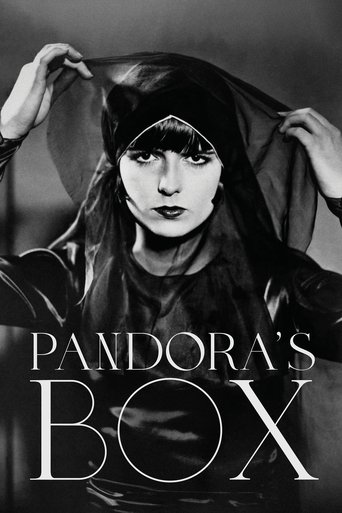
Pandora's Box
1929 · G.W. Pabst
This is the role that made Brooks immortal. G.W. Pabst's adaptation of Frank Wedekind's Lulu plays cast her as the amoral, irresistible Lulu, a woman whose unself-conscious sexuality destroys every man who comes near her and ultimately destroys herself. Brooks plays the part without a trace of moral judgment or actorly calculation. She simply is Lulu — open, radiant, heedless, doomed — and the effect is devastating. No other actress of the period could have played this role; most would have signaled the character's danger or her vulnerability, but Brooks does neither. She exists in a state of pure, terrifying presence. The film was not widely seen in America for decades, but when it was rediscovered it transformed Brooks from a forgotten starlet into a legend.

The Canary Murder Case
1929 · Frank Tuttle, Malcolm St. Clair
Brooks had already left for Berlin when Paramount released this Philo Vance mystery, and the studio punished her for her departure by dubbing her voice with another actress's for the sound sequences. The result is a curiosity: Brooks is visually compelling as the showgirl murder victim at the center of the plot, but the voice coming out of her mouth belongs to someone else. The film itself is a competent early talkie whodunit with William Powell as Vance, but its real significance lies in what it represents — the moment Paramount decided to make an example of Brooks for refusing to play by their rules. She never worked for the studio again.
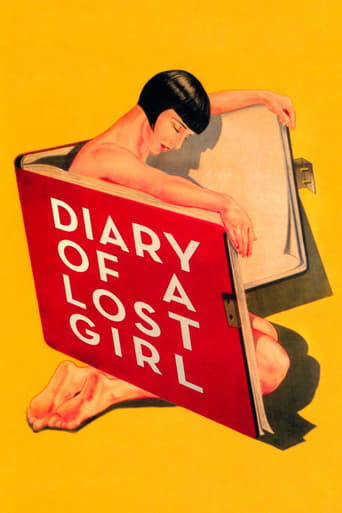
Diary of a Lost Girl
1929 · G.W. Pabst
Pabst's second collaboration with Brooks is nearly as extraordinary as the first. She plays Thymian, a pharmacist's daughter who is seduced, becomes pregnant, is sent to a brutal reformatory, escapes into prostitution, and is eventually rescued by a chance encounter. The material is melodramatic in outline, but Brooks and Pabst transform it into something genuinely harrowing. Brooks brings the same unguarded transparency she gave Lulu, but here it serves a character defined by suffering rather than desire. Her face in the reformatory scenes — absorbing cruelty without hardening — is among the most expressive work in silent cinema. Together, the two Pabst films constitute one of the great actor-director partnerships.
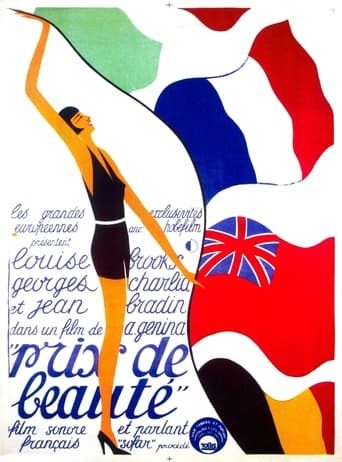
Miss Europe
1930 · Augusto Genina
Brooks's final significant film was this French-Italian production directed by Augusto Genina, in which she plays a typist who wins a beauty contest and is drawn into the world of celebrity. The film was shot as a silent but released with a synchronized sound track, and it has a bittersweet quality that resonates with Brooks's own situation: a woman whose beauty and talent bring her fame but not happiness. The final sequence, in which Brooks watches a projection of herself on screen, is one of the most haunting images in her filmography. After this, her career effectively ended. She returned to America, took a few minor roles, and by the mid-1930s had left the industry entirely.