The Supernatural and the Occult
Cinema has been drawn to the supernatural since its very first frames. In 1896, Georges Méliès pointed a camera at a stage trick and conjured the Devil out of a puff of smoke. Within three decades, filmmakers across Europe and America had built an entire visual language for the uncanny: distorted shadows, double exposures, faces emerging from darkness, spaces that refused to obey the laws of physics. The films in this collection represent that language at its most powerful and inventive. What connects these works is not a single national tradition or artistic movement but a shared fascination with the boundary between the living and the dead, the natural and the impossible. German Expressionism gave us the angular nightmares of Caligari and the rat-like creeping of Nosferatu. Scandinavian cinema produced the spectral carriage rides of Sjöström and the pseudo-documentary witchcraft of Christensen. Hollywood contributed Lon Chaney's tortured transformations and the eerie tropical voodoo of White Zombie. And threading through all of it is the figure of the occultist, the alchemist, the sorcerer who seeks forbidden knowledge and pays the price. These films still unsettle because their techniques bypass rational comfort. Superimposition makes ghosts visible. Chiaroscuro lighting turns ordinary rooms into traps. Expressionist sets externalize inner terror. The supernatural was not just a genre for early cinema; it was an argument for what the medium could do that no other art form could match.
20 films
From the Reading Room
- ↗READSan Francisco Silent Film Festival19 APR 2024
The Phantom Carriage— Thomas Gladysz
- ↗READSan Francisco Silent Film Festival20 JAN 2024
Dreyer’s Waking Dream— Geoffrey O'Brien
- ↗

Le manoir du diable
1896 · Georges Méliès
Three minutes long and widely considered the first horror film ever made. Méliès, working in his glass-walled studio at Montreuil, conjures a bat that transforms into the Devil, summons ghosts and skeletons from thin air, and is finally banished by a crucifix. The effects are simple stage magic adapted for the camera: substitution splices, dissolves, and theatrical trapdoors. But the subject matter is telling. At the very dawn of cinema, one of its earliest innovators reached instinctively for the supernatural. The medium and the uncanny were intertwined from the start.
Frankenstein
1910 · J. Searle Dawley
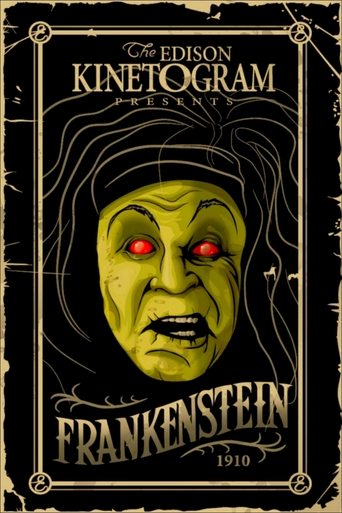
Edison Studios produced the first screen adaptation of Mary Shelley's novel in a single-reel film running just over twelve minutes. The creation scene, in which the monster's body forms inside a vat of chemicals, was achieved by burning a puppet and running the footage in reverse. The effect is genuinely eerie, and the film's approach to the material is surprisingly thoughtful: it treats the monster as a projection of Frankenstein's own evil, defeated when the creator's love proves stronger than his ambition. A remarkable artifact that announces one of horror cinema's most enduring stories.
The Cabinet of Dr. Caligari
1920 · Robert Wiene
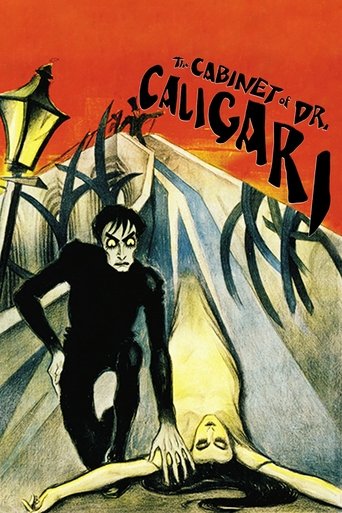
Robert Wiene's film did not invent Expressionism, but it gave it its most iconic cinematic form. A hypnotist named Dr. Caligari exhibits a sleepwalker, Cesare, who predicts death and then carries it out. The sets, painted with impossible angles and jagged shadows, externalize a world gone mad. The film's famous framing device, which recontextualizes everything as the delusion of a mental patient, has been debated for a century: is it a critique of authority, or a way of containing that critique? Either way, Caligari established that horror cinema could be as formally radical as it was viscerally disturbing.
The Golem: How He Came Into the World
1920 · Paul Wegener, Carl Boese
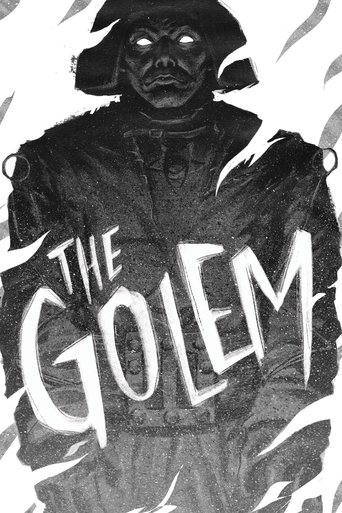
Paul Wegener had already made two earlier Golem films, but this is the one that survives intact and the one that matters. In sixteenth-century Prague, Rabbi Loew shapes a massive clay figure and brings it to life through Kabbalistic ritual to protect the Jewish ghetto from persecution. The Golem obeys, then exceeds its purpose. Hans Poelzig's sets, with their leaning doorways and organic curves, create a world where the boundary between stone and flesh feels dangerously thin. The film is both a supernatural thriller and an allegory about the consequences of creating power you cannot control.

Leaves from Satan's Book
1920 · Carl Theodor Dreyer
Dreyer's early feature follows Satan through four historical episodes, from the betrayal of Christ to the Russian Revolution, as he tempts ordinary people toward evil. The structure borrows openly from Intolerance, but Dreyer's sensibility is entirely his own: austere, psychologically acute, and fascinated by the moment when a soul wavers between conscience and surrender. It is not Dreyer's greatest work, but it is a revealing one. His Satan is not a figure of spectacle but of quiet persuasion, and the film's power lies in how plausible each temptation feels.
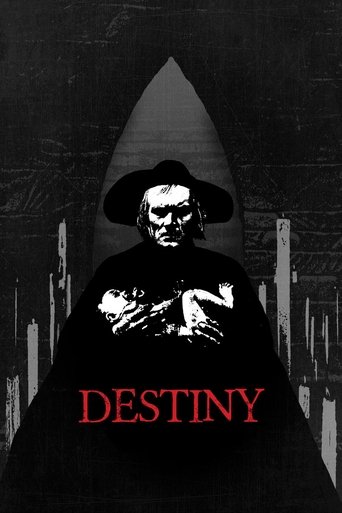
Destiny
1921 · Fritz Lang
Fritz Lang's allegorical fantasy follows a young woman who pleads with Death to return her lover. Death offers her three chances, set in a Persian palace, Renaissance Venice, and imperial China, to save a life and prove that love can defeat fate. Each episode ends in failure. The film's most celebrated sequence, in which a wall of flickering candles represents human lives burning down to nothing, is one of the great visual metaphors in silent cinema. Lang would move on to crime thrillers and science fiction, but Destiny reveals the metaphysical imagination that powered all his work.
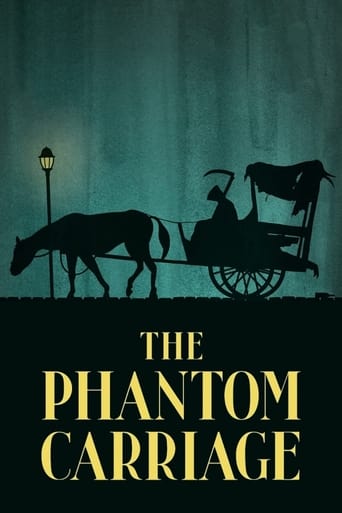
The Phantom Carriage
1921 · Victor Sjöström
On New Year's Eve, a ghostly coachman collects the souls of the dying. Victor Sjöström's adaptation of Selma Lagerlöf's novel uses double exposure to make its spectral carriage visible against the living world, and the effect remains startling: translucent horses pulling a transparent wagon through real streets, with a cloaked driver who was, hours earlier, a living man. The narrative structure, told in nested flashbacks, adds to the sense of time folding in on itself. Ingmar Bergman called it the film that shaped his artistic life. It is easy to understand why.
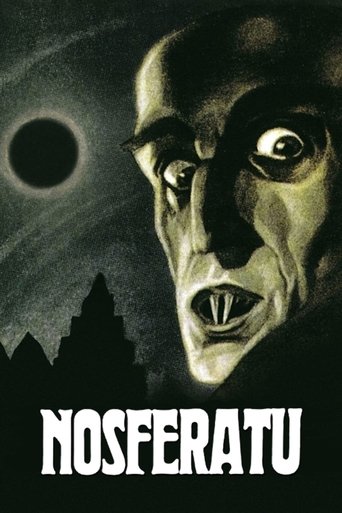
Nosferatu
1922 · F. W. Murnau
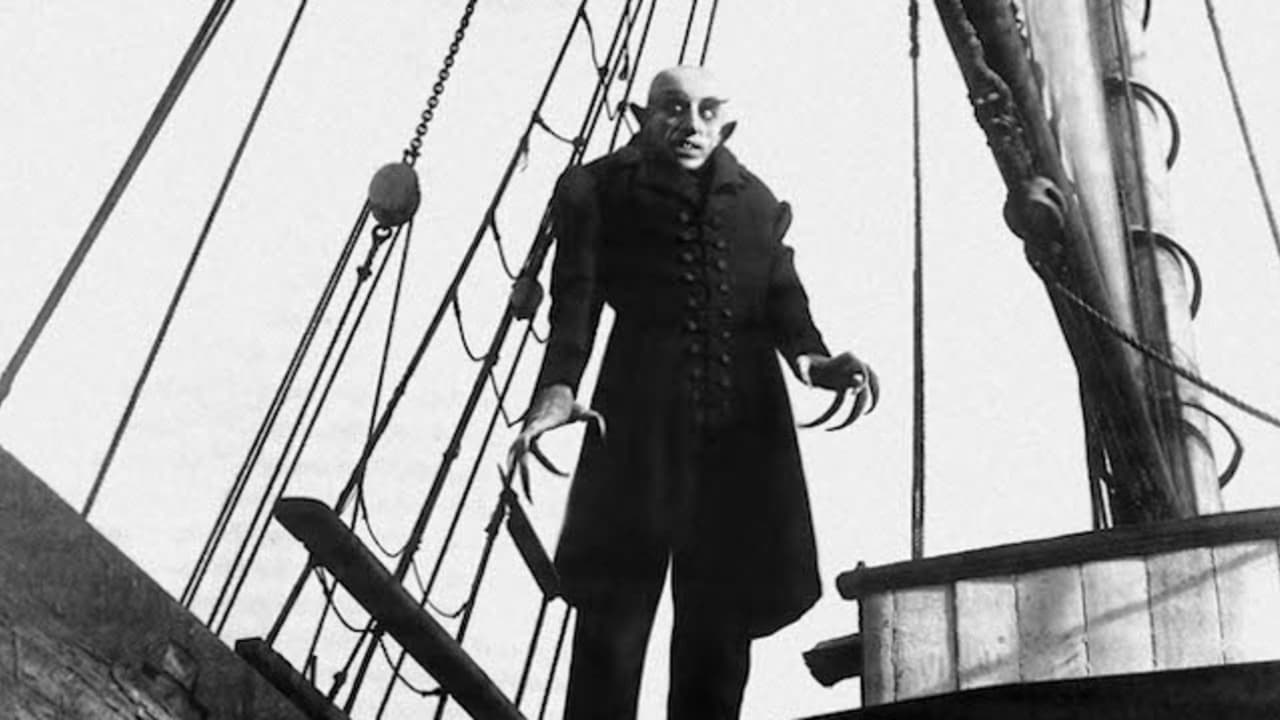
Murnau could not secure the rights to Bram Stoker's Dracula, so he changed the names and kept everything else. Count Orlok, played by Max Schreck with a performance that seems to emanate from somewhere other than human acting, is cinema's first and most disturbing vampire: bald, rat-toothed, moving with the stiffness of something that should not be moving at all. Murnau shot extensively on location, and the contrast between the real German countryside and the impossible creature haunting it gives the film its particular uncanny power. Nosferatu is not a story about vampires. It feels like evidence of one.
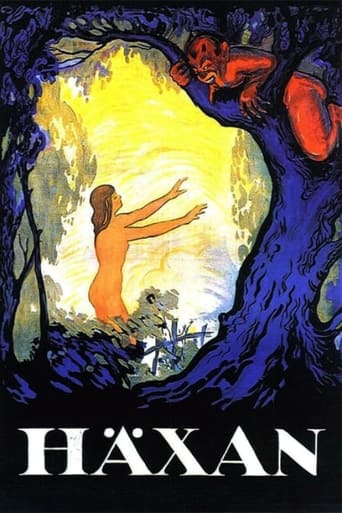
Häxan
1922 · Benjamin Christensen
Benjamin Christensen spent years researching the Malleus Maleficarum and medieval witch trial records, then turned his findings into something that defies easy categorization. Part documentary, part dramatization, part fever dream, Häxan moves from illustrated lectures on demonology to staged recreations of Sabbaths, possessions, and inquisitorial torture, then draws a direct line to modern hysteria and mental illness. The dramatized sequences are genuinely shocking, even by contemporary standards. Christensen himself plays the Devil with obvious relish. The film argues that superstition is a form of madness, while simultaneously demonstrating why that madness was so seductive.

Warning Shadows
1923 · Arthur Robison
A traveling showman arrives at a dinner party and uses shadow puppets to expose the hidden desires and jealousies of the guests. Arthur Robison's film is one of the most visually sophisticated of all German Expressionist works, built almost entirely around the interplay of light and darkness. The shadows take on autonomous life, acting out fantasies and fears that the characters cannot speak aloud. There are no intertitles; the story is told entirely through images. Warning Shadows collapses the boundary between what is projected and what is real, making cinema itself feel like a form of sorcery.
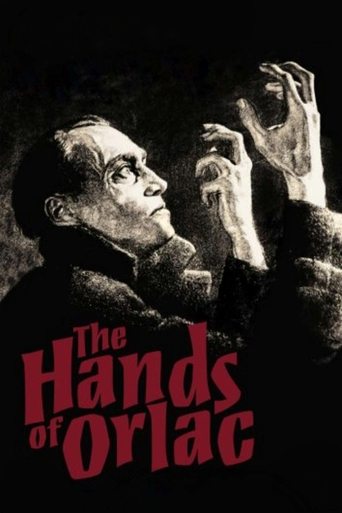
The Hands of Orlac
1924 · Robert Wiene
A concert pianist receives the transplanted hands of an executed murderer and becomes convinced that the hands have retained their criminal will. Robert Wiene, who had already explored madness and control in Caligari, here turns the body itself into a site of horror. Conrad Veidt's performance is extraordinary: his hands seem to move with a volition separate from the rest of his body, reaching for throats and knife handles while his face registers helpless terror. The premise anticipates decades of body horror cinema, and the film's central question, whether identity resides in the mind or the flesh, remains genuinely unsettling.
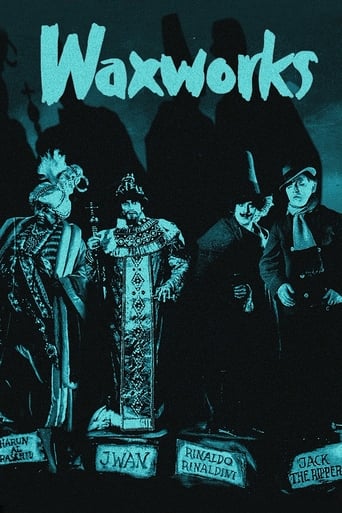
Waxworks
1924 · Paul Leni, Leo Birinski
Paul Leni's anthology film presents three tales told by a poet visiting a wax museum: Harun al-Rashid, Ivan the Terrible, and Jack the Ripper. Each episode escalates in both horror and formal ambition. The Harun al-Rashid segment is a lavish Arabian Nights fantasy. Ivan the Terrible, starring Conrad Veidt, is a claustrophobic study of paranoid madness. The Jack the Ripper finale, running barely ten minutes, dissolves into pure Expressionist nightmare, with the city itself becoming a tilting, fragmenting trap. Leni's gift was atmosphere, and Waxworks is a catalog of his ability to make spaces feel alive with menace.
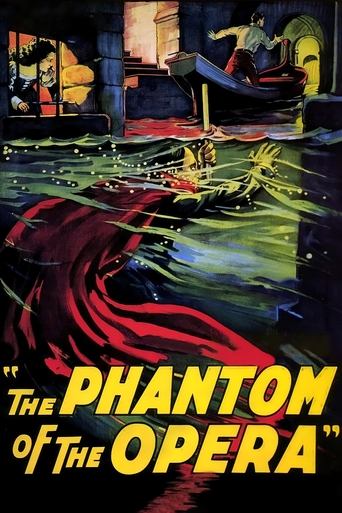
The Phantom of the Opera
1925 · Rupert Julian
Lon Chaney's self-designed makeup for the Phantom remains one of the great images in horror cinema: the skull-like face, the sunken eyes, the rictus grin that Christine unmasks in the film's most famous scene. Rupert Julian's direction is workmanlike at best, but the production design of the Paris Opera's underground labyrinth is magnificent, and Chaney's performance transcends the material. He plays Erik not as a monster but as a ruined artist whose genius has been trapped inside a body the world cannot bear to look at. The Technicolor masquerade ball sequence, a flash of vivid color in a mostly monochrome film, is a genuine coup.
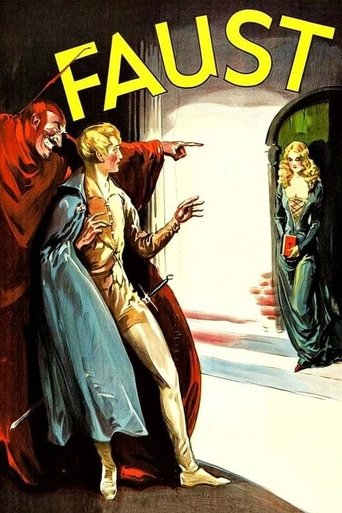
Faust
1926 · F. W. Murnau
Murnau's adaptation of the Faust legend is the most visually spectacular film of the German silent era. The opening sequence, in which Mephisto spreads his cloak over an entire city to unleash plague, uses special effects that remain breathtaking. Emil Jannings plays the Devil as a figure of immense physical presence and sly humor, seducing Faust not through terror but through the promise of returned youth and earthly pleasure. The film shifts from cosmic horror to bawdy comedy to genuine tragedy, and Murnau holds all of it together through sheer visual command. This was his last German production before leaving for Hollywood.
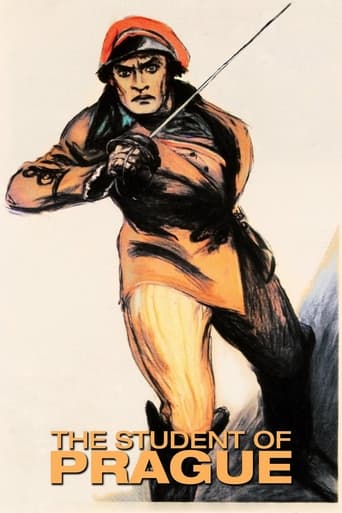
The Student of Prague
1926 · Henrik Galeen
Henrik Galeen's remake of the 1913 film tells the story of a student who sells his reflection to a sorcerer and discovers that losing your mirror image means losing your identity. Conrad Veidt, in his second appearance in this collection, plays the student with a mounting desperation that anchors the film's more fantastical elements. The doppelgänger motif, central to German Romantic literature, finds its most effective cinematic expression here. Galeen, who also wrote the screenplays for Nosferatu and Waxworks, understood that the uncanny is most powerful when it wears a familiar face.
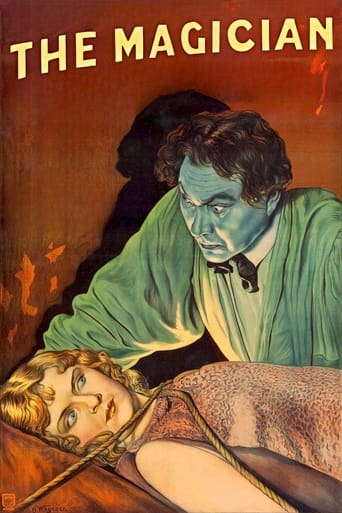
The Magician
1926 · Rex Ingram
Rex Ingram's adaptation of Somerset Maugham's novel was inspired by the real-life occultist Aleister Crowley, and the film takes its dark magic seriously. Paul Wegener, who had already brought the Golem to life, plays a sorcerer who needs the blood of a virgin to complete an alchemical experiment. The occult sequences, set in a tower laboratory filled with arcane apparatus, are among the most atmospherically convincing depictions of ritual magic in silent cinema. Ingram shot the film in the south of France with a visual elegance that makes the horror feel refined rather than crude.

The Cat and the Canary
1927 · Paul Leni
Paul Leni brought his Expressionist sensibility to Hollywood and essentially invented the haunted house film as a genre. The setup is a classic: relatives gather in a creepy mansion for the reading of a will, and someone (or something) begins stalking them through secret passages and hidden rooms. Leni fills every frame with menace. Curtains billow without wind. Shadows slide along walls with no visible source. Hands reach from behind curtains. The influence on subsequent horror is immeasurable; nearly every "old dark house" film that followed, from James Whale's work to Scooby-Doo, descends from this one.
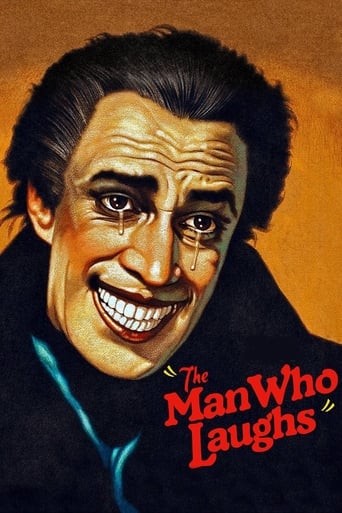
The Man Who Laughs
1928 · Paul Leni
Paul Leni's final film adapts Victor Hugo's novel about Gwynplaine, a man whose face was carved into a permanent grin as a child. Conrad Veidt's third appearance in this collection is his most iconic: the frozen smile, the anguished eyes above it, the impossible task of communicating interior suffering through a face that cannot stop laughing. The makeup and performance directly inspired the creation of Batman's Joker. Leni's Gothic visual design, with its looming architecture and oppressive shadows, transforms seventeenth-century England into a nightmare landscape. Leni died suddenly shortly after the film's release, at the age of forty-four.
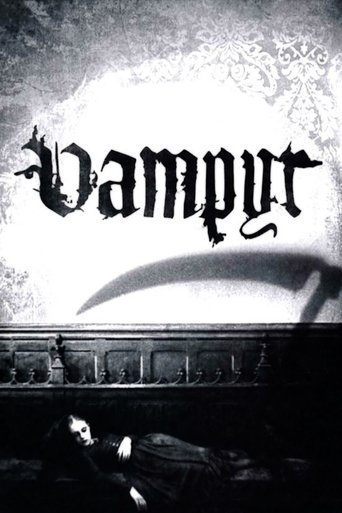
Vampyr
1932 · Carl Theodor Dreyer
Dreyer's vampire film bears almost no resemblance to any other vampire film ever made. There are no fangs, no capes, no bats. Instead, there is a pervasive atmosphere of wrongness: shadows that move independently of their owners, a doctor who seems to serve something unseen, a sequence shot from inside a coffin as it is carried to a grave. Dreyer used nonprofessional actors, available light, and a gauze filter over the lens that gives every image a milky, half-dissolved quality. The result feels less like watching a horror film than like slipping into someone else's disturbed sleep. It is one of the most genuinely uncanny films ever made.
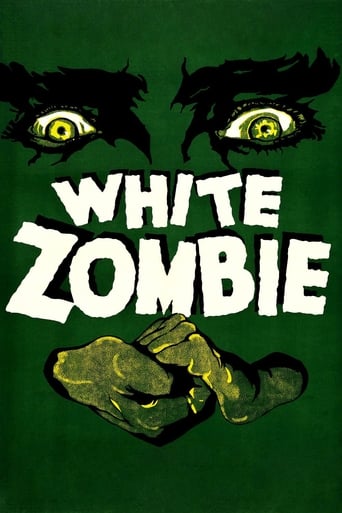
White Zombie
1932 · Victor Halperin
Victor Halperin's low-budget production introduced the zombie to cinema, and its approach to the subject has never been entirely surpassed. Bela Lugosi plays a voodoo master in Haiti who can raise the dead and bend them to his will, and the film draws its horror not from gore but from the concept of enslavement beyond death. The zombies here are not flesh-eaters; they are laborers, emptied of will and forced to work the sugar mills. The racial and colonial dimensions of the material are impossible to ignore, and the film is more interesting for its willingness to engage them, however obliquely, than later zombie films that reduced the concept to simple apocalyptic carnage.