
Soviet Montage
Soviet montage was born from a paradox: a country that could barely keep its projectors running produced the most radical rethinking of film form the medium has ever seen. In the years after the 1917 Revolution, a generation of filmmakers working with almost no resources — scavenged film stock, improvised equipment, unheated studios — took apart the basic unit of cinema, the edit, and rebuilt it as an instrument of thought. Their argument was simple and enormous: meaning in film does not live inside the shot. It lives in the collision between shots. The theorists disagreed with each other constantly, and those disagreements are the engine of the movement. Eisenstein believed in montage as intellectual shock — the juxtaposition of unrelated images to force the viewer into new understanding. Pudovkin believed in montage as emotional construction — linking images to build feeling the way a novelist builds a sentence. Vertov rejected fiction altogether and argued that the camera's purpose was to capture life and reorganize it into patterns invisible to the naked eye. Dovzhenko ignored all three and made films that felt like poems, lyric and earthy and impossible to theorize. Kuleshov, the teacher who started it all, had proven with a single experiment that the same actor's face, juxtaposed with different images, appeared to express completely different emotions — meaning the audience, not the performer, created the feeling. This collection traces the movement from its first experiments in the early 1920s through its extraordinary peak in the late twenties, when Soviet cinema was producing masterworks at a rate that has never been matched, to the moment when the state's demand for ideological clarity made the movement's formal ambitions untenable. Start with Eisenstein if you want to be overwhelmed. Start with Barnet if you want to be surprised. Start with Vertov if you want to see what cinema looks like when it refuses to tell stories at all.
19 films
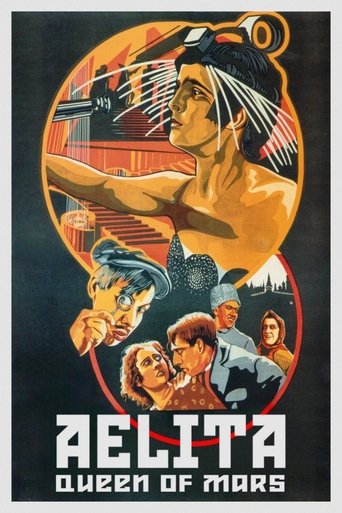
Aelita: Queen of Mars
1924 · Yakov Protazanov
Protazanov was already a veteran director before the Revolution, and Aelita is not, strictly speaking, a montage film — which is precisely why it belongs at the beginning of this collection. It shows you what Soviet cinema looked like before the montage theorists reinvented it: conventional narrative filmmaking dressed up with Alexandra Exter's stunning Constructivist set and costume designs for the Mars sequences. The earthbound scenes of post-revolutionary Moscow are actually more interesting than the sci-fi spectacle, because they capture the texture of daily Soviet life — the housing shortages, the bureaucracy, the exhaustion — with a documentary plainness that the more radical filmmakers would soon reject. Think of Aelita as the baseline: this is what Eisenstein, Vertov, and the rest were reacting against.
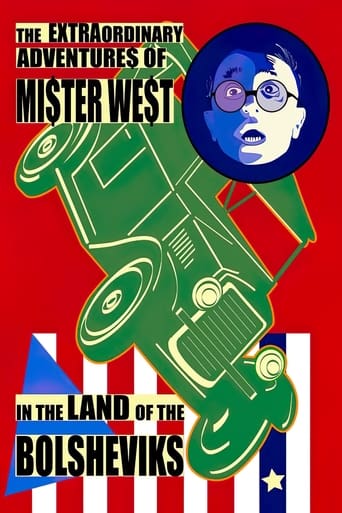
The Extraordinary Adventures of Mr. West in the Land of the Bolsheviks
1924 · Lev Kuleshov
Kuleshov is the founding theorist of the entire Soviet montage movement — his famous experiment, in which the same expressionless face was intercut with different images and audiences perceived different emotions each time, is the single most important demonstration of how editing creates meaning. His actual films are less well known, and this comedy is the best entry point: an American tourist arrives in Moscow expecting barbarians and encounters a group of con artists who confirm his prejudices before the real Soviets set him straight. It's funny, it's fast, and it moves with an American-style energy that's completely deliberate — Kuleshov worshipped Griffith and Hollywood craft, and his workshop trained actors to move with the precision of machines. Pudovkin was his student. So was Boris Barnet. The entire movement passed through this man's classroom.
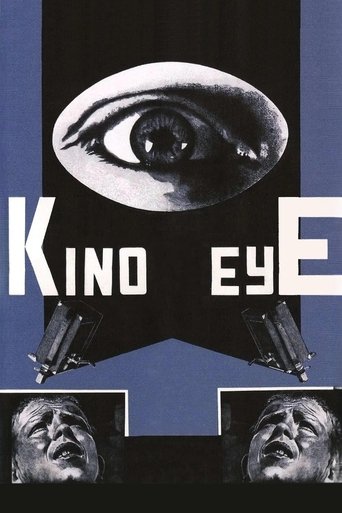
Kino Eye
1924 · Dziga Vertov
Vertov's first feature-length film, and the purest expression of his early theory of the "Kino-Eye" — the camera as an instrument superior to the human eye, capable of revealing truths about life that direct observation misses. There are no actors, no sets, no story. Vertov and his team filmed Soviet life — markets, hospitals, factories, children, workers — and assembled the footage into patterns that make the mundane feel revelatory. It's cruder and less virtuosic than Man with a Movie Camera, but that rawness is the point: you can feel Vertov figuring out what his theories actually look like on screen. The film also introduces the techniques — reverse footage, slow motion, split screens — that he would refine into the astonishing visual language of his later work.
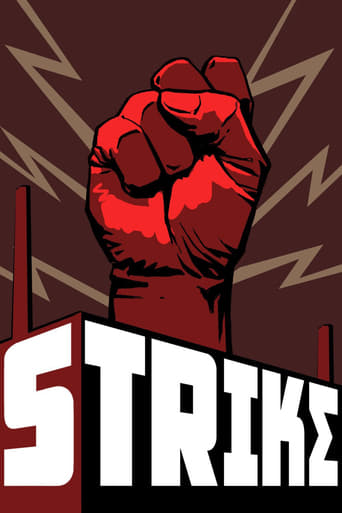
Strike
1925 · Sergei Eisenstein
Eisenstein's first feature, and the film where montage announced itself as a weapon. A factory strike is organized, suppressed, and finally crushed in a massacre that Eisenstein intercuts with footage of cattle being slaughtered — the first and most notorious use of what he called "intellectual montage," the collision of two unrelated images to create a meaning that exists in neither. The technique is deliberately crude, and that crudeness is part of the point: Eisenstein wanted to shock the viewer out of passive consumption and into active thought. The film also introduces his concept of "typage" — using non-professional actors cast for their physical characteristics rather than their acting ability — which gives the crowd scenes a documentary weight that professional performances couldn't achieve.
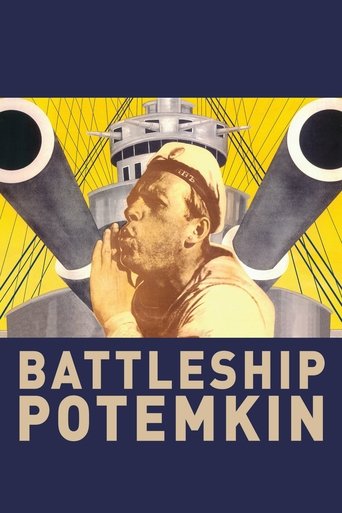
Battleship Potemkin
1925 · Sergei Eisenstein
The most famous Soviet film, the most analyzed sequence in cinema history, and arguably the single most influential work of editing ever produced. Eisenstein was twenty-seven. The Odessa Steps sequence — which depicts a massacre that never actually happened — builds its horror through the rhythm of its cuts: soldiers descending in geometric lockstep, civilians scrambling in chaos, a baby carriage bouncing down the stairs, close-ups of screaming faces intercut with boots and rifles. Every shot is precisely calibrated for duration, angle, and graphic composition, and the cumulative effect is visceral in a way that transcends the propaganda purpose. The sequence has been studied, imitated, parodied, and homaged by everyone from Brian De Palma to Francis Ford Coppola, and it still works — it still makes you flinch — because Eisenstein understood something fundamental about how the human nervous system responds to edited images.
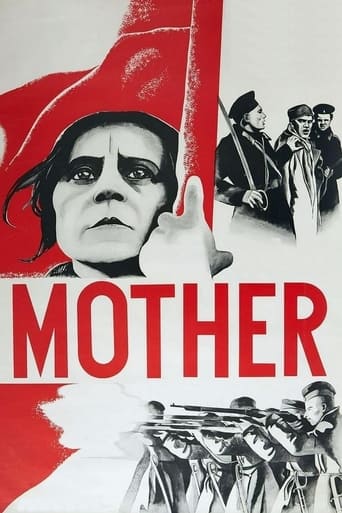
Mother
1926 · Vsevolod Pudovkin
Pudovkin's answer to Eisenstein, and the clearest illustration of how differently two brilliant filmmakers could understand the same technique. Where Eisenstein's montage is dialectical — thesis colliding with antithesis to produce synthesis — Pudovkin's is constructive: each shot builds on the last like words in a sentence, accumulating emotion through linkage rather than collision. Mother, adapted from Gorky's novel about a woman radicalized by her son's arrest during the 1905 Revolution, is the demonstration piece. The ice-breaking sequence at the climax, intercut with the workers' march, doesn't shock you the way the Odessa Steps do — it swells, it gathers, it carries you forward. The distinction matters: Eisenstein wanted to make you think. Pudovkin wanted to make you feel. Both succeeded, and the tension between their approaches is the central argument of the entire movement.
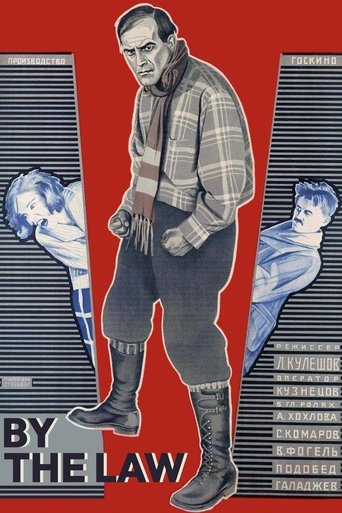
By the Law
1926 · Lev Kuleshov
Kuleshov's masterpiece, and a radically different proposition from anything else in this collection. Three people are trapped in a cabin in the Yukon after one of them commits murder, and the other two must decide whether to execute him or wait for the authorities who may never come. That's it — three actors, one set, no crowds, no montage fireworks. Kuleshov was proving a theoretical point: that the power of cinema lies not in spectacle but in the precise arrangement of shots, and that you could create unbearable tension from almost nothing. Adapted from a Jack London story, the film has more in common with Hitchcock than with Eisenstein, and it's the most psychologically intense film the Soviet silent cinema produced. Watch it as a corrective to the assumption that montage theory was only about revolutionary spectacle.
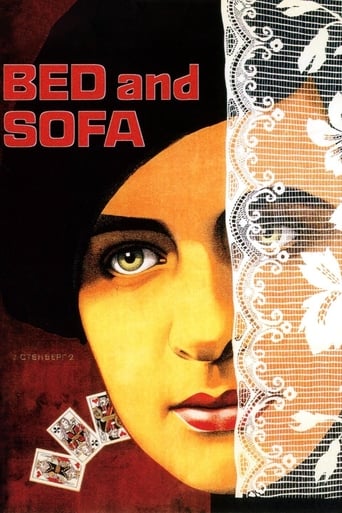
Bed and Sofa
1927 · Abram Room
A Moscow housing shortage forces a husband and wife to take in a lodger, and the arrangement becomes a ménage à trois — played not as scandal but as a matter-of-fact consequence of the living conditions that millions of Soviet citizens actually faced. Room's film is astonishing for its frankness: the wife's unwanted pregnancy, her visit to an abortion clinic, and her eventual decision to leave both men are depicted with a directness that was exceptional even by the relatively permissive standards of 1920s Soviet cinema. It's the most human-scaled film in this collection — no revolutionary masses, no formal experiments, just three people in a cramped apartment navigating desire, jealousy, and limited options. It also happens to be the most feminist film of the Soviet silent era, which is saying something given how quickly that window closed.
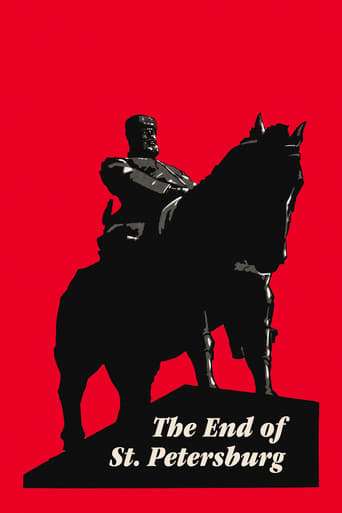
The End of St. Petersburg
1927 · Vsevolod Pudovkin
Commissioned for the tenth anniversary of the Revolution (alongside Eisenstein's October), Pudovkin's film follows a nameless peasant boy who arrives in St. Petersburg and is gradually swept into the revolutionary tide. It's Pudovkin's most ambitious work and his most direct competition with Eisenstein — both films cover the same historical events, but where October is abstract and intellectual, End of St. Petersburg is emotional and character-driven. The stock exchange sequence, intercutting the frenzy of war profiteering with the carnage of the front lines, is one of the most devastating uses of montage in the Soviet canon. Pudovkin proves, as forcefully as possible, that you don't need to abandon narrative to make montage work at full power.
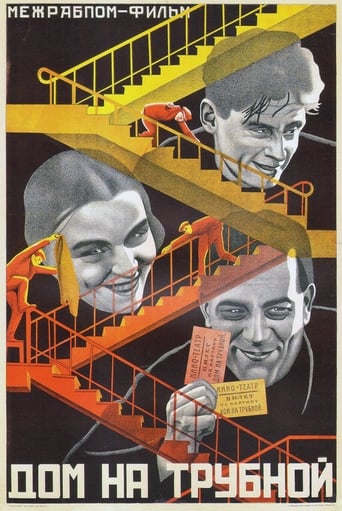
The House on Trubnaya
1928 · Boris Barnet
Boris Barnet is the great secret of Soviet silent cinema — a filmmaker whose wit, warmth, and visual inventiveness are completely at odds with the movement's reputation for ideological heaviness. A country girl arrives in Moscow and gets a job as a maid in a chaotic apartment building, and what follows is a social comedy played at breakneck speed with camerawork that's as adventurous as anything Eisenstein or Vertov produced, deployed in the service of making you laugh. The tracking shots through the building, the visual gags, the affectionate portrait of Moscow's working class — none of it feels like propaganda, which is probably why Barnet has been systematically undervalued by film historians who expected Soviet cinema to be grimly serious. He was Kuleshov's student, and he absorbed the master's lessons about editing and rhythm better than anyone except Pudovkin.
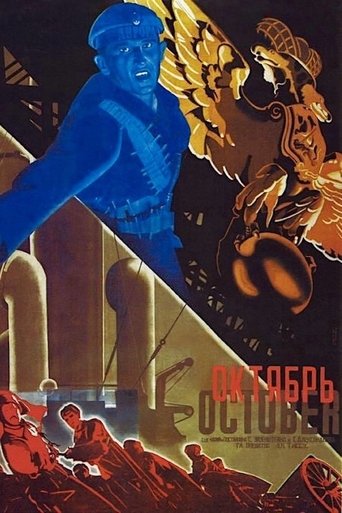
October (Ten Days that Shook the World)
1928 · Sergei Eisenstein, Grigori Aleksandrov
Eisenstein's recreation of the October Revolution is the most radical experiment in intellectual montage ever attempted — and the film where you can feel the theory starting to exceed what audiences can process. The famous "God and Country" sequence, which intercuts images of religious icons from increasingly "primitive" cultures to deconstruct the concept of divinity, is montage operating as pure argumentation: Eisenstein is literally trying to make the audience think a philosophical thought through the collision of images alone. It's brilliant, it's exhausting, and it was a commercial disaster — Soviet audiences wanted to see their revolution dramatized, not theorized. The film was heavily re-edited by the authorities, who also ordered the removal of Trotsky from the footage after his political fall. What survives is still overwhelming, still frequently baffling, and still the most ambitious attempt anyone has made to use cinema as a tool of dialectical reasoning.
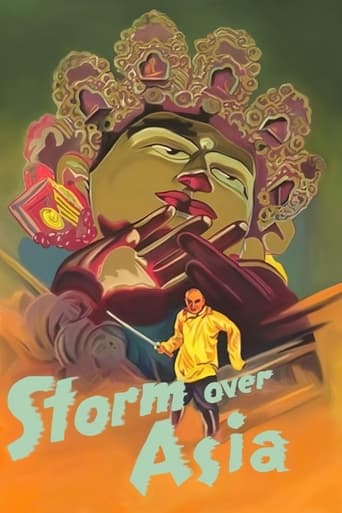
Storm Over Asia
1928 · Vsevolod Pudovkin
Pudovkin's third and final great silent film follows a Mongolian trapper who is discovered to be a descendant of Genghis Khan and is installed as a puppet ruler by the occupying British forces. It is the Soviet montage movement's most explicitly anti-colonial work, and Pudovkin shot extensively on location in Mongolia with a visual grandeur that gives the film an almost ethnographic dimension. The final sequence — a storm that builds from metaphor into apocalypse as the protagonist's rage at colonial exploitation erupts into revolution — is the most sustained piece of pure montage Pudovkin ever constructed. The landscape cinematography alone is worth the film, but the political argument hasn't aged a day.
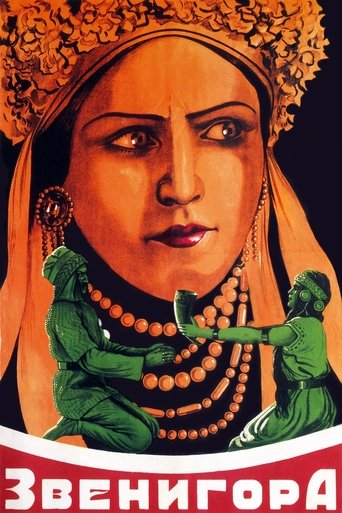
Zvenyhora
1928 · Oleksandr Dovzhenko
Dovzhenko's first major work, and the film that announced the arrival of a sensibility entirely unlike anything else in Soviet cinema. The plot, insofar as there is one, spans a thousand years of Ukrainian history — from a buried Scythian treasure through the Cossack wars to the present day — but Dovzhenko doesn't narrate this history so much as dream it. Images follow a logic that is poetic rather than political or intellectual: a horse stands motionless in a field, an old man digs for gold that may not exist, soldiers merge with the landscape. Soviet critics didn't know what to make of it. Eisenstein called it remarkable. It's the first panel of Dovzhenko's Ukraine trilogy — followed by Arsenal and Earth — and the most mysterious film in this collection.
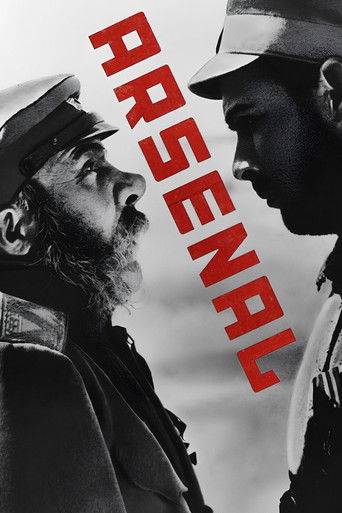
Arsenal
1929 · Oleksandr Dovzhenko
The second panel of Dovzhenko's Ukraine trilogy, and the one where his poetic method becomes fully radicalized. Ostensibly about the 1918 uprising at the Kiev Arsenal, the film ranges freely across Ukrainian history and myth with a disregard for linear narrative that makes Eisenstein look conventional. Soldiers laugh as they are gassed. A horse turns to the camera and speaks. A worker bares his chest to a firing squad and the bullets cannot kill him. These images aren't metaphors — or rather, they're metaphors that have shed their explanations and become pure visionary cinema. Dovzhenko was a painter before he was a filmmaker, and Arsenal is the film where you feel that training most viscerally: every frame is composed as an image first and a narrative element second.
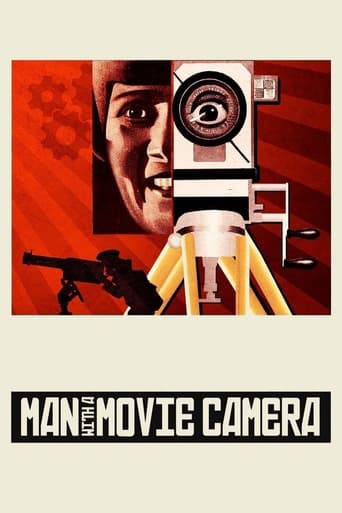
Man with a Movie Camera
1929 · Dziga Vertov
Vertov's masterpiece and the most formally radical film the Soviet montage movement produced — which is saying something, given the competition. The manifesto printed at the beginning declares that this film will use no script, no sets, no actors, and no intertitles. What follows is sixty-eight minutes of Soviet urban life captured through every technique the camera can perform — split screens, superimposition, slow motion, freeze frames, reverse footage, extreme angles, tracking shots from moving vehicles — all assembled by Vertov's wife and editor Elizaveta Svilova into a rhythm that accelerates until cinema itself seems to be vibrating apart. It is simultaneously a documentary, a city symphony, a self-portrait of its own making, and a theoretical argument about what film should be. It is also, not incidentally, extraordinarily beautiful.
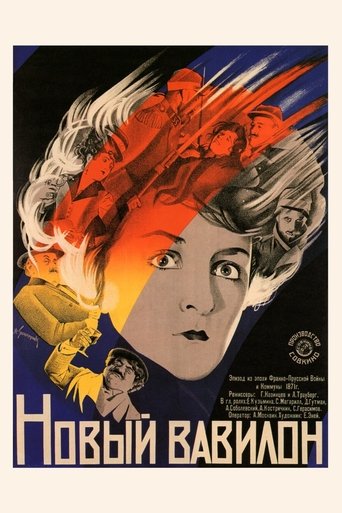
The New Babylon
1929 · Grigori Kozintsev, Leonid Trauberg
Kozintsev and Trauberg came out of FEKS — the Factory of the Eccentric Actor — a movement that emphasized circus, vaudeville, and grotesque exaggeration as antidotes to theatrical realism. The New Babylon, their account of the Paris Commune of 1871, is the most visually eccentric film in this collection: the department store sequences are shot with a swooping, carnival energy that makes consumer capitalism look literally delirious, and the contrast with the Commune's doomed idealism is devastating. The score was composed by a young Dmitri Shostakovich — his first film commission — and its deliberately jarring, contrapuntal relationship to the images anticipates techniques that wouldn't become common for decades. FEKS is the Soviet avant-garde's lunatic fringe, and this is their masterpiece.

Fragment of an Empire
1929 · Fridrikh Ermler
Ermler's most celebrated film imagines a shell-shocked soldier who lost his memory during World War I and regains it a decade later in the new Soviet state. The premise is a stroke of genius: it allows the film to see Soviet modernity through genuinely fresh eyes, and the montage sequences depicting the protagonist's overwhelmed perception of the changed world — factories, trams, radio, new social relations between men and women — are among the most psychologically sophisticated in the Soviet canon. Where Eisenstein's montage is argumentative and Pudovkin's is emotional, Ermler's is perceptual: he uses editing to simulate what it feels like to have your reality reconstructed from scratch. The film is also, beneath its formal innovations, deeply humane — the soldier's confusion and his tentative efforts to understand his new world are genuinely moving.
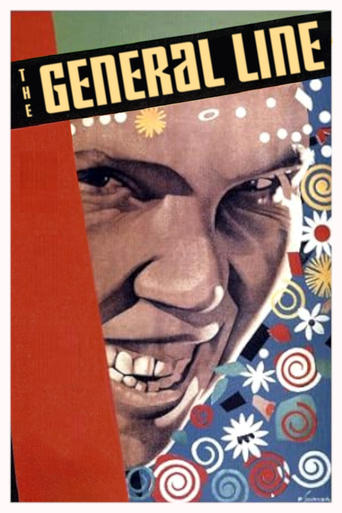
The General Line
1929 · Sergei Eisenstein, Grigori Aleksandrov
Eisenstein's last silent film, and the one that broke him. Commissioned as a celebration of agricultural collectivization, it became instead a laboratory for increasingly abstract montage experiments — the cream separator sequence, in which milk being processed is edited into a quasi-orgasmic crescendo of spray and light, is the point where Eisenstein's formal ambitions completely overwhelm his narrative obligations. The Soviet authorities demanded extensive re-editing (the original title, The General Line, was changed to Old and New because the Party's agricultural policy had shifted), and the result is a fascinating wreck: half propaganda, half pure cinema, and the clearest evidence of the collision between the movement's artistic ambitions and the state's demand for ideological utility. Within a few years, Socialist Realism would be imposed as the mandatory style, and the great montage experiments would be over.
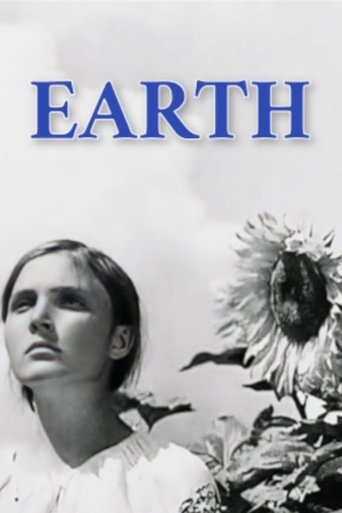
Earth
1930 · Oleksandr Dovzhenko
The final panel of Dovzhenko's Ukraine trilogy, and the lyric summit of the entire Soviet montage movement. A young collective farm organizer is murdered by a kulak, and Dovzhenko transforms this political event into something that feels closer to a creation myth: sunflowers turning toward the sun, apples falling in the rain, a funeral procession that becomes a celebration of the harvest cycle. The famous sequence of the protagonist dancing alone on a moonlit road before his death is one of the most beautiful things in all of cinema — ecstatic, vulnerable, and completely inexplicable in political terms. Soviet critics attacked the film for its "pantheism" and insufficient ideological clarity, which was true and entirely beside the point. Earth is the film that proves the montage movement was about more than revolutionary politics — it was about what cinema could see when it looked at the world with something approaching love.