
German Expressionism
German Expressionism was never just an art style — it was a scream. Born in the wreckage of World War I, in a Germany reeling from defeat, revolution, hyperinflation, and the collapse of every certainty the old empire had promised, it took the internal states that realism couldn't touch — dread, madness, desire, despair — and made them visible. Sets buckled and leaned. Shadows moved with intentions of their own. The camera itself became untrustworthy. The movement proper runs from The Cabinet of Dr. Caligari in 1920 to roughly the mid-1920s, but its influence bled forward through the entire Weimar period and ultimately into Hollywood, carried there by the very filmmakers who'd invented it when they fled the Nazis in the 1930s. Film noir, horror cinema, science fiction — all descend from what these directors built in Berlin studios out of painted canvas, angled light, and a nation's collective anxiety. This collection traces the full arc: from Caligari's painted nightmares through the movement's peak in the mid-twenties to its late transformation into New Objectivity, ending with Fritz Lang's M — the film where Expressionism shed its stylized sets but kept its soul.
19 films
From the Reading Room
- ↗READ21 DEC 2016
Where to begin with F.W. Murnau— Ben Nicholson
A beginner’s path through the sublime silent cinema of F.W. Murnau
- ↗
- ↗READSan Francisco Silent Film Festival20 MAY 2025
Nosferatu— Beatrice Loayza
- ↗VIDLondon Review of Books (LRB)05 APR 2017
Fritz Lang's Use of Sound in 'M' and 'The Testament of Dr Mabuse'— Michael Wood
- ↗VIDLancaster Silent Movies & Classic Film Club24 FEB 2020
F W Murnau in Germany and Hollywood
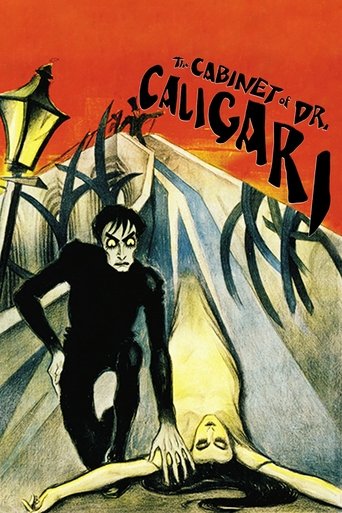
The Cabinet of Dr. Caligari
1920 · Robert Wiene
This is where it starts. Wiene's film didn't just tell a story about madness — it built the world out of madness, with Hermann Warm's jagged, tilted sets making the viewer's own perception unreliable. Everything that follows in this collection descends from what Caligari did in 1920: the radical idea that a film's visual design could express psychological states rather than simply depict physical reality. It also contains one of cinema's first twist endings, which retroactively reframes everything you've just watched. Pay attention to the framing device — it's doing more than you think.
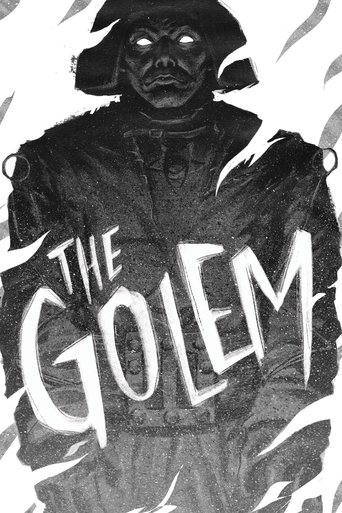
The Golem: How He Came Into the World
1920 · Paul Wegener, Carl Boese
Where Caligari drew on avant-garde theater, Wegener went to folklore — specifically the Jewish legend of a clay figure brought to life by a rabbi to protect the Prague ghetto. The film's massive, organic sets (designed by Hans Poelzig) feel grown rather than built, all curves and weight where Caligari was all angles. It established Expressionism's deep interest in the artificial being — the creature made by human hands that exceeds human control — a thread that runs straight through to Metropolis and beyond. The Golem is also the direct ancestor of every Frankenstein film ever made.

From Morning to Midnight
1920 · Karlheinz Martin
The most purely theatrical of all Expressionist films, and deliberately so. Martin adapted Georg Kaiser's stage play with almost no concession to cinematic realism — the sets are painted backdrops, the acting is wildly stylized, the whole thing feels like a fever dream performed on a stage that's dissolving around the actors. It was considered so extreme that it wasn't released in Germany for years. Watch it as a document of just how far early Expressionism was willing to push the form before the movement learned to integrate its techniques with conventional storytelling.
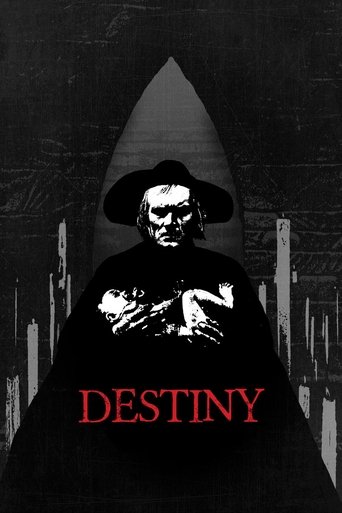
Destiny
1921 · Fritz Lang
Lang's breakthrough, and you can feel a major filmmaker arriving fully formed. Death himself appears as a character — a weary, towering figure played by Bernhard Goetzke — and a young woman bargains for her lover's life across three historical episodes. The film's architectural sets and its treatment of fate as an inescapable force established Lang's obsessions for the rest of his career. Douglas Fairbanks saw it and was so struck that he bought the American rights to suppress it, then borrowed its ideas for The Thief of Bagdad. Buñuel said it was the film that made him want to become a director.
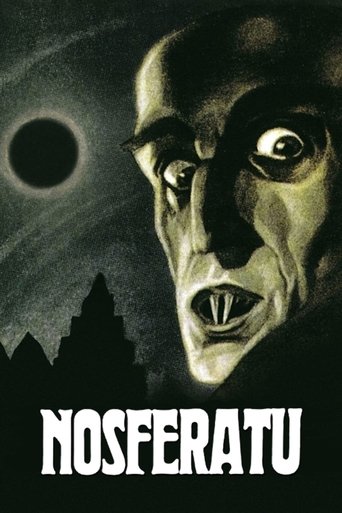
Nosferatu
1922 · F. W. Murnau
Murnau couldn't secure the rights to Bram Stoker's Dracula, so he changed the names and made something far more disturbing than a faithful adaptation would have been. Count Orlok is not suave or seductive — he's a plague rat in human form, all pointed ears and curled fingers and wrong proportions. Murnau broke with Expressionist convention by shooting extensively on location, then used those real landscapes to make the unreal feel invasive, as if the vampire were contaminating the natural world itself. The result is the founding text of screen horror, and Max Schreck's performance remains the most unsettling thing anyone has done in front of a camera.
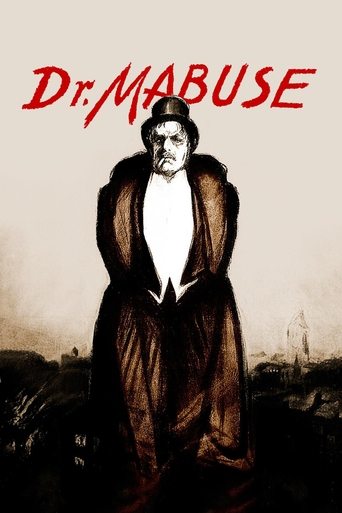
Dr. Mabuse, the Gambler
1922 · Fritz Lang
Lang's four-and-a-half-hour epic of Weimar-era crime and paranoia is Expressionism applied to the present tense. Dr. Mabuse is a master of disguise, a hypnotist, a gambler, a counterfeiter — a figure of pure will who manipulates a corrupt society that's barely holding together. The film is deliberately overwhelming: gambling dens, séances, stock market crashes, car chases, all rendered in Lang's ruthlessly controlled compositions. It's also a portrait of its moment — you can feel the social fabric of the Weimar Republic fraying in every scene. Mabuse became Lang's recurring villain, and for good reason: he embodied the chaos that Germany couldn't stop staring at.

Warning Shadows
1923 · Arthur Robison
Robison's film has no intertitles at all — the story is told entirely through images, and specifically through the interplay of light and shadow. A traveling showman uses shadow puppets to act out a jealous husband's fears, and the boundaries between the shadow play, the characters' fantasies, and reality dissolve completely. It's a film about spectatorship itself: about what projected images do to the people watching them. If you want to understand what Expressionist filmmakers thought cinema was fundamentally about — the manipulation of light to reveal psychological truth — this is the purest statement of that idea.
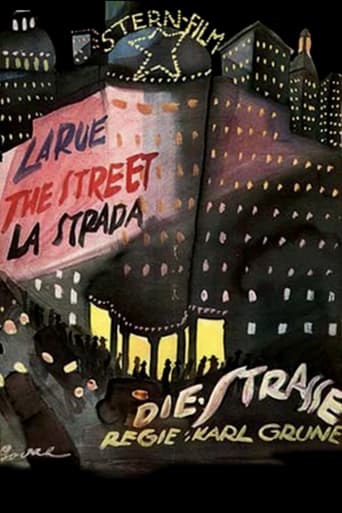
The Street
1923 · Karl Grune
Grune essentially invented the Strassenfilm — the "street film" — a subgenre that became one of Expressionism's most important legacies. A respectable bourgeois man is drawn from his domestic life into the nocturnal city, where neon, shadows, and the promise of transgression overwhelm his defenses. The formula seems simple, but its implications are enormous: the street as a space where social identity dissolves, where desire and danger are indistinguishable, where modernity itself becomes a kind of intoxication. The entire tradition of film noir begins here.
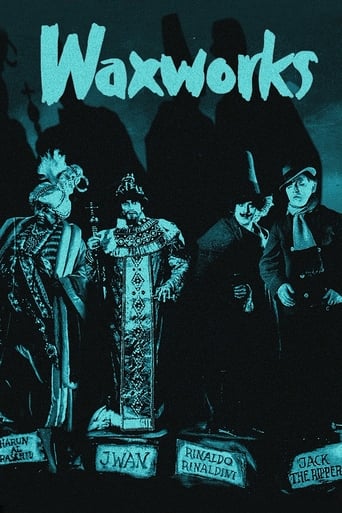
Waxworks
1924 · Paul Leni, Leo Birinski
An anthology film structured around three wax figures in a fairground — Harun al-Rashid, Ivan the Terrible, and Jack the Ripper — with each episode escalating in visual intensity and psychological darkness. The first segment is playful orientalism, the second is a paranoid political nightmare, and the third, directed with Conrad Veidt sleepwalking through distorted streets, is pure Expressionist terror compressed into a few minutes. Leni was a set designer before he was a director, and it shows: every frame is a composition first and a narrative second. He would go on to make The Cat and the Canary in Hollywood, carrying the Expressionist visual sensibility directly into American genre cinema.
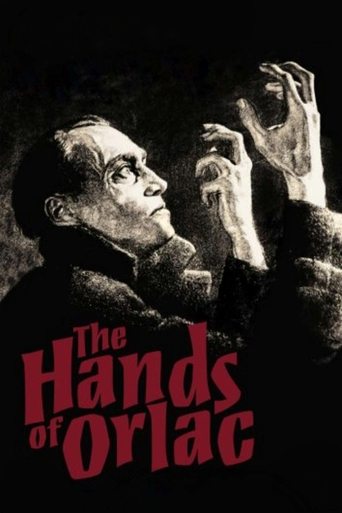
The Hands of Orlac
1924 · Robert Wiene
Wiene returns to the territory of Caligari — the unstable mind, the unreliable body — but with a premise so perfectly Expressionist it almost feels too neat: a concert pianist receives the transplanted hands of an executed murderer and becomes convinced they compel him to kill. Conrad Veidt's performance is a masterclass in physical acting; his hands become autonomous characters, alien objects attached to a body that no longer trusts itself. The film is the purest expression of Expressionism's central anxiety: that the self is not unified, that something foreign lives inside us, and that rational control is an illusion.
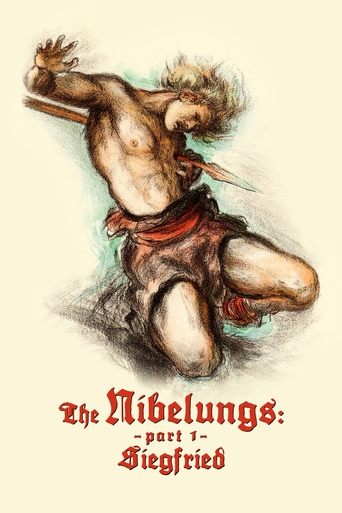
Die Nibelungen: Siegfried
1924 · Fritz Lang
Lang spent two years building the most ambitious production in German film history — a two-part adaptation of the medieval Nibelungenlied that treated myth with the compositional rigor of architecture. Every frame of Siegfried is designed with almost inhuman precision: the geometric forest, the dragon constructed at full scale, the vast hall of the Burgundians. The stylization is Expressionist in method — nothing looks like the real world — but the emotional register is epic rather than psychological. Lang wanted to give Germany a national mythology on film, and what he built is staggering. This is Part One: the hero's rise. Part Two is the fall.
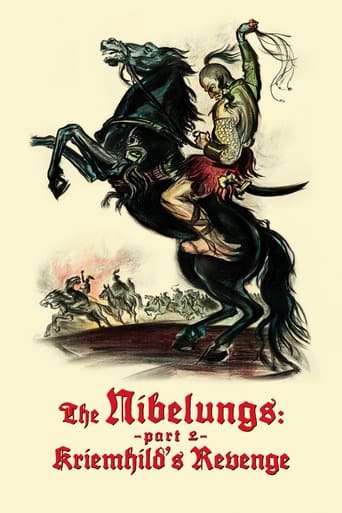
Die Nibelungen: Kriemhild's Revenge
1924 · Fritz Lang
The second half of Lang's Nibelungen is a fundamentally different film from the first — darker, more relentless, and ultimately apocalyptic. Kriemhild's grief at Siegfried's murder transforms into a vengeance so absolute it consumes everything and everyone around her. Where Siegfried was monumental, Kriemhild's Revenge is claustrophobic despite its enormous scale; the geometric compositions that felt majestic in Part One now feel like a trap closing. The final battle is one of the most harrowing sequences in silent cinema. Taken together, the two films are Lang's statement that myth is not escapism — it's a mirror for the worst impulses of civilization.
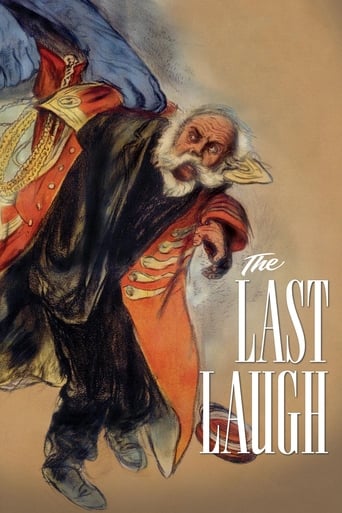
The Last Laugh
1924 · F. W. Murnau
A hotel doorman loses his uniform and, with it, his entire identity. That's the plot — that's all of it — and from that premise Murnau and his cinematographer Karl Freund created one of the most technically revolutionary films ever made. The camera was unchained from its tripod for the first time: strapped to Freund's chest, mounted on bicycles, suspended from overhead tracks. The result is a film that moves with its protagonist's psychology, swooping and tilting and blurring as his world collapses. There are no intertitles. The story is told entirely through the camera's movement and Emil Jannings' performance. It was the film that announced Murnau as the most technically innovative director in the world — and, if you were paying attention, made conventional filmmaking look static overnight.
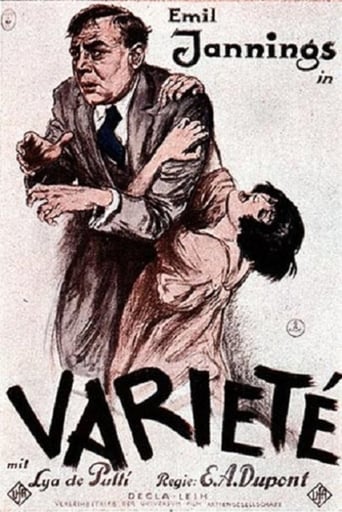
Variety
1925 · E.A. Dupont
Dupont's trapeze melodrama is, on paper, a conventional love triangle — but the way it's photographed is anything but conventional. Karl Freund's camera (the same man who unchained it for The Last Laugh) swoops through circus audiences, hangs from trapezes, and fragments the frame with mirrors and prisms. The subjective camera techniques pioneered here became standard Hollywood practice within a few years. It was also the German film that broke through to massive international commercial success, proving that Expressionist visual techniques could sell tickets worldwide. The story is the excuse; the cinematography is the event.
Faust
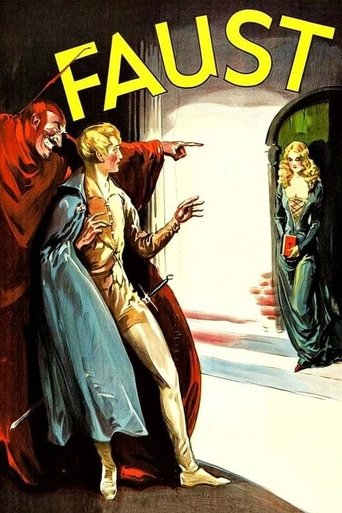
1926 · F. W. Murnau
Murnau's most visually extravagant film — and arguably the single greatest display of Expressionist technique ever committed to celluloid. The opening sequence, in which Mephisto spreads his enormous dark cloak over an entire city, is one of cinema's most breathtaking images. From there, Murnau deploys every trick available: superimposition, forced perspective, miniatures, light effects that make the screen feel genuinely three-dimensional. Emil Jannings' Mephisto is both terrifying and darkly funny, and the Faust legend gave Murnau the perfect vehicle for Expressionism's grandest theme: the bargain between human ambition and the darkness it invites in. This was Murnau's last German film before departing for Hollywood.
Metropolis
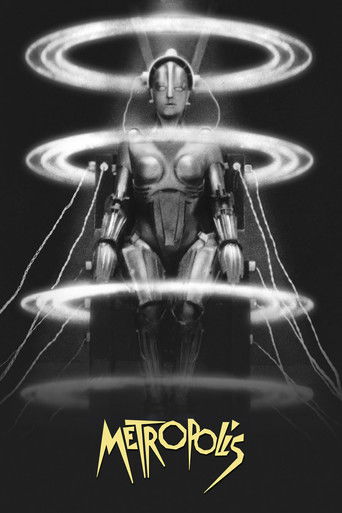
1927 · Fritz Lang
The most expensive and ambitious film Weimar cinema ever produced, and the one whose imagery has proven most indestructible. Lang's vision of a stratified future city — workers toiling underground, elites in rooftop gardens, a robot built in the image of a revolutionary — has been absorbed so completely into visual culture that it's hard to see it fresh. Try anyway. The Expressionist architecture of the underground city, the transformation scene of the Machine-Man, the flooding of the workers' quarters — these sequences are still overwhelming at scale. The politics are muddled (Lang's wife Thea von Harbou wrote the script, and her sympathies would later prove troubling), but as pure visual imagination, nothing in cinema had approached this before, and very little has since.
Asphalt
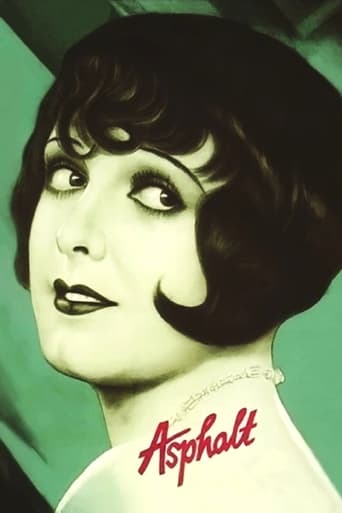
1929 · Joe May
By 1929, the painted sets and geometric shadows of early Expressionism had given way to something sleeker and more psychologically grounded, and Joe May's Asphalt is one of the finest examples of this late-period style. A young policeman falls for a jewel thief in a Berlin rendered as a landscape of wet streets, neon light, and moral ambiguity — the Strassenfilm formula refined to its most seductive. The city night scenes are among the most gorgeous in all of Weimar cinema. Watch it as a bridge: you can see classical Expressionism receding in the rearview mirror and film noir approaching from ahead.
Diary of a Lost Girl
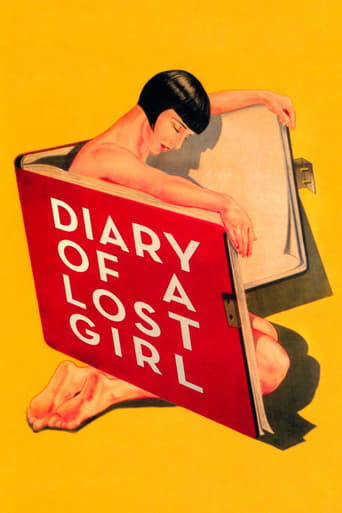
1929 · G.W. Pabst
Pabst represents the crucial transition from Expressionism to Neue Sachlichkeit — New Objectivity — the cooler, more socially engaged style that emerged in the movement's wake. Here, with Louise Brooks in her second collaboration with Pabst (after Pandora's Box), the distortions are social rather than visual: a pharmacist's daughter is exploited by every institution that claims to protect her — family, reform school, brothel, polite society. Pabst's camera observes with a devastating clarity that owes everything to what Expressionism taught about revealing interior states, but the method has evolved. The screaming sets are gone; now the horror is in the faces, the framing, and what's left unsaid.
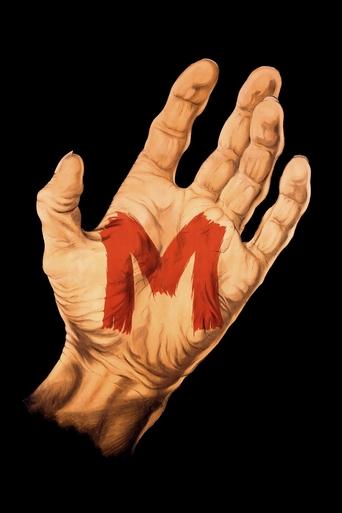
M
1931 · Fritz Lang
Lang's first sound film — and the endpoint of this collection — is not, strictly speaking, an Expressionist film. The painted sets are gone, replaced by real locations. The stylization is restrained. But everything Expressionism taught about shadow, framing, and the visualization of psychological states is here, refined into something colder and more precise. Peter Lorre's child murderer, hunted by both the police and the criminal underworld, is the Expressionist protagonist taken to his logical extreme: a figure defined entirely by an interior compulsion he cannot control, tried in a kangaroo court that mirrors the audience's own desire to see monsters identified and destroyed. M is where German Expressionism grew up. It is also, not coincidentally, one of the greatest films ever made.